Manresa Wilds Launches New Research and Education Station
Officials hope R.E.S.A. will “strengthen the region’s capacity to understand and respond to the climate challenges reshaping Connecticut’s coastline.”
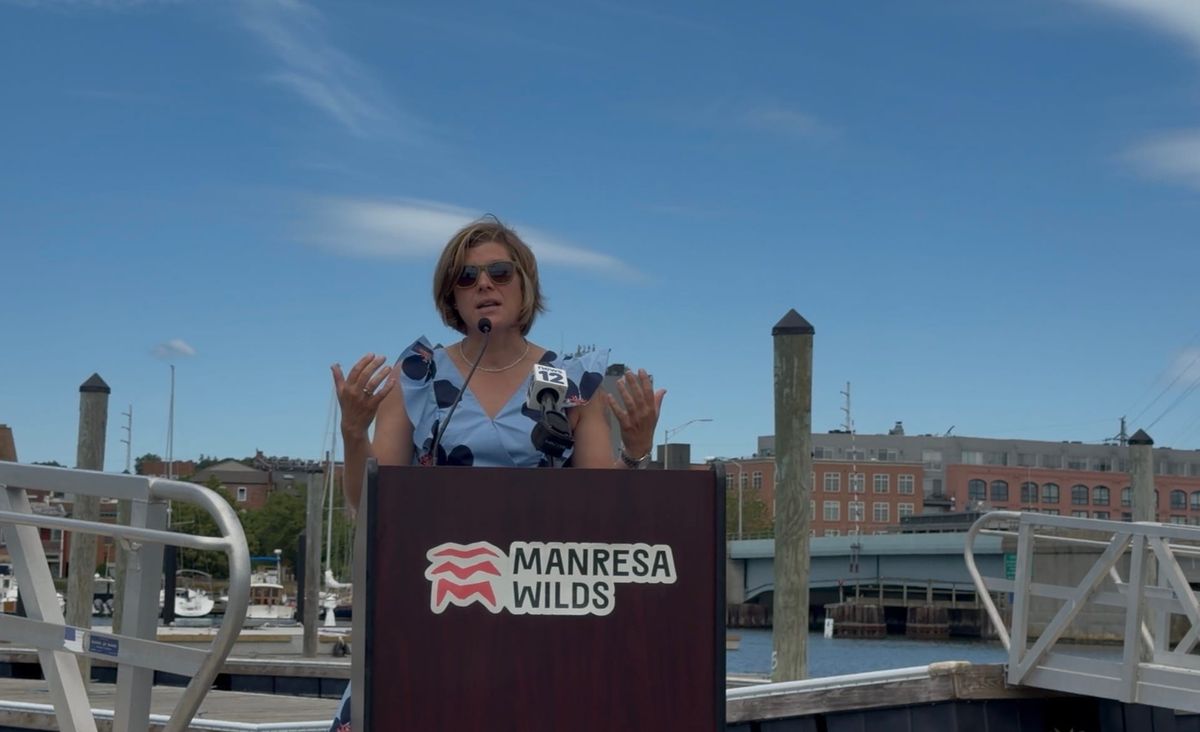
“A hub for discovery and learning.” That’s the vision for the newly formed Research and Education Station (R.E.S.A.) at Manresa Wilds in Norwalk.
The research consortium, which features five partners—Woods Hole Oceanographic Institution (WHOI), The Maritime Aquarium, Wesleyan University, Sacred Heart University, and Norwalk Public Schools—aims to expand environmental learning and scientific research along Long Island Sound, while providing hands-on learning opportunities to students of all ages.
"Manresa Wilds should be a place of discovery, where people can help shape a more resilient future,” said Austin and Allison McChord in a statement. The McChords are the benefactors behind Manresa Island Corp, the nonprofit transforming Manresa Island from a decommissioned power plant into a 125-acre community park called Manresa Wilds.
“R.E.S.A. brings that vision to life by connecting students, researchers, and the broader community to the site. We’re excited to be supporting partnerships that will make Manresa Wilds a hub for learning and coastal stewardship for generations to come,” the McChords said.
One of the main overarching goals of R.E.S.A is to help “strengthen the region’s capacity to understand and respond to the climate challenges reshaping Connecticut’s coastline.”
Officials celebrated R.E.S.A. on Friday, May 29, at Veterans’ Park in Norwalk. Jessica Vonashek, executive director of Manresa Island Corp, dubbed it a “huge milestone” day for the project, and said it was “one of the clearest examples of what Manresa can become.”
“It’s a community asset, and it’s a community benefit, and that means being able to bring in partners wherever we can, however we can, in meaningful ways,” Vonashek said.
Manresa Island Corp. has committed $500,000 in initial grants to these organizations to support “partner-led research, education, public programming, and workforce development related to the future park site.”
“My job now is a statewide job, so I’m not supposed to say this, but I’m going to say it now—this project is my favorite project in the entire state of Connecticut,” Dan O’Keefe, Connecticut’s Commissioner of Economic Development, said. “It’s my favorite project because of all it represents.”
Inside the Research and Education Station
Norwalk Mayor Barbara Smyth called it “not only an important moment for Norwalk, but the future of environmental research, education, and stewardship along Long Island Sound.”
“I have to say I’m having a real geek moment as a lifelong environmentalist,” she added with a smile. “As your mayor, I’m so, so proud of this partnership.”
The five organizations bring “expertise across oceanography, marine education, environmental science, the humanities, and K–12 learning” to the site, which officials said they believe will create a “research and education ecosystem rooted in and enabled by the unique conditions of Manresa Wilds.”
“It’s going to be a place not only where families can gather, but also a place where research can happen, and young people can be inspired and what a tremendous legacy and gift to the city of Norwalk that they have given us,” Senator Bob Duff said.
While the overall project will be opening in stages, starting with the Northern Forest section in 2027, some of this work has already begun. WHOI has installed water sensors in Norwalk Harbor to track real-time tides and gather sound-wave data to predict “hyperlocal” flooding. Wesleyan University has begun gathering first-person stories as a part of an oral history project to document the industrial history of the site and the people who helped run it. Students from Norwalk Public Schools have been out to the site to help plant pollinator gardens.
But the plans from each organization go much deeper.
WHOI is proposing to build a custom state-of-the-art coastal research vessel; create a network of “Manresa Wilds Stations,” which would be solar-powered, water quality observatories that capture real-time pollution and nutrient data; a remote exploration command center, where visitors can watch and even control underwater robots; and green energy innovations, including “feather folding” wind turbines, which are portable, renewable energy systems.
In the interim, WHOI brought its 60-foot coastal research vessel, the RV Tioga, to the launch announcement, and said it would be available for research needs related to Manresa, until the new vessel was ready to launch.
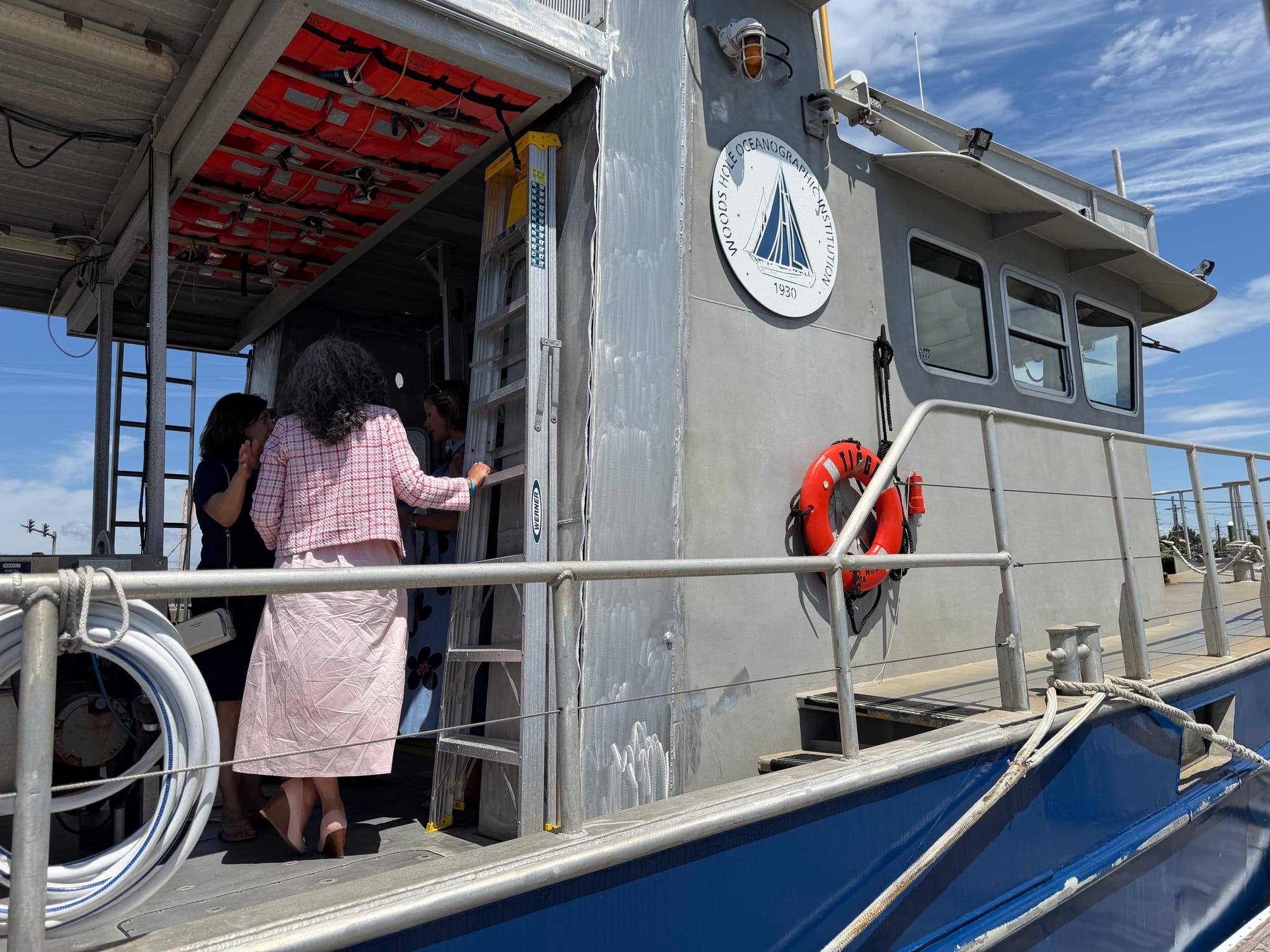
The Maritime Aquarium is currently leading shoreline monitoring efforts and hosting educational field trips for students. But it’s also exploring a permanent hub on the site that would allow it to connect research, animal welfare, and education.
Wesleyan University has already had students from seven of its courses participate in work at Manresa. Some students have begun analyzing the forest that grew up over the coal-ash deposited on the site, while others have started collecting oral history interviews.
Sacred Heart University is expanding its Project Limulus, a long-term study that examines the horseshoe crab populations to Manresa. In addition, the university plans to continue conducting interdisciplinary research around restoration ecology, conservation biology, and coastal management at the site.
And finally, Norwalk Public Schools are looking to use the site to enhance hands-on learning opportunities and provide students with potential career paths.
“We look forward to our students and staff gaining the knowledge, curiosity, and expertise to do this important work,” said Alexandra Estrella, the outgoing superintendent of Norwalk Public Schools. “This partnership will provide meaningful opportunities for hands-on learning, while helping us better understand how to protect the Long Island Sound ecosystem and Connecticut coastline for generations to come.”
Beyond Manresa
While some work is happening on site now, many of the research proposals could come to life within the next few years. But officials also highlighted that they hope the research initiative they’re launching at Manresa could replicate on other former industrial sites across the country.
Vonashek noted that even though the site is not yet open to the public, hundreds of students, teachers, and researchers have been to the site, gaining an understanding of sites that have a deep industrial history and need for remediation.
“Also a hub for future forward thinking,” Vonashek said about the initiative. “We know that there are hundreds of sites that look like Manresa all across the Northeast and being able to establish research and education programs that help us to understand sites like this better, help us to advance the whole entire area—not only just the state of Connecticut and Norwalk, but also beyond.”
Duff said that the site will help conduct research and lead conversations about “we can be more sustainable as a community, as a state, and as a nation,” and how we “adapt to an ever-changing environment.”
Want to learn more? Explore the overall Manresa Wilds project or explore the transformation of Fairfield County’s coastline—of which Manresa Wilds is a huge piece.