Hit the Gas: A Look at the Growth of Speed Cameras in Lower Fairfield County
While officials say Fairfield and Greenwich's speed camera programs have been successful, residents are raising concerns—just as other communities look to deploy the new technology.
Ask any local official across southwest Connecticut what the biggest complaint from their constituents is and the answer is almost always reckless driving and/or speeding.
That’s a main reason why local communities like Fairfield, Greenwich, and Stamford are implementing speed camera programs in their municipalities.
“Speeding is the number one complaint received by the Greenwich Police Department and the Board of Selectmen—I will get calls every day,” Greenwich Sergeant JD Smith said at a public hearing on the cameras in May.
Fairfield Chief of Police Michael Paris said in a statement that he’s personally seen some of the “most horrific crashes imaginable,” and the goal of the cameras is to help make the streets safer.
“I have stood on roadways in the middle of the night next to mangled vehicles, comforted grieving families, and witnessed firsthand the devastating consequences that speeding can have on human life,” he wrote. “These are moments that stay with you forever, and they shape how you view traffic safety. Our goal with these cameras is simple: To slow drivers down and save lives.”
But even though many residents say they want safer streets, some aren’t happy with the decision to turn to cameras.
“I believe there are real practical issues,” Greenwich resident and RTM member Danielle Eason said at the May hearing. “I also have real concerns about privacy related to the cameras. “Can other government agencies like ICE access the information? Can insurance companies or another FOIA the data? Can another state’s police department or attorney general’s office subpoena the data in a vigilante justice effort regarding women’s health care should someone seek healthcare in Connecticut?”
Let’s dive into the growth of speed cameras across the region (and the state), why communities are turning to them, and what some of the concerns are.
New State Law
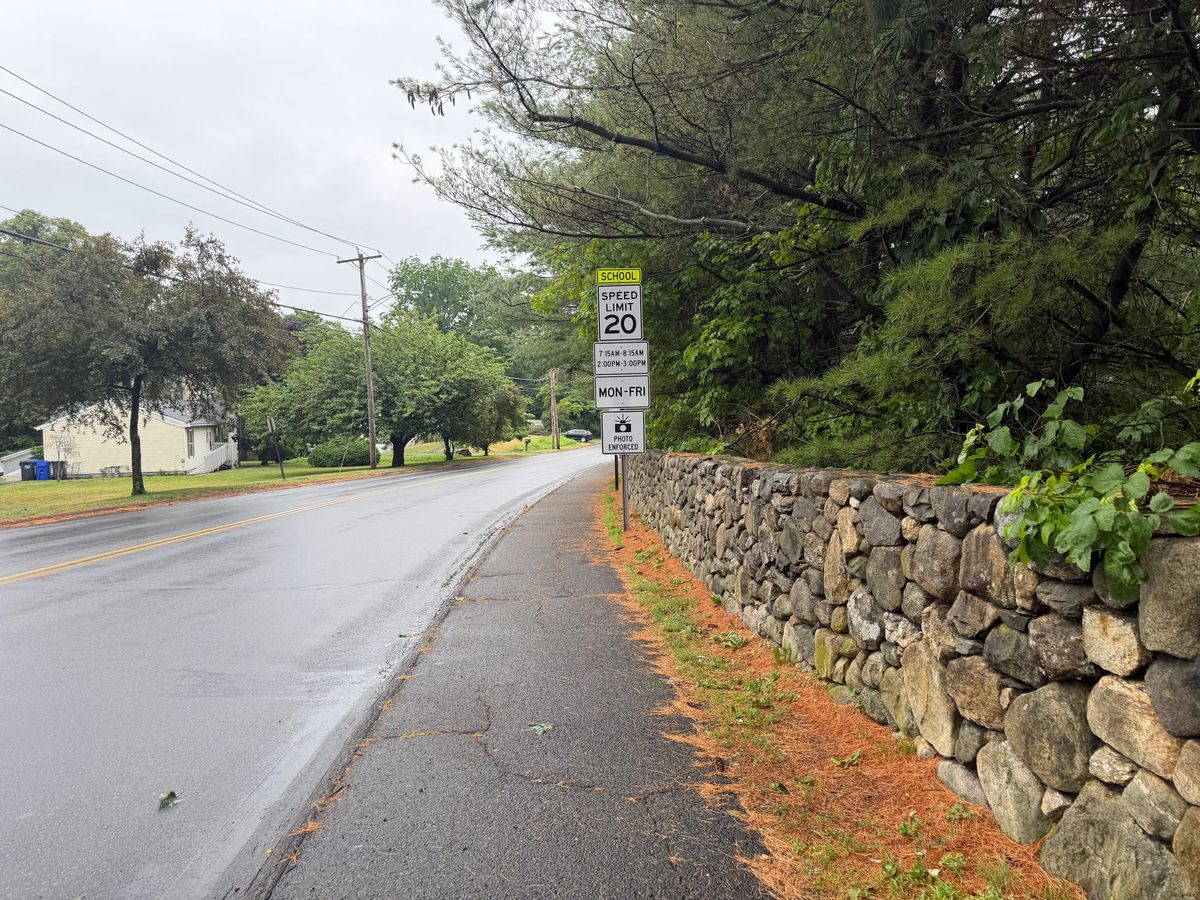
The conversation around speed cameras has to start at the state level following the passage of Public Act 23-116. The law allowed municipalities to submit plans to the state for implementing speed cameras in vulnerable areas, usually places like school zones where there are a lot of pedestrians, or places where there are high numbers of crashes.
So far around the state, 15 communities—including Stamford, Fairfield, and Greenwich—have had their plans for speed cameras approved with an additional five more under consideration.
All three are focusing their speed camera programs on school zones.
How the Speed Cameras Work
While each community has some specifics that vary (like the hours the cameras are in operation), in general the programs operate very similarly. First, a municipality has to pass an ordinance allowing the use of speed cameras in their community and then develop a plan for the cameras, including their locations, which it must submit to the state for approval.
The cameras must be located in specific areas, such as school zones or pedestrian safety zones. If a driver goes through one of these zones driving more than 10 miles over the posted speed limit, the camera captures their license plate and a ticket is created. The camera company reviews the footage to make sure the license plate is legible and there were no extenuating circumstances—like moving out of the way of an emergency vehicle—and then forwards the ticket to the police department, which can also review it and then mail out the ticket.
So if the posted speed limit is 20 miles per hour and a driver goes 31 miles per hour through that zone, a ticket will be issued.
The zones usually have posted signs that let drivers know there are cameras in operation. And before tickets were issued, communities had public notification periods and then 30-day warning periods where notices were issued if a driver was speeding instead of a ticket.
Tickets are a maximum of $50 for the first offense and a maximum of $75 for any subsequent offenses.
Benefits of Speed Cameras
For communities that have implemented the program, officials cite dramatic drops in the number of people speeding through the areas.
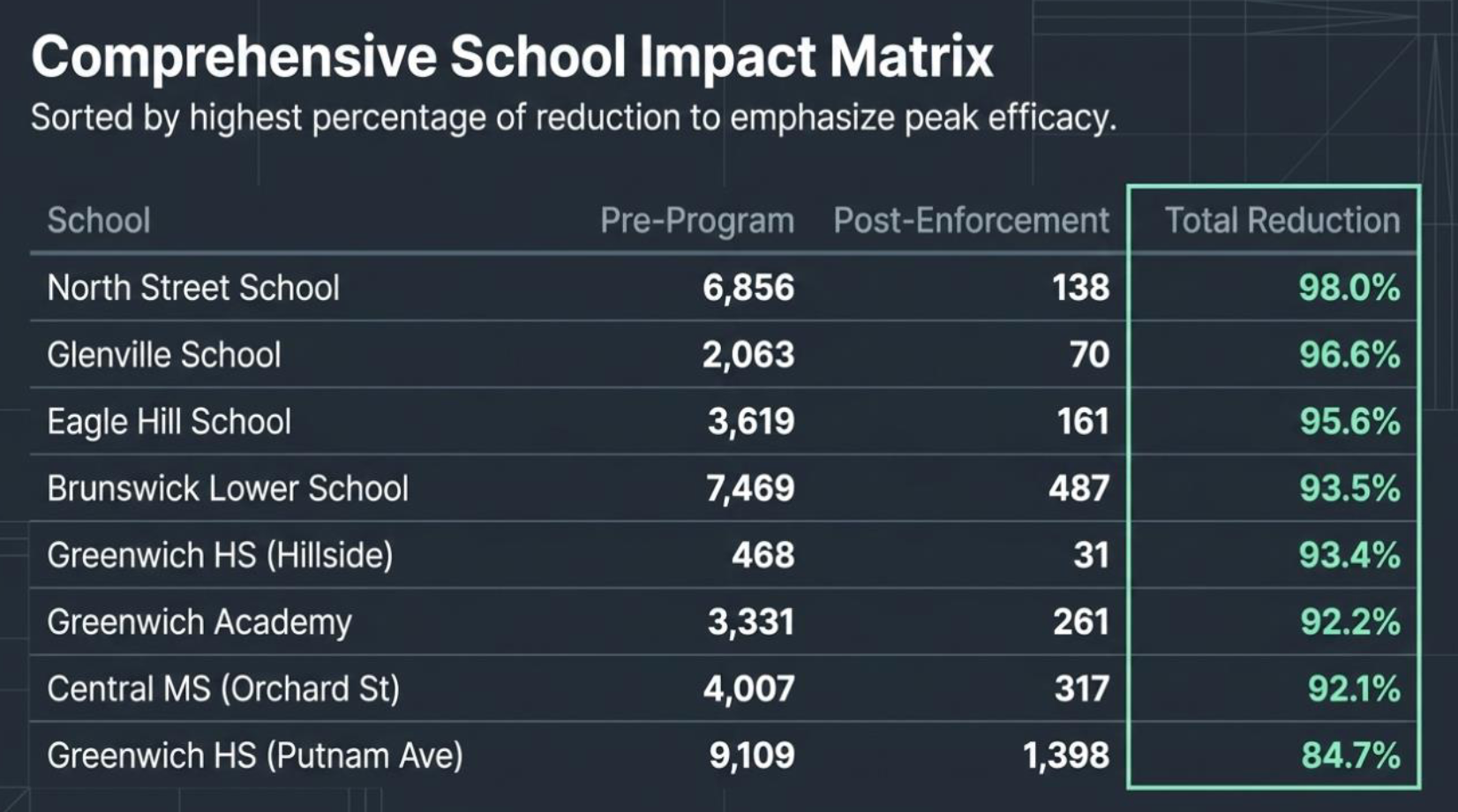
Mark Hutchinson, the CEO of Blue Line Solutions, which operates the cameras in Greenwich, said they saw a more than 90% decrease in the number of people speeding through the school zones with cameras.
Prior to their installation, the company conducted a five-day speed study across the eight school areas with cameras and found 36,922 going more than 10 miles per hour over the speed limit in those areas. By week five of having the cameras installed, that number was at 2,863 speeders.
“That is a dramatic reduction in the number of people speeding,” he said at a public meeting in May. “That is not a money grab, that’s a safety program—92.2% reduction in speeders going through these school zones, that’s something this community should be very proud of.”
Fairfield saw a drop of more than 85% since the cameras were installed in eight corridors in town. On the first day of warnings, 7,363 drivers were clocked speeding. By June 16, just 1,048 received violations that day.
Altumint, the company that operates Fairfield’s cameras, found that “even the worst speeders changed course.”
“The Top 100 vehicles set off the cameras more than any others—an average of 41 times each, one as many as 134,” the company reported, but said that on average, those top vehicles reduced their speed by 80% from the initial warning period to the start of enforcement.
Paris wrote that the town saw a 33% decrease in speeding just during the 30-day warning period for drivers—before actual tickets were handed out.
“The reality is that speed kills, regardless of the time on the clock,” Paris said. “As with any new program, we will continue to evaluate its effectiveness, identify areas for improvement, and make adjustments where appropriate. Our focus will remain on one thing: reducing dangerous driving behavior and improving safety for everyone in our community.”
Drivers also have said that the cameras have made them more aware of their own speeds both in the zones and in other portions of town.
Cathy Steel from Greenwich said she’s “learned to tolerate and maybe appreciate the speed cameras,” as they’ve reminded her to slow down both in the school zones and around town.
“I appreciate them because they are calming traffic,” she said, adding that the town needs to do a better job at signage to let drivers know they are entering an area with cameras.
Driving at slower speeds also means that if a crash were to occur, there’s a lower risk of injury for a pedestrian or fellow driver who was hit.
“Speed dictates survivability for child pedestrians,” Sergeant JD Smith, from Greenwich, said, noting that a child has about a 10% survival rate if they’re hit by someone going 40 miles per hour.
Concerns about the Speed Camera Programs
But despite these successes, many residents say they don’t want the cameras in their communities. Many cite concerns about privacy as a main reason.
“I’ve spent years advocating for the safety of our schools and our roads, and as much as I am for traffic safety I am concerned about these speed cameras,” Greenwich resident Ashley Cole said. “There are multiple issues, privacy data collection, denial of due process and potential conflicts of interests.”
But others said they don’t agree with the camera locations or how the municipalities have gone about this process.
“It gives me pause that a for-profit third party vendor chooses high traffic locations because they’re paid per citation,” Greenwich resident and RTM member Maya Tikio said. “As a result the locations don't seem to coincide with pedestrians but rather the number of cars.”
In Fairfield, State Senator Tony Hwang asked the local leadership to put a pause on the program after about 190,000 warnings were issued to speeders during the 30-day warning period.
“Those numbers are staggering and alarming. However, they are not surprising. What they reveal is that speeding and breaking speed limit laws has become normalized in our communities and throughout our state,” he said at a press conference. “Let me be clear: I support speed and red-light cameras because they are an important tool for police to improve roadway safety. We also need to recognize the frustration and concern from residents who feel blindsided by the implementation. If people do not fully understand the program, we risk undermining the broader public safety mission.”
And others have said they believe the cameras are there to replace police officers, something officials from both Fairfield and Greenwich pushed back on.
“Our officers conduct thousands of traffic stops every year, but we cannot physically be everywhere at once,” Paris wrote. “These cameras act as an additional tool to encourage compliance with the law and improve safety in areas where speeding has become a serious concern.”
What’s Next for Speed Cameras
For residents in Fairfield, the town is hosting a public information session on many of its roadway safety initiatives, including the speed camera program, on Tuesday, July 14 at 7 p.m. at Fairfield Warde High School.
“Our residents have thoughtful feedback to offer and questions to ask about these roadway changes, and we want to offer a public opportunity to do so,” said First Selectperson Christine Vitale in a statement. “This session offers the goals behind these initiatives as well as sharing the crash and injury data that showed the Town we could and should be doing more to make our streets safer. Public input is an important part of the conversation we want to have with our neighbors.”
Other communities look to add speed cameras soon.
Stamford has an approved plan with the state DOT to add 14 cameras to school zones across the city. Norwalk has approved an ordinance that allows the city to put together a plan and submit it to the state, but the city has yet to do that.
You can learn more about the communities’ speed camera programs on their websites:
Greenwich Speed Camera Program