Stamford, Norwalk, and Bridgeport Approve Budgets Totaling $1.5 Billion+ Combined
Bridgeport, Norwalk, and Stamford officially approved their budgets for the 2026-2027 fiscal year, which begins July 1.
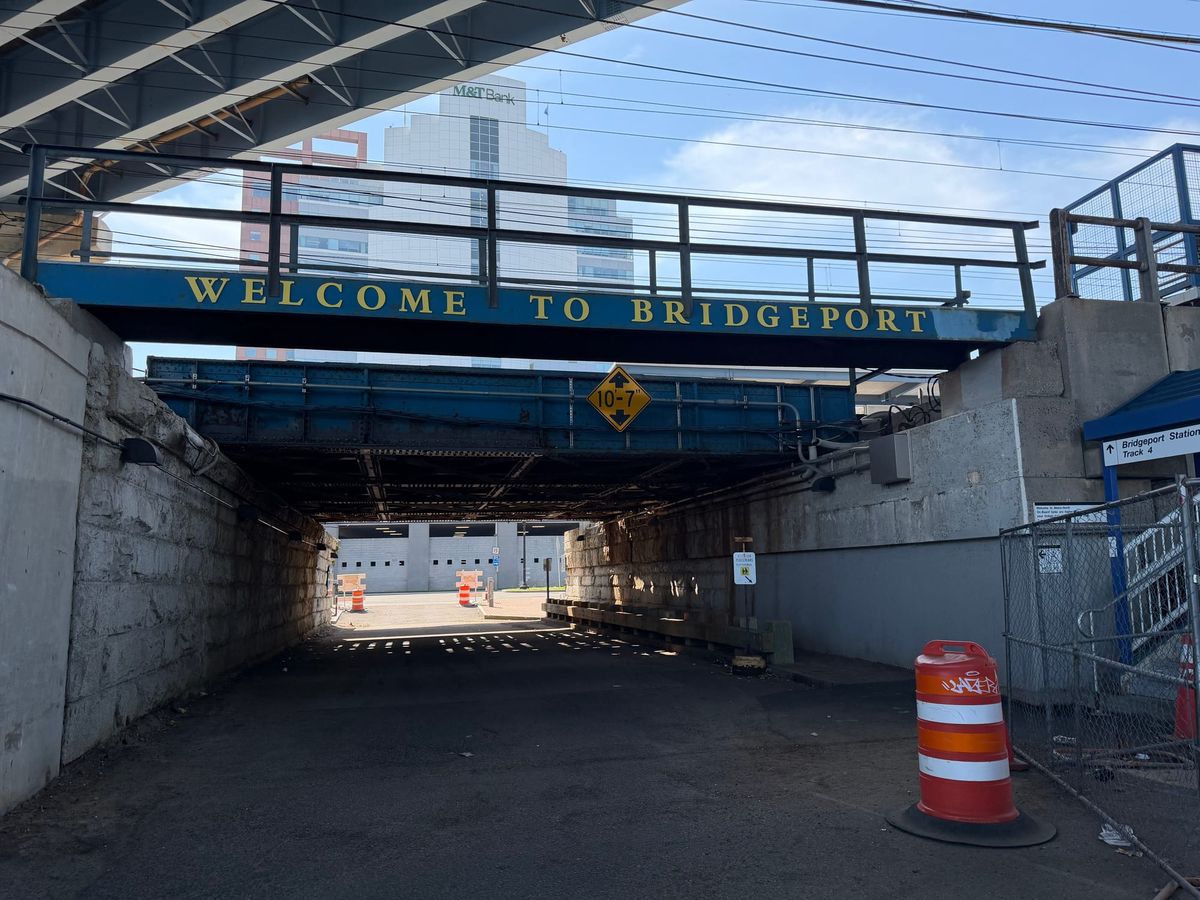
Budgets for the three major cities—Stamford, Norwalk, and Bridgeport—in Lower Fairfield County are officially set.
Ending what some officials called a “historic” budget season and one others called “a challenging year,” the cities adopted budgets that together combine for more than $1.5 billion in spending. The adopted budgets set the stage for the next year ahead—determining how much you’ll pay in taxes, what services are added or cut, and how your local government and school system run.
Stamford adopted a $726.4 million budget, Norwalk adopted a $478.6 million budget, and Bridgeport adopted a $655 million budget.
In addition, each community received additional funding from the state after Governor Ned Lamont and lawmakers said they saw some of the challenges local municipalities were having. Stamford and Norwalk each received around $3 million in additional state funding combined for the schools and city, while Bridgeport received about $25 million from the state.
“By closing funding gaps for our schools and municipalities, we can help communities avoid raising property taxes while keeping classrooms running and local services strong,” Governor Ned Lamont said in a statement. “Affordability is a top priority for this administration, and this investment delivers real relief where people feel it most.”
Let’s look at each municipality’s adopted budget and what it means for residents.
Stamford
Mayor Caroline Simmons initially proposed a $747.4 million operating and special fund budget for the city of Stamford. After months of deliberations between the Board of Finance and Board of Representatives, both bodies approved a $726.4 million budget for the city.
“I've said many times from the very beginning of this process that the Board of Finance would have to make some very hard decisions with respect to these budgets, to retain those items and those services that were absolutely essential to the city,” Board of Finance Chair Mary Lou Rinaldi said in April.
Rinaldi, who called this year’s budget more difficult than the COVID year budget, said that the board believed the initial ask of a 7.89% increase from the mayor was too much for residents to bear.
“The members of the Board of Finance believe that this level of increase is unsustainable and causes tremendous hardship to the citizens of Stamford to impose a tax increase of this magnitude when people are struggling with higher food and gas prices, higher rents and other expenses—it just didn't seem fair to us,” Rinaldi said.
One of the biggest cuts the Board of Finance made was to the Board of Education budget, reducing it by $12 million.
Board of Finance member Richard Freedman, who initially proposed the cut, said he viewed “that effectively as a $2.3 billion reduction to the superintendent's budget—I know that's not how it will be headlined in the newspaper or talked about around town, but that's how I view it.”
That’s because he noted the superintendent had initially requested a $365.7 million budget, which the Board of Education voted to increase to $372 million. Freedman’s plan got rid of all of the increase, and then included cuts to the health insurance line (now that the rates had been finalized and the estimates could move to actual numbers), and factored in additional funding from the state.
The Board of Representatives made a few more small trims to the budget at its meeting in early May. Now the Board of Finance will meet on May 18 to officially set the mill rates for the city.
At the same time, the Board of Education has to decide how to reconcile its budget with the reductions to its initial ask.
Superintendent Tamu Lucero had proposed cutting 76 positions as a part of the efforts to reduce the budget, but the Board of Education postponed a vote, the Stamford Advocate reported.
Norwalk
The city’s Board of Estimate and Taxation officially voted to approve a $478.6 million budget after months of back and forth with the City Council over how much money the schools should get.
The Board of Education initially asked for a 6.85% increase to its budget from last year. In her first proposed budget, Mayor Barbara Smyth included a 4% increase for the Board of Education. But after hearing from parents and students, the City Council voted to raise that to a 4.9% increase.
However, the Board of Estimate and Taxation, which ultimately has the final say on financial decisions in the city, returned it to 4%. After some back and forth, and the addition of about $1.9 million in additional education funding from the state, the Board of Estimate and Taxation voted to give the Board of Education a $257.4 million budget, a 4.12% increase from the previous year.
“The goal was to get to 4.9% increase overall [for the schools],” Norwalk’s Chief Financial Officer Jared Schmitt told the Board of Estimate and Taxation in early May. By moving the local increase up to 4.12% and combining it with the state aid, that allowed the schools to receive a 4.9% increase, he said.
But Anne Yang, a member of the Board of Estimate and Taxation, felt that it was “going in the wrong direction.”
“The cities and boards of educations are getting additional funds and the premise of the additional funds going to the cities is taxpayer relief and what I see in this budget is the taxpayer’s burden increasing and not decreasing,” she said. “I don't understand why there needs to be any kind of increase over what [the BET already] passed.”
Other members of the financial body felt that this was a “fair compromise,” as the Chair Ed Abrams put it.
“Given the balance of comments we’ve seen from the variety of people across the city as well as the very clear message sent by the city council and constituents they represent, I believe it to be a fair compromise, thanks to the state, and it limits the impact to the city of Norwalk,” he said.
Still, despite the additional funding, the Board of Education still had to make cuts to its budget to get down from its initial proposal as there was about a $5 million gap between what was requested and what was approved. Superintendent Alexandra Estrella and her team made $1.2 million in “school enrollment right-sizing reductions,” in addition to other cuts such as reducing nearly $600,000 worth of positions in central office, eliminating a second assistant principal at West Rocks Middle School, and leaving a federal program that allowed all students to get free breakfast and free lunch.
“So over time, the district will see an impact,” Estrella said, according to a report from NancyonNorwalk. “It might not be this year or the next, but as services continue to deplete and the system becomes exhausted, because we’re asking so much from people, it will have an impact over time.”
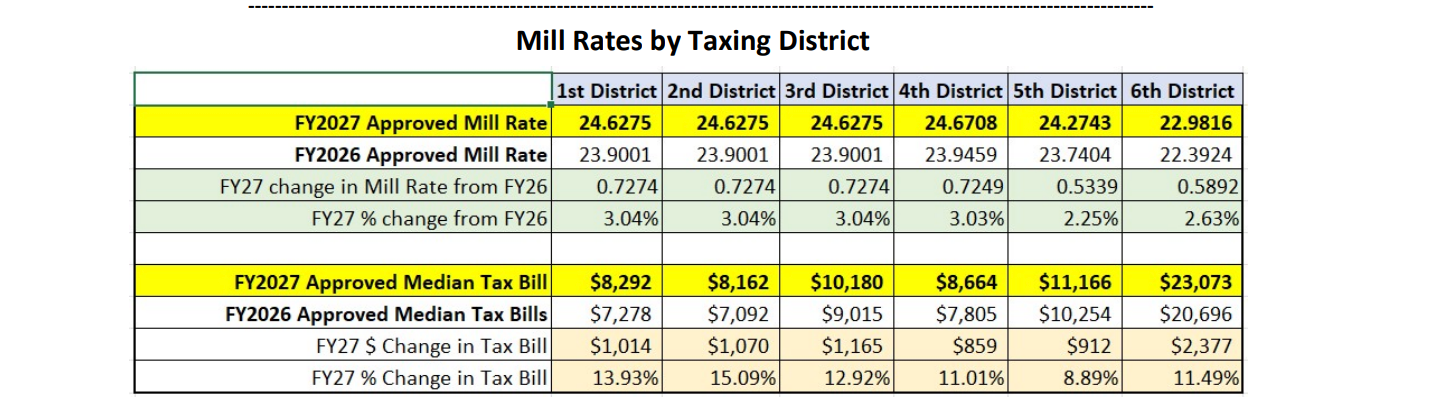
Here’s a look at the mill rate by taxing districts, according to the city’s finance department.
Bridgeport
The City Council voted to approve a $655 million budget, which increases local funding for education, provides free park access to residents, and reduces the city’s mill rate from 43.45 to 27.75. The main reason this was possible is because the city’s Grand List grew 62.5%, allowing the city to benefit from having more, higher valued properties to tax. The lower mill rate doesn’t necessarily mean that all residents will see a tax decrease, as those with properties that went up could also see higher taxes.
"This budget is a gamechanger for Bridgeport," said Mayor Joe Ganim in a statement. "Our city’s growth has outpaced most of Connecticut, signaling a high level of investment and confidence in our future. This budget not only proposes the lowest mill rate in decades but makes the largest investment ever in our schools and libraries, expands senior and veteran tax relief, gives residents free access to our parks, and funds the expansion of supervised balloting.
The final budget increases how much local funding is going to the schools. Ganim originally proposed an additional $10 million over two years, but changed it to $12 million over two, with $10 million coming this year.
The city also decided to allocate $10 million in additional state funding to the Board of Education—on top of the additional $15 million the Board of Education got directly from the state.
“This plan is the result of true partnership among my administration, the state delegation, the City Council, Superintendent Avery, and the school board,” Ganim said in a statement. “We are doubling down on the new aid secured by our delegation in Hartford by putting our local resources to work for our biggest priority—our youth. This collective effort is truly historic, and a strong signal that we are supporting Dr. Avery and the Board at all levels of government as they work to resolve issues within the school district."
The funding will help offset massive reductions in staff and services, which administrators warned could happen. In Avery’s initial proposed budget, he said that to keep things “status quo” would require a $47.7 million increase. Avery reduced that request to $44.1 million. The Board of Education issued a request for an $106 million increase, stating that the amount reflected the needs of the district.
Still, officials praised the additional $35 million coming the district’s way this year.
“I am extremely pleased to have the strong support of Mayor Ganim, the delegation, and Council members as we work to improve our school district,” Interim Superintendent Royce Avery said in a statement. “This new state and local aid will save many essential jobs and prevent us from making decisions that would devastate our school system. I look forward to continuing this partnership in the years to come as we continue to make progress and reform district operations.”
School officials and Board of Education members were in the audience when the City Council voted to adopt the budget earlier this month.
“I want to say that this is probably one of the best budgets we’ve had in his city in a long time,” council member Ernie Newton, who chairs the council’s Budget and Appropriations Committee, said. “We tried to address seniors, we tried to keep the mill rate down but I’m really proud to say we finally did our part for the education of our children…I want to thank the Board of Education for their teamwork. This is what happens when people come together for a common issue.”