Inside the Transformation of Norwalk’s Wall Street
Norwalk's Wall Street is home to new businesses, new housing, and new investment—with more to come.
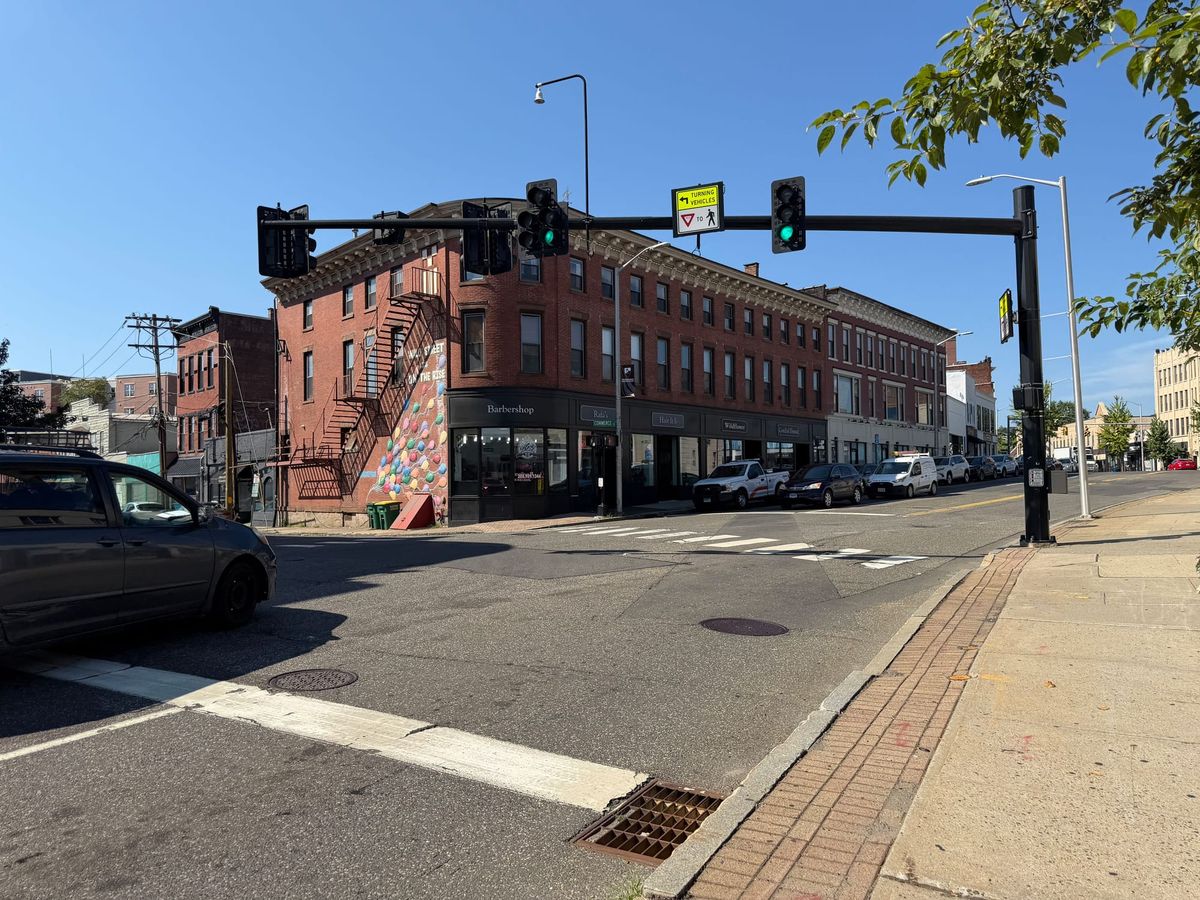
The Wall Street area has always been an important hub in the city of Norwalk. And now it’s undergoing a major transformation, fueled by millions in private and public investment. Thanks to new businesses, new housing, and new infrastructure, “Wall Street is on the rise,” as one of the many murals along the corridor states.
But it wasn’t an easy road to get to this point, and it hasn’t been without some setbacks.
The area is home to some of the city’s major institutions, like the main library, post office, bus depot, and—at the end of it—the Norwalk Green. It was the commercial hub of the city for decades, and has been home to everything from name brands like Sears to local businesses, like Kiddie Town.
However, in 1955, a flood tore through the area and decimated many of the buildings along the Norwalk River. Since then, efforts to revitalize the area have come and gone, with bouts of success and some failures.
Recently, however, new organizations like the Norwalk Conservatory of the Arts and the revitalized District Music Hall (formerly known as the Wall Street Theater), along with new businesses have all helped bring people to the area. In addition, new housing developments are underway, which business owners hope will bring even more customers to the area. And a $30 million project to invest in public infrastructure in the area aims to make it easier for people to get around.
In fact the city dubbed 2024 “the year of Wall Street” as that’s when investments began really taking off in the area and have continued since.
So with that being said, let's explore what’s happening on Wall Street.
New Businesses, New Retail, New Experiences
At the heart of the neighborhood’s revitalization has been the influx of new commercial tenants to the area, which have drawn people—and attention—to the area.
There’s the Norwalk Conservatory of the Arts, which was founded in 2018 and welcomed its first official students in fall 2024. The school aims to provide an “exemplary arts education to aspiring artists and students, positively impact the local community of arts, and create connections within the music, theatre, and television and film worlds.
Also in 2024, the Wall Street Theater rebranded as the District Music Hall, and has revived itself as a live music and entertainment destination, with some upcoming shows including Phillip Phillips in November. And there’s also the SoNo Academy beauty school, where students can take courses in cosmetology and makeup artistry.
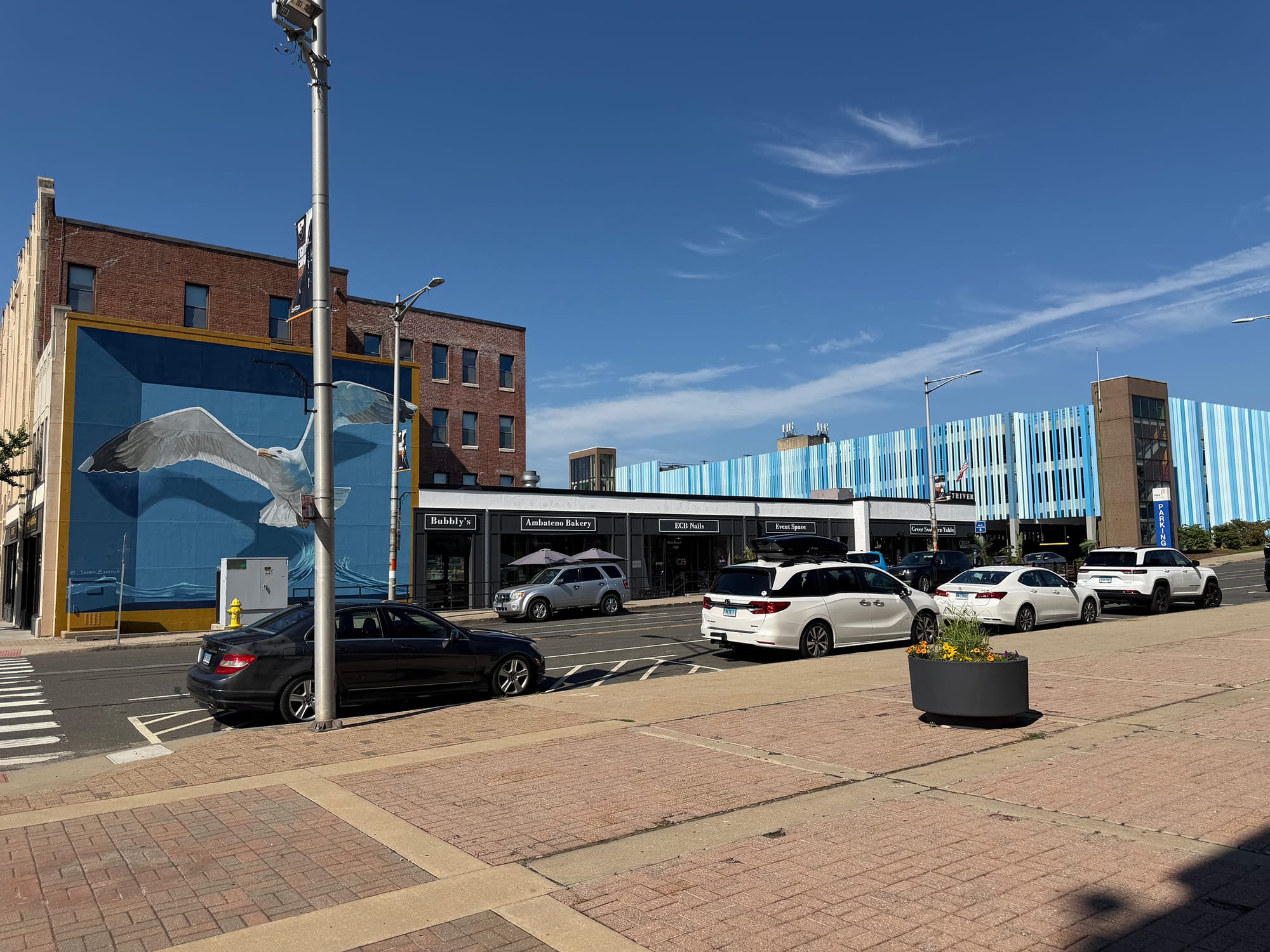
In addition, some new high profile restaurants, cafes, and bars have drawn customers to the area—as well as some long time staples. Greer Southern Table opened its doors in 2023, just across the street from Banc House, a local institution. But Greer Southern Table wasn’t totally new to Norwalk, as its owner Greer Fredericks had previously operated Peaches Southern Pub in the area and shut it down in 2020. There’s also the Flying Scotsman, a whiskey bar and Bar Bushido—which has both a more elegant restaurant in the back and a front casual dining room, with arcade games—in addition to some staples of the area, like Cafe Aroma.
At the heart of many of these new developments is developer and investor Jason Milligan, who is the landlord of “over 100 commercial tenants,” his attorney Adam Blank recently told the Norwalk Planning and Zoning Commission.
New Housing (and Hotel) Developments
Milligan and the city of Norwalk have had their share of controversies—including multiple lawsuits over property ownership disputes as well as critical back and forths. However, as Blank told the commission in August, “there is no one more invested in the success of the neighborhood.”
Milligan is in fact at the center of two new projects—one currently under construction and one in front of the commission. If he receives the approvals he’s looking for, they could add more than 300 units of housing to the area, providing even more vibrancy to the area.
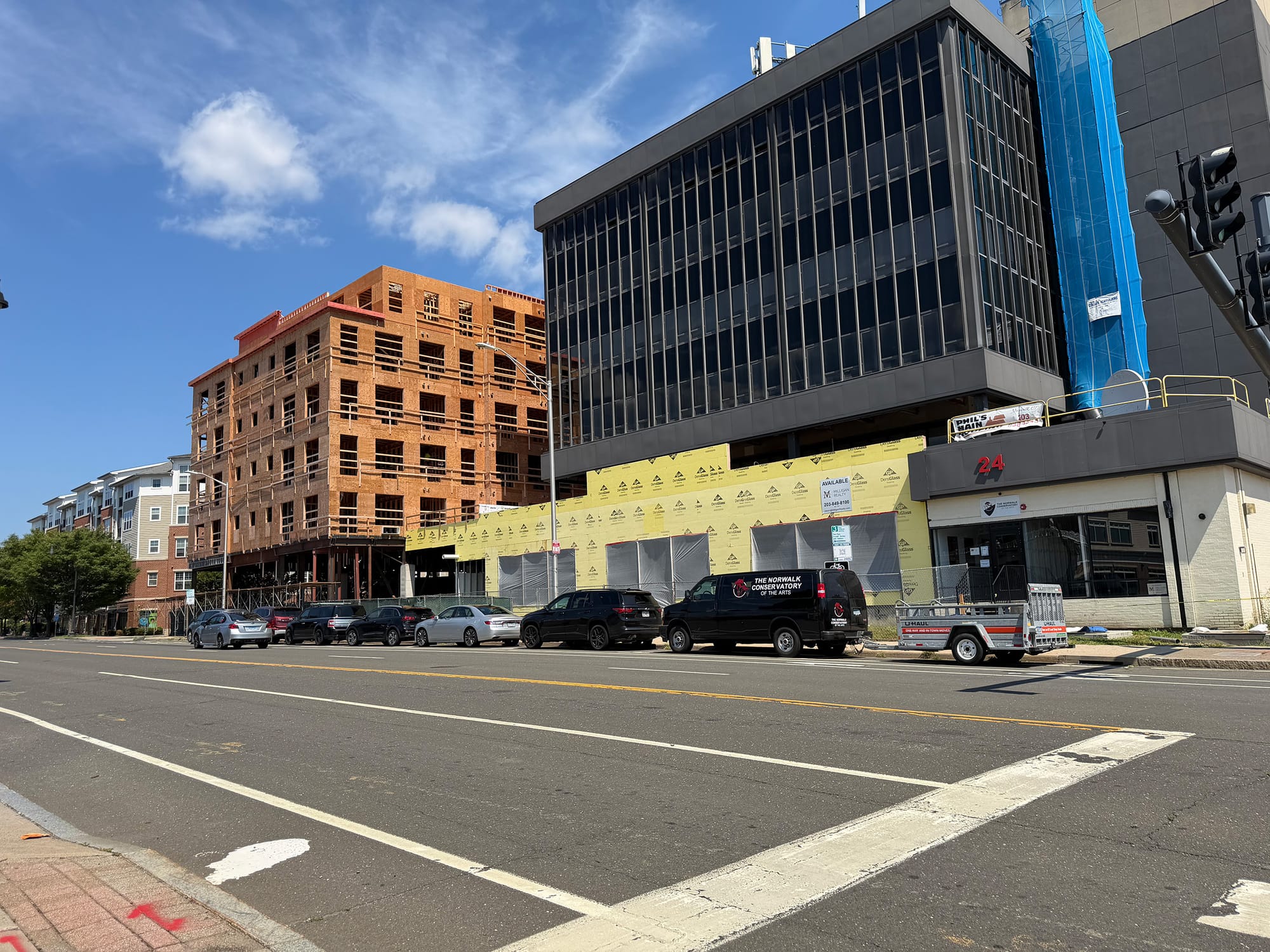
Construction is underway at 24 Belden Avenue to bring an 100+-unit Hilton Hampton Inn hotel, along with 96 apartments, and a refurbished office building.
At the time, Blank told the commission that because Milligan owns dozens of properties in the area, he “needs office space to throw people on the street for lunch to make his other businesses work as well,” which is why the office building will stay even though it currently has a low level of occupancy.
Milligan had also previously received an approval for a project that included 224 units—a mix of housing and extended stay hotel units—at 23 Isaacs Street. However, after the Belden Avenue project was approved, Milligan told NancyonNorwalk that the projects could “cannibalize each other a little bit,” and is asking the Planning and Zoning Commission to allow for him to shift the Isaacs Street project to a 207-unit apartment complex.
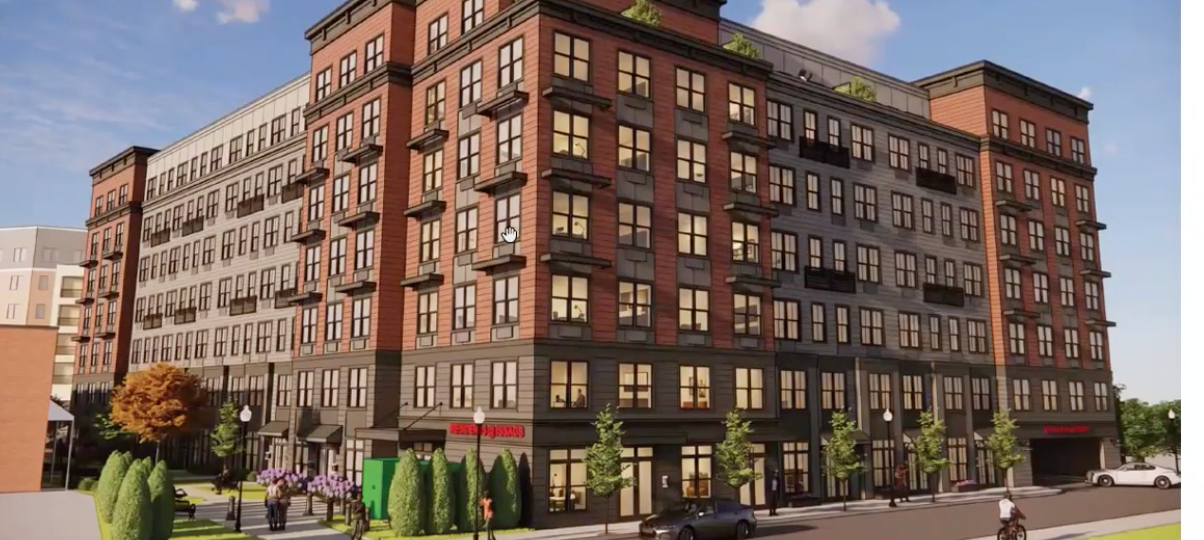
Milligan called himself “an uncomfortable change agent,” who is “willing to make mistakes and try again.”
But he said this project will bring people “in and around the neighborhood doing great things.”
“A lot of them are going to live and work, and we hope that a lot of them don't even have cars,” he told the commission.
Only one member of the public spoke during the public hearing on the project—Marc Alan, who works at Factory Underground, a production company and recording studio in the area, and has been an advocate of the arts community in Norwalk, particularly Wall Street.
“Jason and I haven't always seen eye to eye on everything—Jason is a tough adversary, but he's a great teammate. And that's what he's really been for all of us in the Wall Street neighborhood. There's been so many positive things that have come out of what he's done,” he said. “Jason is all about naturally affordable housing, and I can just tell you from my own perspective—I'm all about breathing life into the arts and cultural district of Norwalk, and having more options for affordable housing for artists, musicians, and students…That's really huge for this community, and so I'm really in favor of this.”
The commission asked the city staff to put together a resolution to approve the property—while noting it wanted to make sure a few of its concerns were addressed, particularly confirming that if the zoning was changed to allow the 207 units at this site it wouldn’t be considered spot zoning.
Wall Street Place Development (Finally) Close to Completion
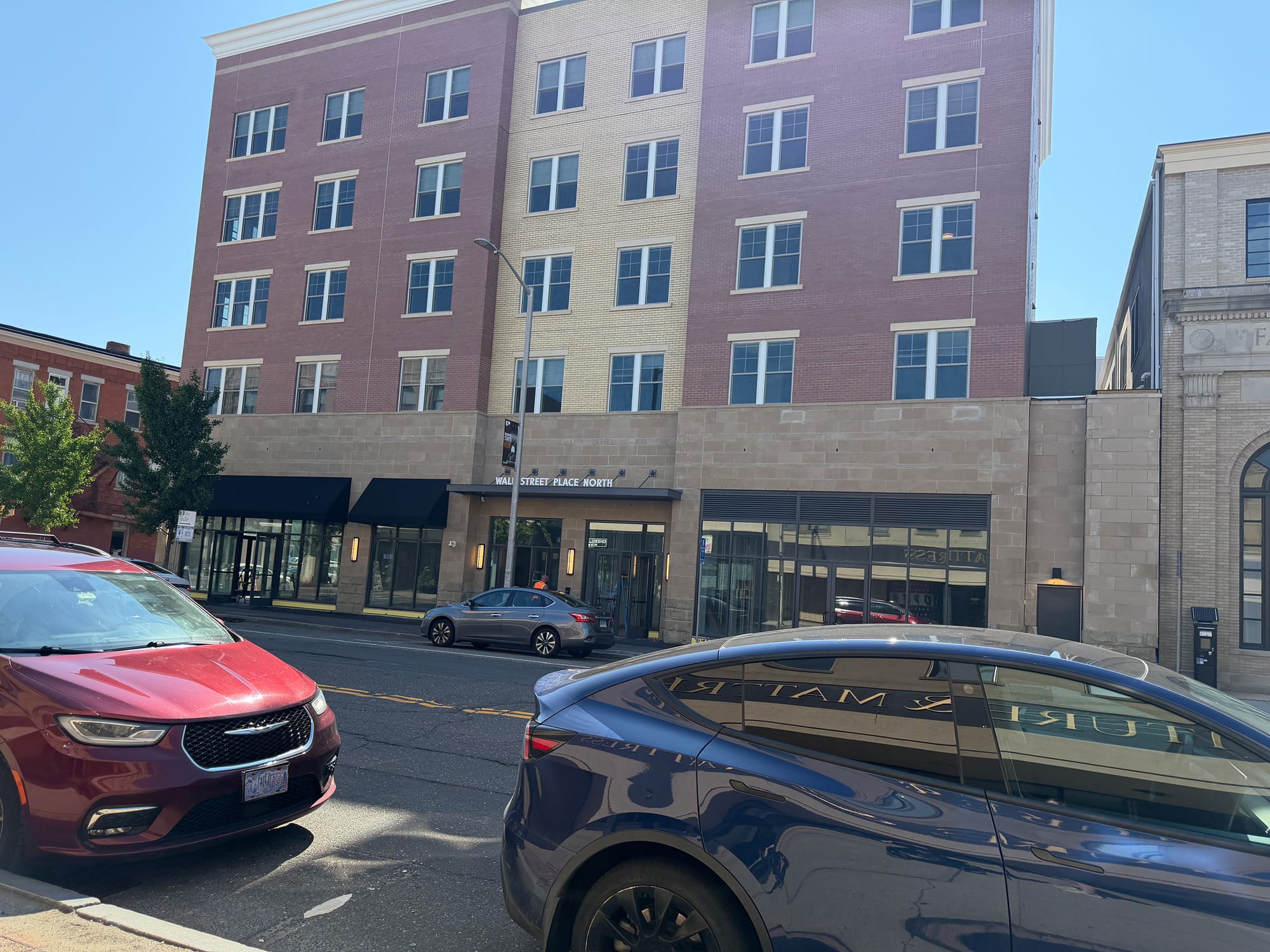
Very close to the Isaacs property is the Wall Street Place Development, which honestly is at the center of this street—and this story.
The project dates back to 2004 and has faced almost every issue—financial foreclosures, lawsuits, stalled construction, bankruptcies and beyond. Phase 1 of the project, located at the corner of Wall Street and Isaacs Street began in 2015, but construction was stalled as the developer ran out of money and Citibank foreclosed on the site. From about 2017 until 2022 or so, the half-completed structure sat wrapped in Tyvek construction materials, leading many in the city to dub it the Tyvek Temple.
Milligan was also at the heart of this project, as he purchased two properties that were supposed to be included in the development and ended up in years of litigation with the city around this project. In 2023, however, the lawsuits were settled and the project began moving forward.
The first phase of the project is now leasing its 105 apartments (all of which are income-restricted, meaning you have to make a certain percentage of the area median income to rent there) with construction wrapping up soon.
But all of the development isn’t always supporting businesses in the area. Rebel Daughter Cookies, which was located at 21 Isaacs (which is part of the 23 Isaacs development) closed this summer due to the construction at Wall Street Place and the future plans for the site.
“You've built this business, as in my case, as a third child, putting blood, sweat and tears and a whole lot of family money into it, and of course, when I leased this space back in 2022 I had no idea that it was planned to be bulldozed and I have put a lot of money into the building,” Anne Grossman, the owner, said.
While Grossman has said she wants to reopen at some point, she hasn’t announced a new spot just yet and said closing her business, even temporarily, was a painful decision.
“After I made the official announcement, I was crying at the drop of a hat. And people would come in and you think that you're fine, and you've got all the crying out of the way, and then someone will bring it up and say, ‘I'm so sorry,’ and you realize that you're still kind of grieving the loss,” she said.
Infrastructure Investments
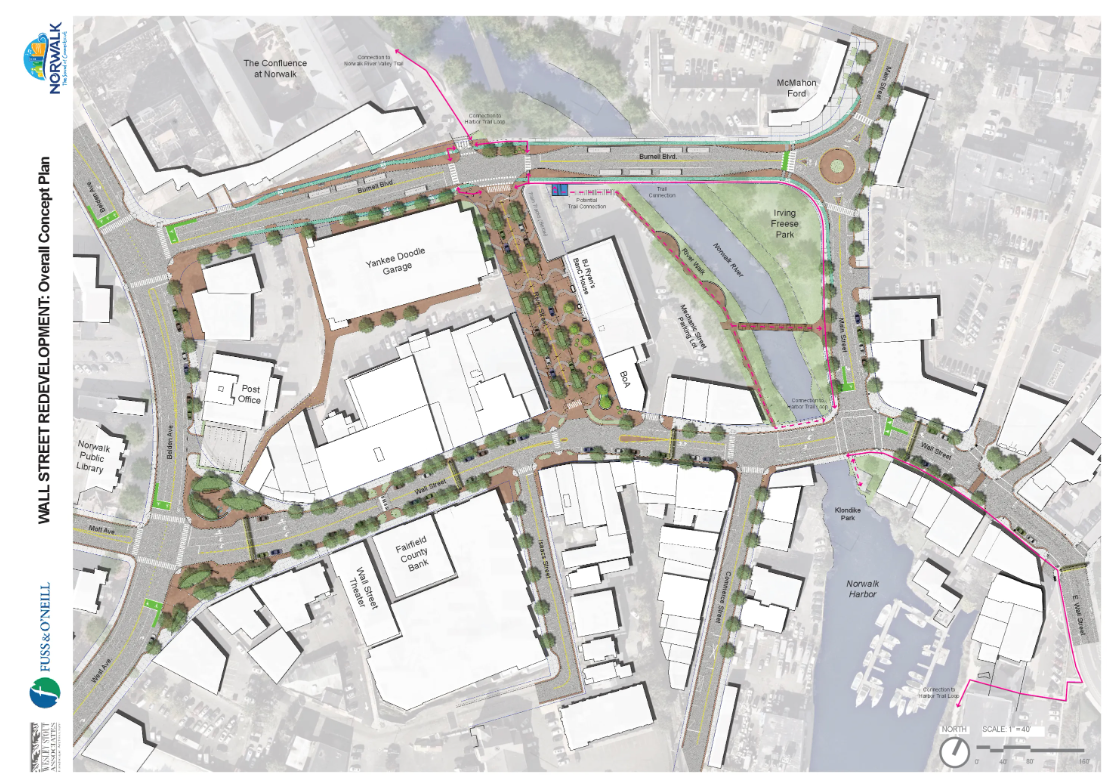
While private funding has fueled a lot of the development on Wall Street, the city—with help from state and federal funding—is also investing about $30 million into the area.
“For more than 35 years, Norwalk has envisioned improvements to the streets, intersections, and sidewalks in the historic Wall Street and Belden Avenue area,” a statement from the city reads. “While many ideas were proposed, none moved forward—until now. The City has secured full design funding and identified an additional $30+ million for construction, bringing long-awaited upgrades to the neighborhood.”
The goals of the project include creating safer intersections and crossing, improving pedestrian and cyclist experiences, creating public spaces for community events, connecting to trails and bike routes, adding street trees, improving the bus hub, modernizing the Yankee Doodle parking garage, and more.
Some of these items have already been completed. For example, Burnell Boulevard is now a two-way road, and High Street and Knight Street traffic patterns have been changed. The first phase of the overall project, which includes streetscape improvements on East Wall Street, is wrapping up this summer. And the first phase of improvements to the Yankee Doodle garage are complete.
Mayor Barbara Smyth called the Phase 1 Yankee Doodle garage improvements “a very important milestone that reflects our continued commitment to the businesses, residents, and visitors that make the Wall Street district a very important part of Norwalk.”
Other improvements that are to come in later phases of the project include: the reconfiguration of the intersection of Wall Street, West Avenue, and Mott Street; a traffic circle on Main Street at the intersection of Burnell; enhancements to River Street to make it more pedestrian friendly; gateway arches to highlight the area, and more.
Milligan told the Planning and Zoning Commission that these changes are the ones that will continue to transform the area.
“We're putting $30 million into infrastructure—we want people moving around…You should be moving in and around that neighborhood, and that's what this is going to do,” he said.