Build It and They Won’t Come: Local Businesses Make Way for Empty Space in Lower Fairfield County
Across Lower Fairfield County, businesses are being forced to move or close to make way for development. Often, those projects bring commercial space that sits vacant.
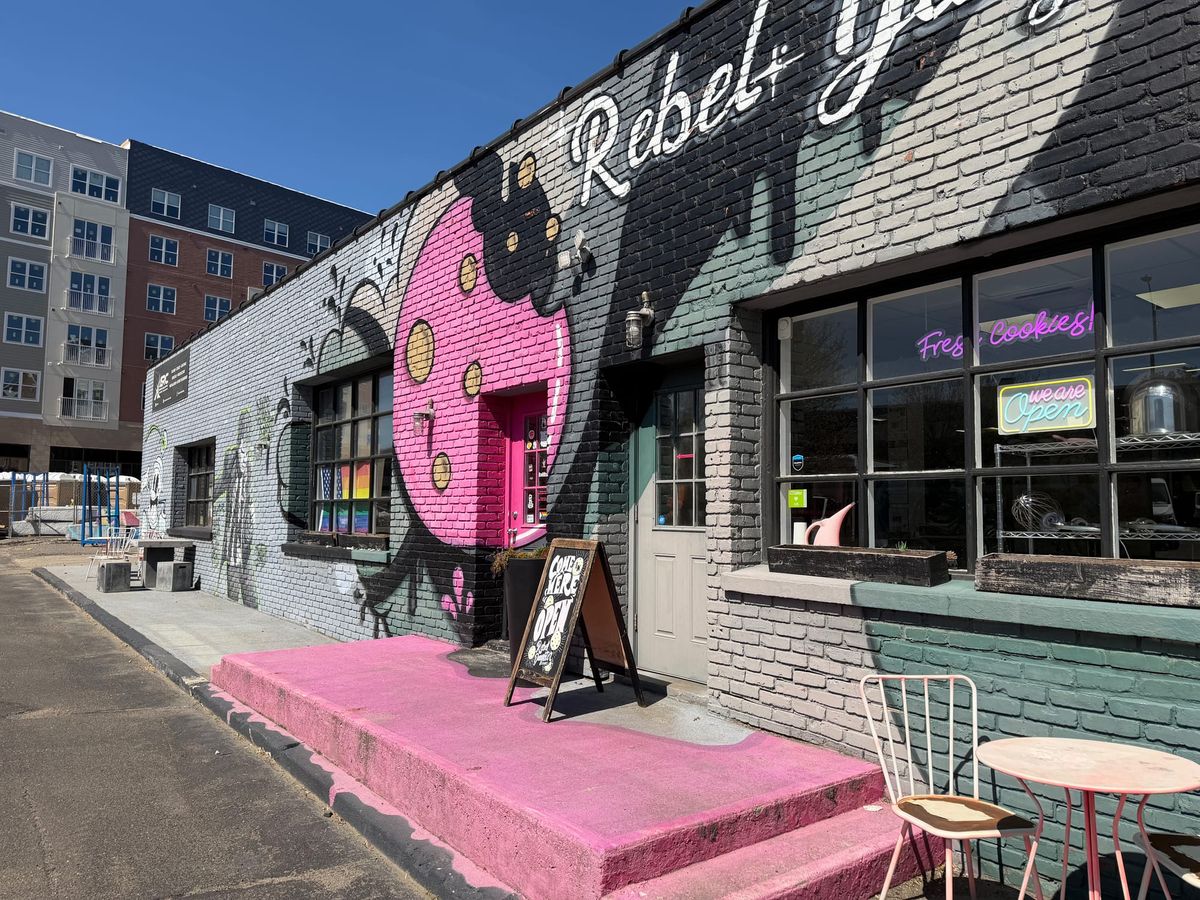
For Anne Grossman, the owner of Rebel Daughter Cookies in Norwalk, all of the issues started about a year ago. It began with one the roads to her business being closed. Then came the construction noise, followed by equipment taking up designated parking spots—all of which led to frustrations from customers.
“Foot traffic has been down, but the people who do come in—it seems like nine out of 10 people are complaining about how hard it was to find us,” she said. “And if they were able to find us, how they were dodging the heavy construction equipment and felt like things were going to be falling on their heads, or they were getting yelled at by the construction people, or by the cops who are blocking the road. And so it just has not been a pleasant experience.”
After months of this, Anne officially announced her decision to close Rebel Daughter Cookies, at least at its current location.
The building—which Anne designed and created to embrace the vibe of the store—is located off Leonard Street in Norwalk, behind the Wall Street Place Development project.
The project, which is located at the corner of Wall Street and Isaacs Street, has been stalled, stopped, changed hands, and more over the past decade, as reported by NancyonNorwalk, but work really began over the past two years. The goal is to have renters in later this year.
The plans call for 155 mixed-income rental apartments as well as spaces for retail and restaurants. But while the stated goals of the project include bringing “new life, activity, and opportunity to the Wall Street Corridor,” it also means displacing businesses like Grossman’s. She’s decided to close in May—with the hope of finding a new space to reopen in.
“After I made the official announcement, I was crying at the drop of a hat. And people would come in and you think that you're fine, and you've got all the crying out of the way, and then someone will bring it up and say, ‘I'm so sorry,’ and you realize that you're still kind of grieving the loss,” she said.
Grossman noted that she put a lot of work into the current building, so to have to close it is extremely hard.
“You've built this business, as in my case, as a third child, putting blood, sweat and tears and a whole lot of family money into it, and of course, when I leased this space back in 2022 I had no idea that it was planned to be bulldozed and I have put a lot of money into the building, not realizing that this was the ultimate goal of my landlord, which is frustrating,” she said.
And she’s far from the only one.
A few miles down the road, the building of the locally beloved distillery 1420 SoNo is also scheduled to be demolished within a year to make room for 32 apartments.
Just a few towns over in Fairfield, at least three businesses—Las Vetas Lounge, Catch a Healthy Habit Cafe, and the Fairfield Barbershop—have to move from their location on Unquowa Road to make room for 50-unit residential building, which was initially denied by the town’s Planning and Zoning Commission in 2022. But the developer appealed in court and eventually won. The revised plans call for a 5-story building with 50 units, of which 8 are affordable, and two retail spaces.
But at the same time, as these new mixed-use developments pop up around the region, they’re adding commercial spaces that sit vacant sometimes for months.
Let’s dive into these opposing trends—and what officials are trying to do to address some of these issues.
Forced Out
Many of the businesses that have been forced to move or close have devoted customers, local residents who say they don’t want this to happen.
“Then there’s the demolition of SoNo 1420 Distillery—it’s a neighborhood gem, welcoming to all, a place to kick back after a long week,” resident Emily Kelting wrote to the Norwalk Planning and Zoning Commission. “Do you really want to allow the applicant to do as Joni Mitchell warns: ‘Pave paradise to put up a parking lot?’ I hope and pray that I, for one, will be able to keep patronizing SoNo 1420 instead of watching it be destroyed by a wrecking ball.”
The Unquowa Road development faced massive opposition in Fairifled—including from members of the Planning and Zoning Commission itself which initially vetoed the project. But after the developer appealed, the commission agreed to settle, paving the way for the businesses being forced to shut their doors.
Residents said this would have a tremendously negative impact in the area, which is located right around the Fairfield train station. More than 2600 residents signed a petition aiming to stop the development from occurring.
“The Unquowa Road proposal, which is sandwiched between the historic Community Theater and Donnelly walk, in the heart of our historic downtown, as currently envisioned will exacerbate existing traffic, pedestrian safety, and flooding concerns in the downtown. Working in the best interest of the town and protecting the historic charm of our downtown should not be a partisan issue,” the petition reads.
However, at least two have found new spots. Las Vetas Lounge announced it would be moving a few blocks away to 1640 Post Road, while Fairfield Barbershop has reopened about a half mile away on 1040 Post Road.
Others, like Tenth of June, a local flower shop, said they’re not sure what’s next.
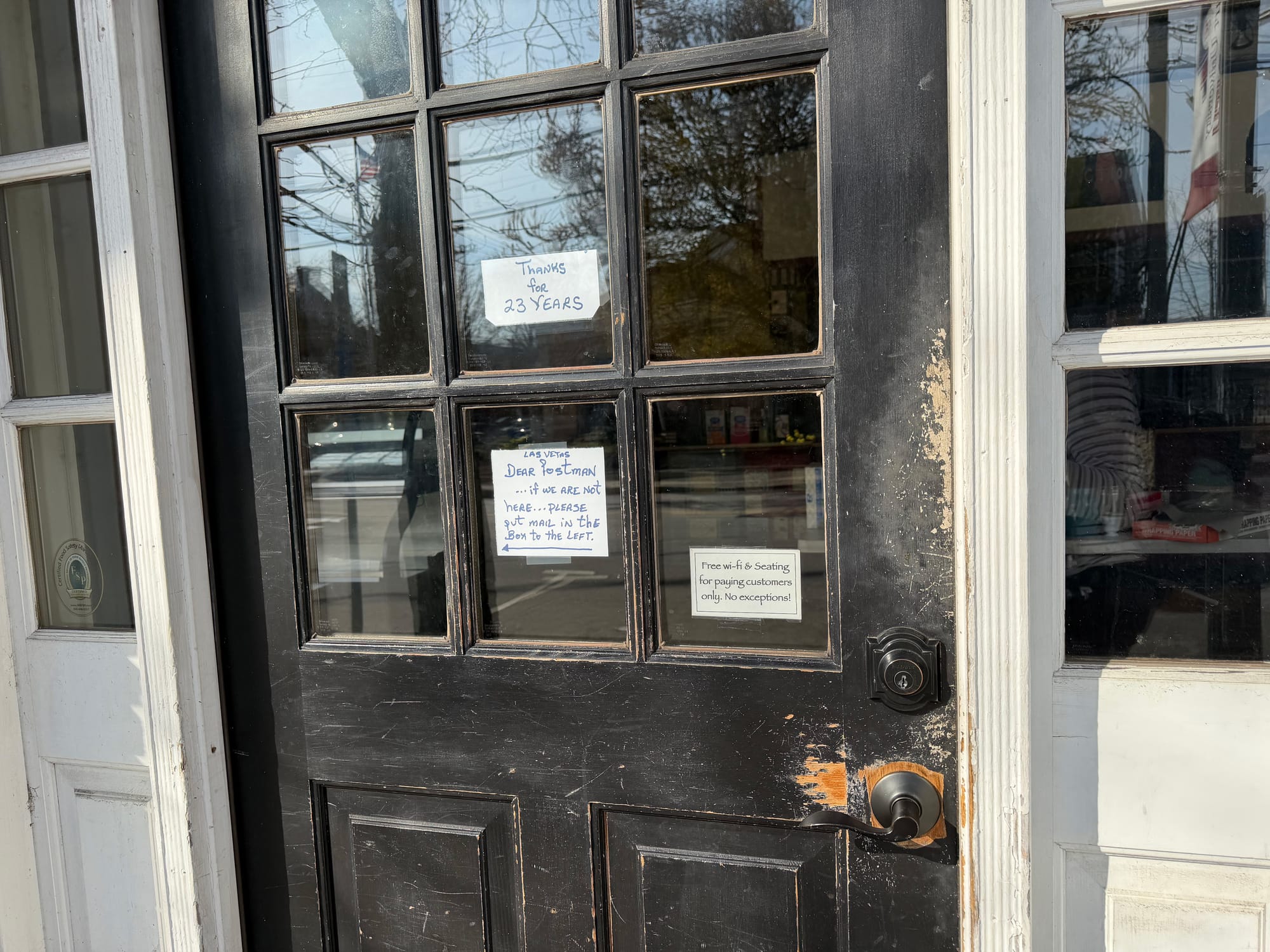
Meanwhile, in Norwalk, residents said they supported new housing, but didn’t want to see it replace local, unique businesses like the distillery.
“While I recognize the importance of responsible urban development, this proposal raises several serious concerns that would negatively affect the surrounding neighborhood and local residents,” resident Joan McDonald wrote. “The SoNo 1420 Distillery has become a recognizable and valued local landmark, contributing to the unique character and vitality of the neighborhood. Its demolition would represent a loss to the cultural and economic diversity of the SoNo area.”
When the Planning and Zoning Commission approved the project, it did add a line requiring the owner to “assist businesses that are being displaced in relocating within Norwalk,” but no word yet on where that will be—and if that’s happening.
1420 Distillery owner Ted Dumbauld told News12 has almost seven years left on his lease.
“Right now, we're not making any plans to move, so it's business as usual. However, because he does have approval from the town, he can come to me at any time and say, ‘Okay, Ted. Let's sit down, let's look at your contract, and let's see if we can negotiate a way to terminate your contract that makes you happy and allows me to move forward with my project,'” Dumbauld told News12.
For Anne, she’s still in the midst of trying to find a new home for Rebel Daughter Cookies. Her needs are a little more complex—it’s not just a storefront, but a commercial kitchen that ships cookies across the country.
“I've been looking for the perfect spot with much more foot traffic and visibility, but it also has to be big enough to be a production facility, in addition to retail,” she said. So that's kind of been the sweet spot we've been trying to find is square footage that is light industrial so that we can have a square footage I need to produce while, at the same time, having the visibility for a retail space.”
Still, she said she’s sad that she has to move from her current location.
“I fell in love with this little kind of hidden garden, almost in the middle of Norwalk—this Art Park with these murals from local artists that reflected the creativity that I'm trying to bring into my product,” she said. “And the murals I felt reflected that vibe that I loved in Brooklyn from when I moved from Brooklyn, and it felt like the stars aligned at that time, and I was meant to be here.”
Sitting Empty
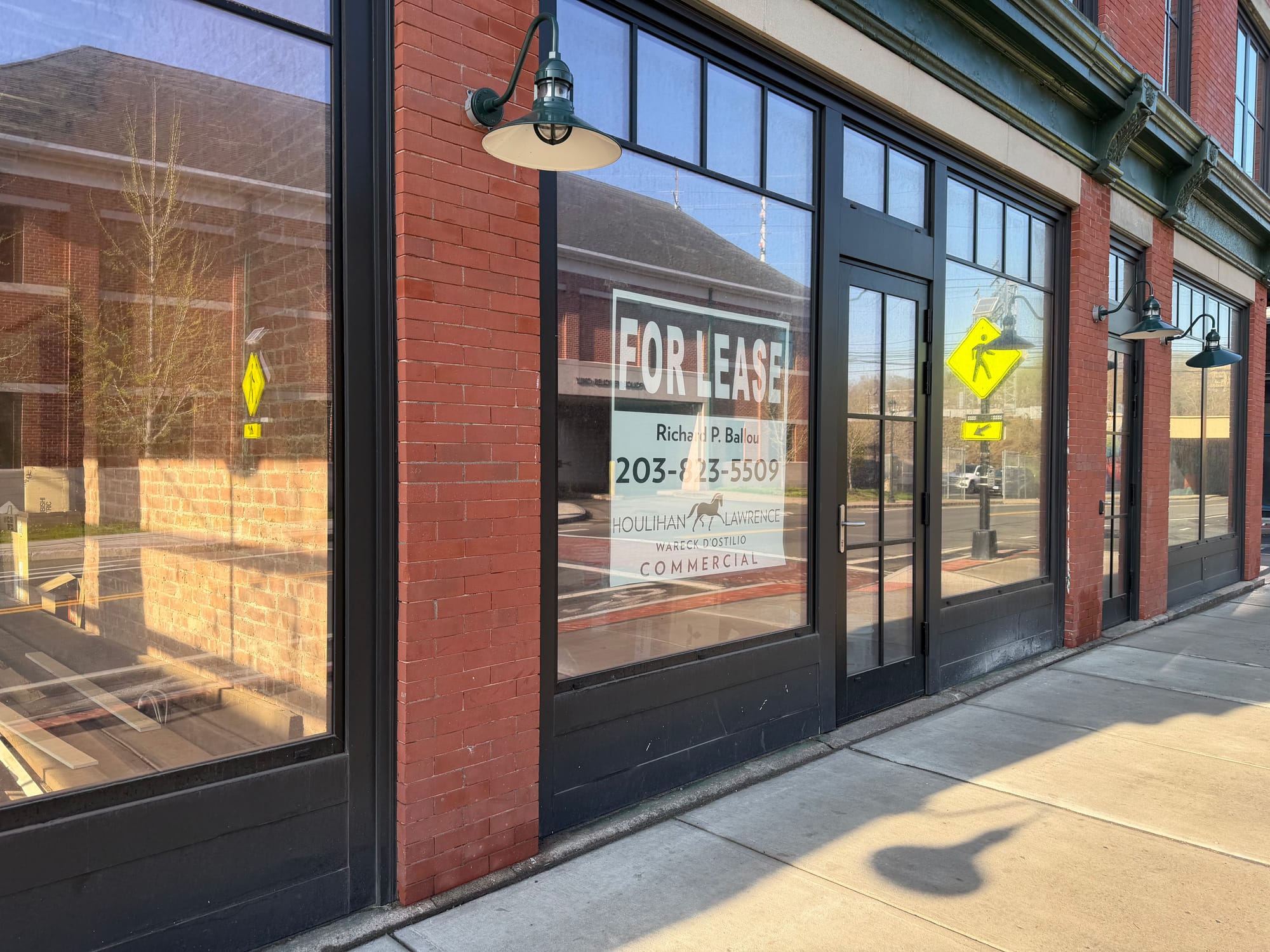
Meanwhile, the types of developments that are displacing these businesses, often bring their own commercial spaces. The goal of these is to help activate streets and provide a mix of uses—from residential to commercial, but the reality on the ground is many sit empty for months.
For example, “For Lease” signs dot the outside of the new Piper apartment complex along West Avenue. Same for the commercial spaces inside the Platform development around the South Norwalk train station.
Even existing complexes, like the Waypointe in Norwalk which opened more than 10 years ago, have been beset by vacancies. Barcelona, which was there from the start, recently closed its doors, as did Sedona Taphouse.
Business owners say that many of the new commercial spaces are too expensive. Reports around Barcelona’s closing say the rent increase was a reason why it closed its doors.
At the same time, commercial property owners don’t always feel pressure to fill their spaces. A study from Harvard’s Joint Center for Housing Studies found that “a primary driver of retail vacancy in dense urban areas is the fact that landlords are willing to forgo rents today in order to preserve the option to lease their space to someone else (who might pay higher rents) tomorrow.”
But having empty storefronts isn’t great for the communities that they’re located in, officials said.
Pushing to Fill the Spaces
The issue surrounding empty storefronts has caught the attention of state lawmakers who are proposing a bill this session to tax landlords who keep spaces—on the ground floor—vacant. Property owners could be charged up to $5 a square foot for “any assessment year during which such property remains vacant.” The properties must be vacant for more than 180 days to be taxed and on the ground level in commercial areas.
It garnered the support of local officials, including Norwalk City Council President Josh Goldstein.
“This isn’t a punishment though. The idea is that it’s an incentive for the landlord to either get a paying tenant or to sell the building to someone who will get a paying tenant,” he said in a video. “I’m supporting SB 363 because it will help us deal with vacant storefronts.”
The Norwalk Planning and Zoning Commission also is looking to endorse the bill. Commission members asked the staff to draft a memo in support of the bill, which they will review at their meeting on Wednesday, April 22.
At the last meeting, commissioners voiced their support for trying to address the vacant store fronts.
“I find it really frustrating that we have a lot of vacant storefronts that ‘activate the street,’” Commissioner Tammy Langalis said during the March meeting. “It’s not activated at all.”
But even if the draft does become law, it won’t help the existing businesses that are being forced to move.
“Small businesses are the backbone of the community,” Grossman said. “And when these huge condos go up with retail spaces below, the price per square foot ends up being really high. And so it's price prohibitive for a lot of small businesses. And so what you see is these huge retail chains coming in, these franchises coming in, and these small businesses are being pushed out of the downtown area where they started. So I think you're losing a little bit of the character. You're losing people who are part of the community, who live in the community, work in the community, who give back to the community.”