Inside the Transformation of Fairfield County’s Waterfront
Across southwest Connecticut, industrial sites (as well as a few private residences) along the water have been—and are currently—being redeveloped into housing, retail, public parks, and more.
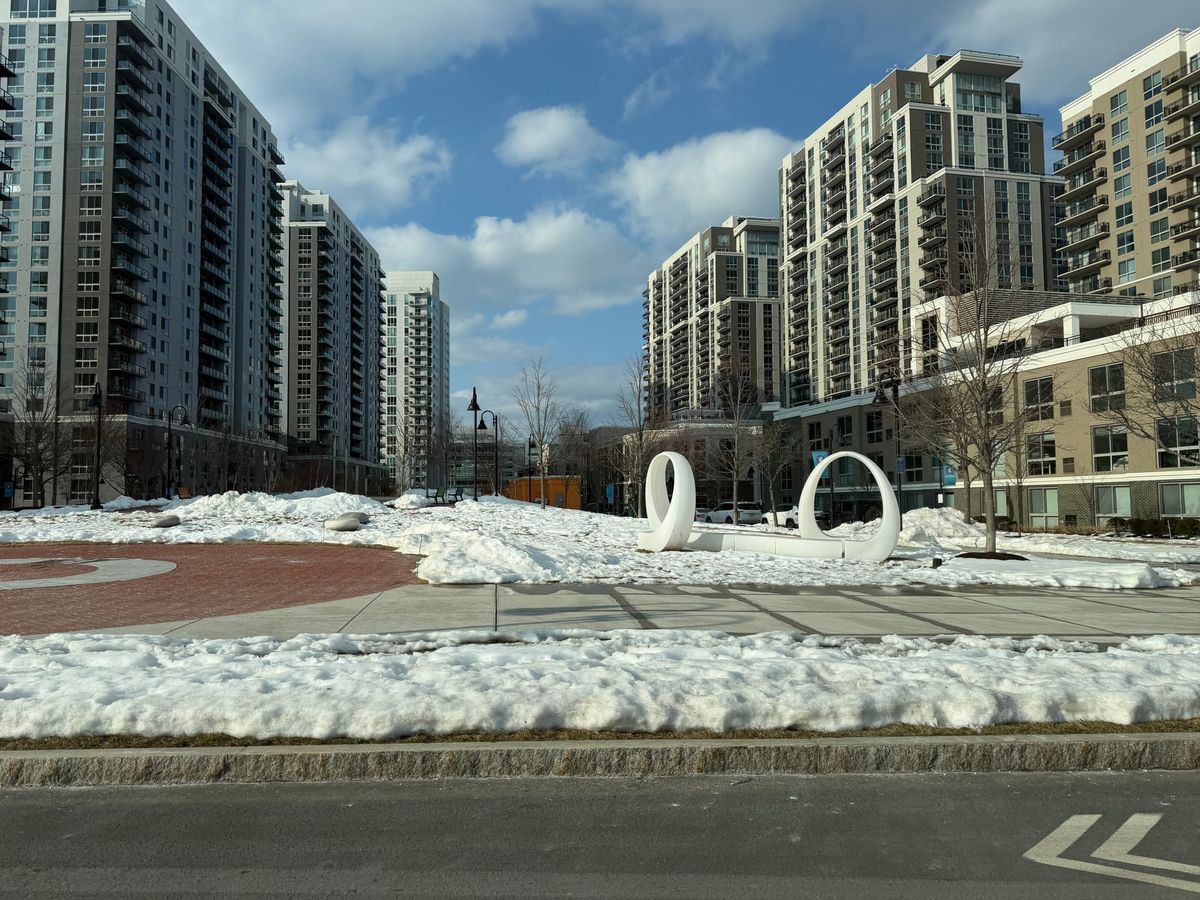
The waterfronts of southwest Connecticut, from Bridgeport to Norwalk, Norwalk to Stamford used to be filled with industrial uses—and private homes. Barges navigated the Sound, and factories and power plants filled the landscape. Machines whirred, products were built, and often pollutants were thrown into the waters of the Long Island Sound.
In between were pockets of wealth, waterfront estates that belonged to some of America’s wealthiest families, providing private access to beaches and waterfront views.
But over the past few decades the waterfront has changed. Factories closed. Families sold their properties. Many of these sites have been redeveloped, turning into residential communities, while others are in the middle of being converted into public parks, providing residents new access to the (much cleaner these days) waters of the Long Island Sound. Some projects have moved quickly, while are still in the works. And all of this is occurring while concerns about the effects of climate change to our coasts continue to grow.
Let’s explore the transformation of southwest Connecticut’s waterfront—and peek into the future at what could come next.
A Second Life for Industrial Sites
Stamford: Harbor Point
One of the biggest transformations along the Connecticut coastline is Harbor Point in Stamford. The area, located in the South End neighborhood along Stamford Harbor, used to be an industrial hub, home to some of the city’s largest employers, such as the Yale and Towne lock manufacturing company. But as the manufacturing sector began to collapse, companies closed up and left, leaving 80+ acres of former industrial sites.
Then in 2005, Antares Development Partners purchased all of the properties with a $3.5 billion plan to redevelop them into a mixed-use neighborhood. A few years later, Antares sold the properties to Building & Land Technology (BLT), which has since constructed more than 4,000 apartments in the neighborhood, along with new restaurants and other mixed uses. The properties are located just a few blocks south of the Stamford train station and downtown making it an attractive place for commuters.
But it hasn’t all been smooth. Many longtime residents of the South End have voiced complaints over how large the developments are, their impact on their community, and the nonstop construction for years. In addition, there’s been some questions around BLT’s construction work. A patio deck collapsed at the Allure building in 2022. And the former Yale and Towne factory, one of the first projects that was redeveloped in the area, is now closed after officials noticed the building sinking into the ground.
Still, officials have noted that the redevelopment has made a difference in the city, by creating new housing, bringing in new businesses, and providing new tax revenue.
Former Stamford Director of Economic Development Thomas Madden told Westfair Business Journal in 2018 that at the time the property assessments, which is what the city taxes the properties on, were $21 billion.
“In terms of what had been there, it’s been huge,” he said to Westfair. “It was an area with a huge amount of waste. You had the smells and the seagulls and everything else. BLT has done a lot to change the whole neighborhood, and it’s helped the city along the way.”
Bridgeport: Steelpointe and the former PSE&G site
Farther up the coast in Bridgeport, two massive redevelopment projects are taking place. First is the redevelopment project called Steelpointe Harbor. Situated along the Bridgeport Harbor, the 52-acre site is proposed to have 1,500 residential units, 200,000 square feet of commercial and office space, and a hotel. So far, the site is home to Bass Pro Shops, T-Mobile, Chipotle, Starbucks, and Boca Oyster Bar.
In October 2025, the developers of Steelpointe Harbor broke ground on the hotel, a Residence Inn by Marriott, which officials said enhances the growing waterfront district.
“This hotel represents not just growth, but opportunity,” Robert Christoph Jr, the project’s developer, said in a statement. “It’s a symbol of what’s possible when the public and private sectors work together to move Bridgeport forward.”
Previously, the developers broke ground in 2024 on The August, a 420-unit mixed use project, which will bring “high quality apartment units” and “state of the art amenities” to the site. Officials said the project, which was on a site that previously was home to a number of industrial uses including a powerplant before it was remediated, will enhance not just the city, but the state.
“Right now, the sun is shining on Bridgeport, a lot of people want to be here,” Governor Ned Lamont said in a statement. “The development here at Steelpointe Harbor is really coming together in a way that makes sense for this city and this state … This is a transformative moment. It's taken a long time to come, but Rome wasn't built in a day."
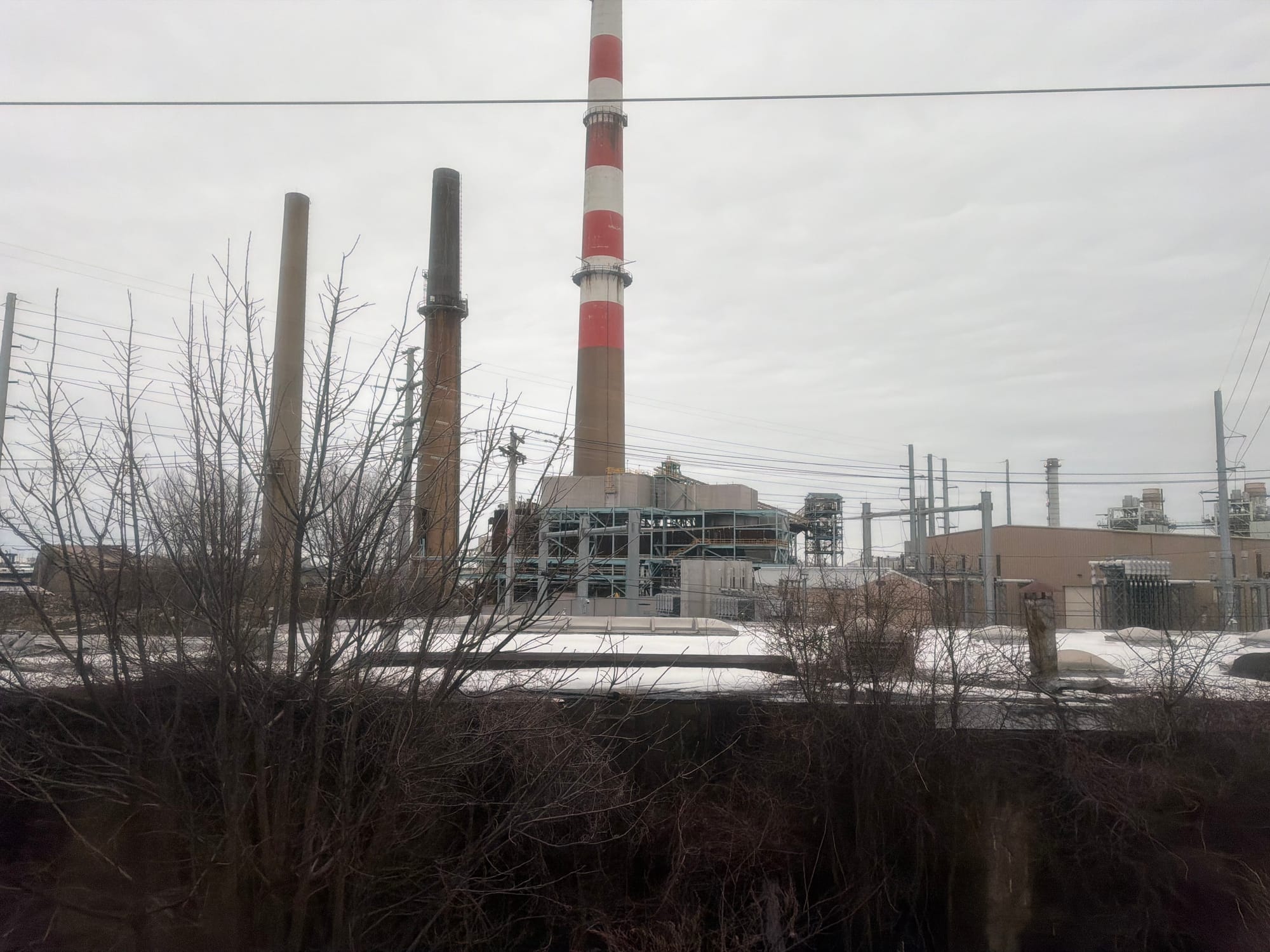
Across the harbor, work is just getting started to transform 33 acres, which include an old coal-fired plant and the iconic red-and-white smoke stack, visible from miles away. In 2022, Lamont and his administration announced an agreement transferring ownership of the decommissioned power plant to Bridgeport Station Development, a private developer. As a part of the agreement, the developer will demolish and remediate the old power plant and surrounding area. The developer received $22.5 million from the state for the demolition and remediation of the contaminated plant.
“This transformational project in Bridgeport demonstrates how our investments are leveraging significant private sector investments and unlocking new growth opportunities,” Lamont said in a statement. “These efforts help to enhance community vibrancy, clean up the environment, increase our housing supply, and create jobs.”
The plant stopped operating in 2021 and has been a “source of blight” since then, according to officials.
“This significant investment in Bridgeport to demolish this former power plant will allow the public to access nearly 2,000 feet of shoreline along Bridgeport Harbor,” Connecticut Department of Energy and Environmental Protection (DEEP) Commissioner Katie Dykes said in a statement. “The transformation of this brownfield site from blight to community asset will strengthen our economy, protect the health of Connecticut’s citizens, and improve our environment.”
Right now, the city is conducting a reuse study to identify potential new uses for the property. In November 2024, a draft of the study shared some preliminary redevelopment opportunities for the site which included:
- A traditional mixed-use development that “integrates residential living with green spaces and services.”
- Residential mixed-use, which would offer “diverse housing options, local amenities, and integrated green spaces.”
- A recreation destination, which would include “state-of-the-art indoor recreation facilities, a vibrant commercial component, and hospitality and service offerings.
- An entertainment destination that connects “with the existing entertainment offerings in the area to establish a full-scale, year-round entertainment hub and includes a “vibrant commercial component”
Remediation work has already begun at the site, with many of the structures around the smokestack demolished in September 2025. However, a group of residents has launched a petition to save the smokestack itself and repurpose it as a part of whatever future development comes to the site.
“Rather than viewing the smokestack as a relic, we can reimagine it as an anchor for a modern, multiuse waterfront district—one that blends housing, recreation, retail, dining, and public space with a visual landmark that residents already identify with home,” the petition reads. “It can be an icon that says, "we have come a long way, and now we are working towards a cleaner, brighter future.”
While the smokestack was scheduled to be demolished in April, the petitioners have won a small victory as that has been pushed back, according to an update from one of the organizers Harrison Gordon.
At a February meeting of the South End NRZ (a neighborhood revitalization group), Gordon wrote that “residents shared thoughtful perspectives on what the stack represents and how it could fit into Bridgeport’s future.”
He added that the “developers discussed the real constraints they face around remediation, liability, and site planning. They also shared important timing information: demolition of the smokestack has been pushed back to late 2026 or early 2027.”
That allows the organizers to “build a serious, evidence-based case for preservation or adaptive reuse.”
From Private to Public Access
Norwalk: Manresa Island
Speaking of power plants, in Norwalk, Manresa Island, which for decades has been home to a power plant since 1960. The power plant was closed in 2013 and the site was flooded during Hurricane Sandy in that year.
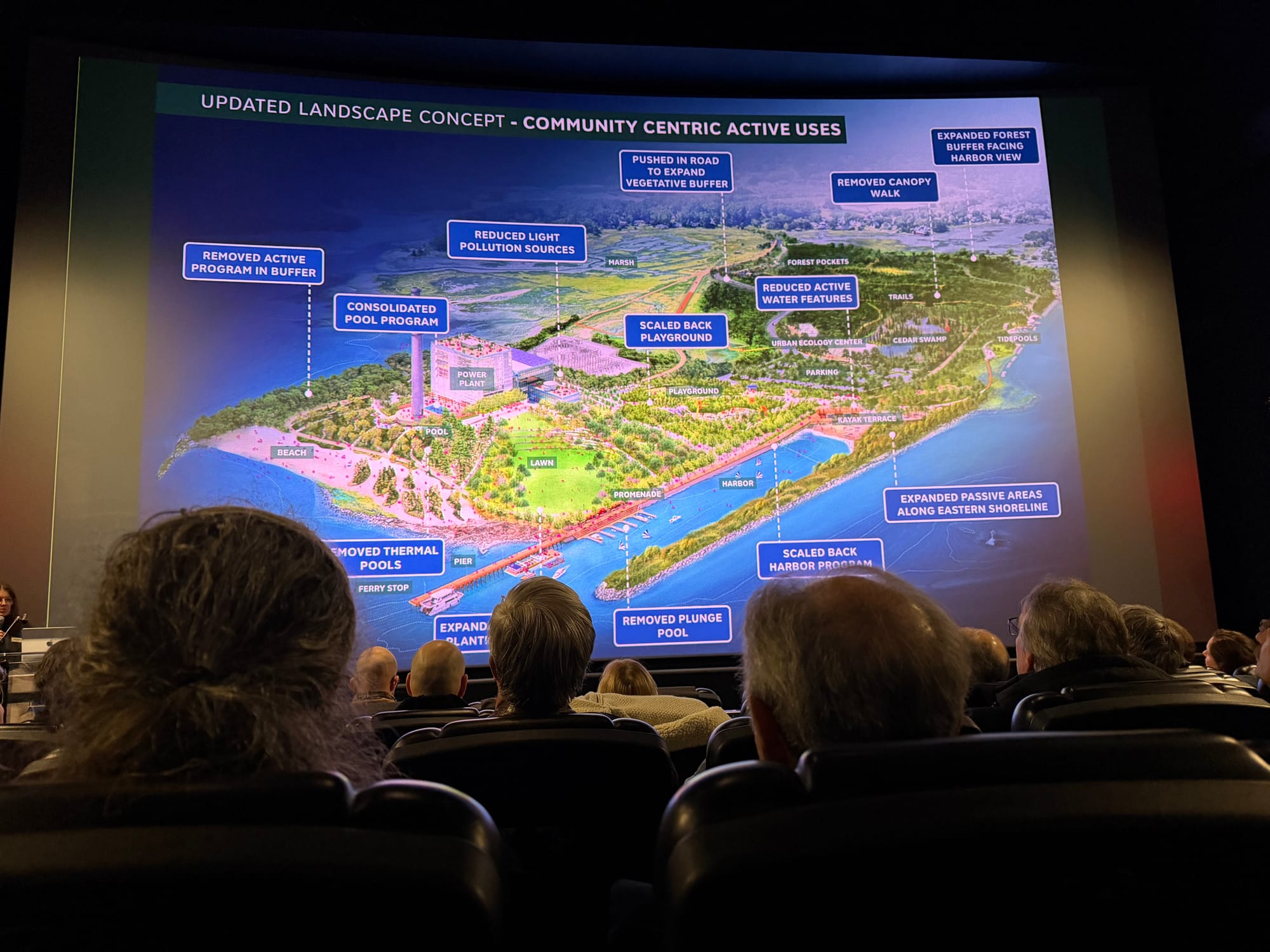
But thanks to Norwalk residents and philanthropists Austin and Allison McChord, plans are underway to transform the site into a public park, complete with beach access, a swimming pool, event spaces, nature trails, learning and research opportunities, and chances to connect with nature. The McChords unveiled the finalized plan for the island at a community event on Thursday, February 19.
“It's an island for all. It's a place like no other,” said Jessica Vonashek, the executive director of the Manresa Island Corp, the nonprofit tasked with overseeing the island.
The estimated cost of the land purchase, remediation, infrastructure, circulation development, and ecological restoration is $410 million, all of which will be paid for by the McChords. The entire cost of the project will come from private philanthropy through the Manresa Wilds nonprofit, anchored by that initial investment from the McChords.
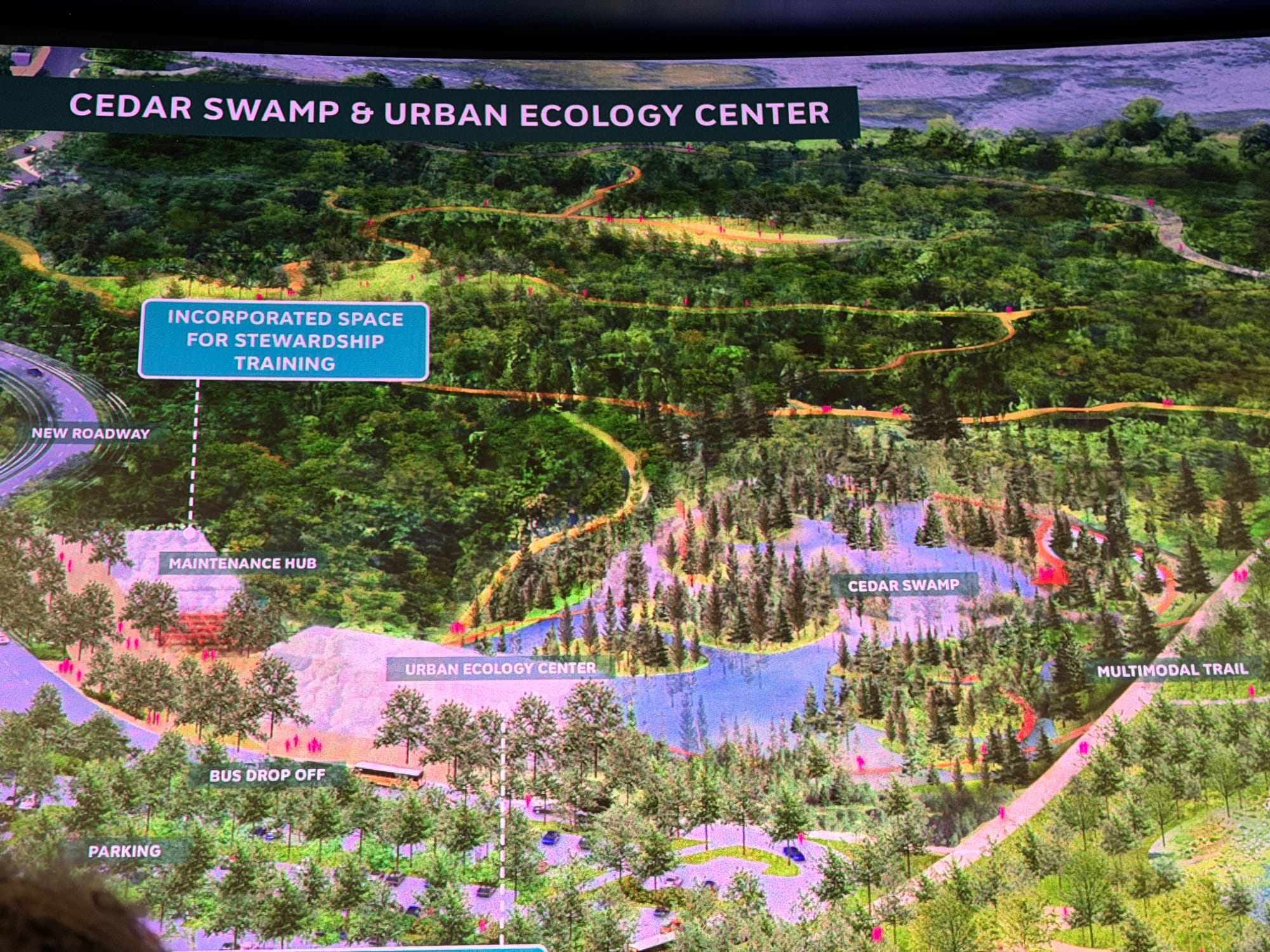
The plans for the project call for transforming the existing power plant building into an event space, providing beachfront access and a large lawn space, creating trails and learning spaces, adding a playground and nature-based play spaces, building an urban ecology center, and enhancing the site’s natural elements through planting buffers, restoring native plants, and making the coastline more resilient.
Since the project was unveiled in October 2024, the couple and their nonprofit have heard from thousands of residents. Allison McChord said that their feedback helped them make important changes to the project, such as scaling back some of the most intensive uses and providing more environmentally restorative aspects to the site.
“We strongly feel that the project is better because of the input we have received from all of you—I really feel that way,” she said, adding that their core goals have remained consistent throughout. “We're going to create a beautiful park that allows people to connect to nature and the Sound. We're going to create community spaces, spaces for research and learning. And critically, we're going to take this big piece of shoreline and revitalize it so it is healthier and more resilient for people and for wildlife.”
The first phase of the project, the Northern Forest, which features primarily trails, is slated to be done by spring 2027. In addition, remediation work on the site has also begun. In 2028, the landscaping and construction work for the rest of the site is expected to begin. The plan is to have major parts of the Manresa Wilds park open starting in 2032, with phases continuing to open through 2035. Ironically, back in the 1950s, residents asked the city to purchase the property to save it from becoming a power plant and turn it into—you guessed it—a park.
[Get an inside look at the plans for Manresa Wilds]

Darien: Great Island
The small town made national news in 2023, when it announced that it would be spending about $85 million to purchase Great Island, which was previously the private estate of the Ziegler family. William Ziegler, the head of the family, was a founding investor in the Royal Baking Powder company. The 60 acres of his estate purchased by the town included an estate house, stables, a riding ring, beach cottage, and woodlands.
The town developed and published a master plan in July 2025, which aimed to “create meaningful public access that respects the ecology of the island.” This includes improving and enhancing pedestrian trails, protecting the coastline, preserving the historic aspects of the site, providing access to the water in a thoughtful manner, and finding ways to activate the site that don’t negatively impact it.
It also outlines some of the infrastructure needs, including stormwater management, utilities, road access, and pedestrian improvements. The town has already begun some of this work as the Board of Finance and Board of Selectmen approved $475,000 for the planning and design of roads, parking, sidewalks, stormwater management, and more. The item is before the Representative Town Meeting on February 23.
Norwalk: 108 Water Street
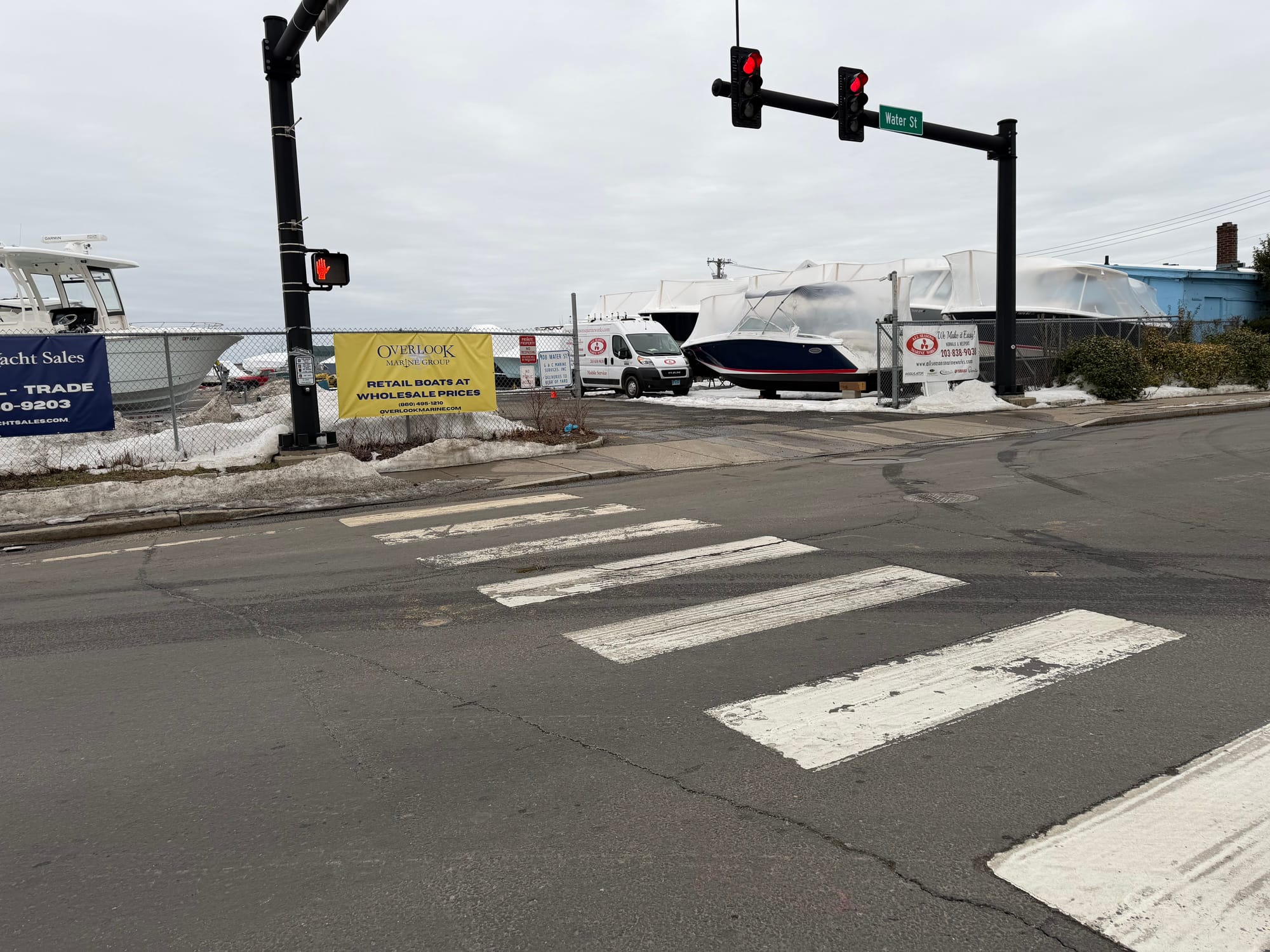
While not as large-scale as the two public parks, a redevelopment plan for 108 Water Street aims to add housing, retail, and office space as well as public access to the water by converting a “private, exclusive, primarily non-water dependent use site [currently used as a boat storage facility] to a tremendous asset available for all of Norwalk to enjoy, at no cost to the City.”
The developer, Spinnaker, which has done numerous redevelopment projects in the city, received approval in 2025 for a mixed-use development featuring 59 residential units, amenities for residents, office space, ground-floor dining, boat slips, and waterfront access. However, in January, the developer sent a memo to the Planning and Zoning Commission, asking for an amendment, because there are concerns about the amount of office space proposed at the site. Instead, the developer is looking to convert some of the offices into a hotel.
“Since it obtained the existing zoning approval, the applicant has engaged with brokers, prospective office tenants as well as potential lenders who would provide financing to construct the development,” the memo reads. “As a result of those conversations the Applicant believes that it is unlikely to lease up the entire 83,000 sq. ft. of approved office building in a commercially reasonable period. Additionally, due to the vacancy risks associated with such a massive amount of office space, lenders are hesitant to provide the financing necessary to move forward with construction. At the same time, we believe demand exists for additional hotel space in the area.”
The commission has yet to review the updated application.
An Uncertain Future
Westport: The Hamlet site
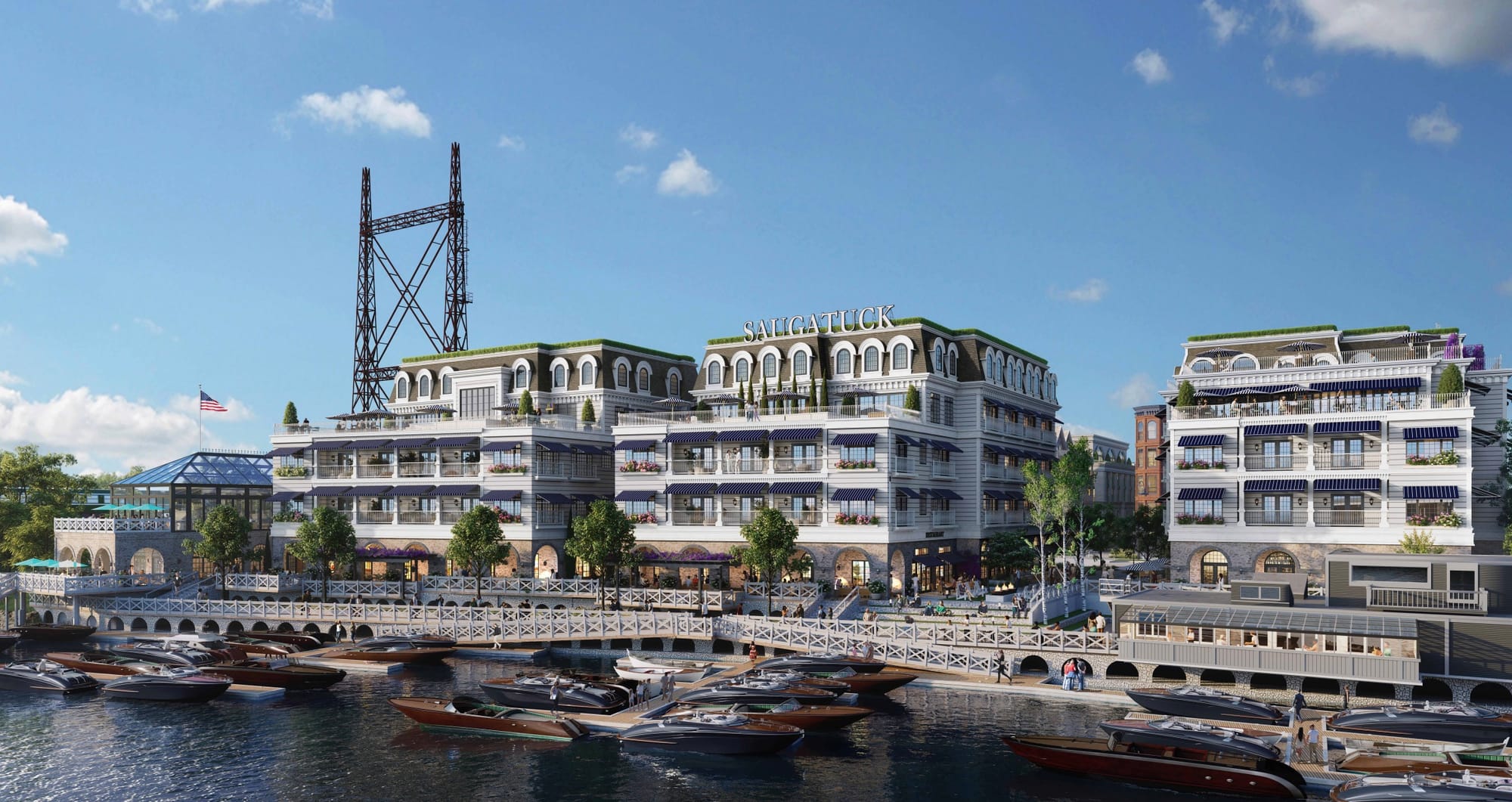
A plan to create a “mixed-use hub for commercial and residential uses in the Saugatuck area” called the Hamlet was vetoed by the Westport Planning and Zoning Commission in 2025. The plans, from Roan Development Ventures, called for bringing a mix of retail spaces, residential units, amenities, a spa, a hotel, and more along Riverside Avenue, Franklin Street, and Railroad Place.
The Hamlet project sparked a huge debate in town, with hundreds of public comments, months of review by the Planning and Zoning Commission, along with other town bodies, and multiple revisions to the plans. Ultimately, the commission vetoed the proposal stating that the proposed design didn’t comply with the standards for the area as it “fails to reflect the style and vernacular inspired by the traditional New England coastal village aesthetic.” It also raised concerns about traffic, parking, water access, and scale.
In addition, in its resolution to deny the commission noted “the numerous changes to the plans caused additional questions by the Planning and Zoning Commission which were unanswered due to statutory timelines. The Commission requested that the applicant withdraw and resubmit the application to allow additional time to review the outstanding issues but the applicant declined.”
After the denial, the developer filed an appeal in court seeking to overturn the ruling. However, according to The Westport Journal, the developer recently withdrew its lawsuit, leaving questions about what could happen to the site in the future.
During the months of review, Roan threatened to file an 8-30g application, which could bring large amounts of housing to the area. 8-30g is a Connecticut state law that allows developers to bypass some of the local regulations in towns that have less than 10% of their housing deemed affordable, so long as the proposed development has 30% or more affordable units in it.
The question now is what will happen to the properties in the future? Right now, no pending application related to them is in front of the town’s Planning and Zoning Commission.
Norwalk: O&G Site
While most of our waterfronts have seen conversions from industrial to residential, one legacy industrial property owner, O&G, was looking to intensify some operations on its site along the Norwalk River. The site has been an industrial one since 1920, and has included operations such as Norwalk Concrete and Asphalt. O&G was looking to have eight barges a month bring materials onto the site and then having trucks come to the site to pick it up and distribute it throughout the community.
But neighbors in the area said this would be a nightmare, as there are many residential units and local businesses around this site.
“What also really bothers me is that the city has made such enormous progress in the past 10 years, in just about every single area you can imagine,” Bradford Craighead, the head of the Norwalk Green Association, which represents residents and businesses in and around the Green, said. “I don’t want to see our brand destroyed. But that’s what’s going to happen. I don’t want Norwalk to become the laughingstock of the Connecticut coastal cities.”
However, the property owner ended up withdrawing its application after two public hearings when many residents raised their concerns. At the time, the representative said they planned to “work with staff going forward to develop the property in a way that’s beneficial to us and the city,” but nothing official has been put forth at this time.
Balancing Coastal Resiliency with Development
In the backdrop concerns about flooding, sea level rise, and erosion weigh heavily on communities along the water.
In fact, the Connecticut Department of Energy and Environmental Protection raised concerns about the 108 Water Street project in Norwalk for exactly this reason.
“The proposal to locate a high-density residential use at the site raises significant coastal management concerns,” a letter from the agency reads, adding that its main concern is that there’s no “dry egress” for residents to leave in the event of a flood.
The owner and redeveloper of the Manresa site, Austin McChord, said these are questions weighing on his mind.
“How do we put this whole site together? How do we make it safe for the next 100 years? How do we make sure that you can access it, that it's not going to float away, that stuff's not going to come off it?” he said.
Both Norwalk and Bridgeport have conducted resiliency studies. The Resilient Bridgeport project stemmed from federal funding after Hurricane Sandy and aimed to become a “prototype for the region’s coastal cities” developing a “resilience strategy and pilot projects focused on protecting homes, businesses and infrastructure in the South End of Bridgeport from chronic and acute flooding in order to foster long-term prosperity in the neighborhood.”
The Norwalk plan was done in partnership with the Connecticut Institute for Resilience & Climate Adaptation (CIRCA) and highlighted ways it could mitigate some of the impacts of climate change.The plan focuses primarily on South Norwalk and includes suggestions such as raising Water Street, adding green infrastructure to address some of the stormwater management, planting trees to address heat impacts, and updating the stormwater systems.
Some of the projects are already incorporating some of these ideas. The Manresa Wilds plans include adding native plants, removing some concrete and allowing for tidepools and living shorelines, and expanding buffers to the site.
Stay Involved
What could the coasts of Connecticut look like as this transformation continues? That’s something we’ll keep reporting on here—particularly diving deeper into some of the resiliency efforts. If you’d like to submit ideas and thoughts on how we can continue to report on this topic, write to us at coastalconnecticuttimes@gmail.com.