Goodbye to the Rail Towers: Where the Walk Bridge Project Stands and What’s Next
Construction is heating up on the Walk Bridge project in Norwalk as the 130-year-old swing bridge is getting replaced.
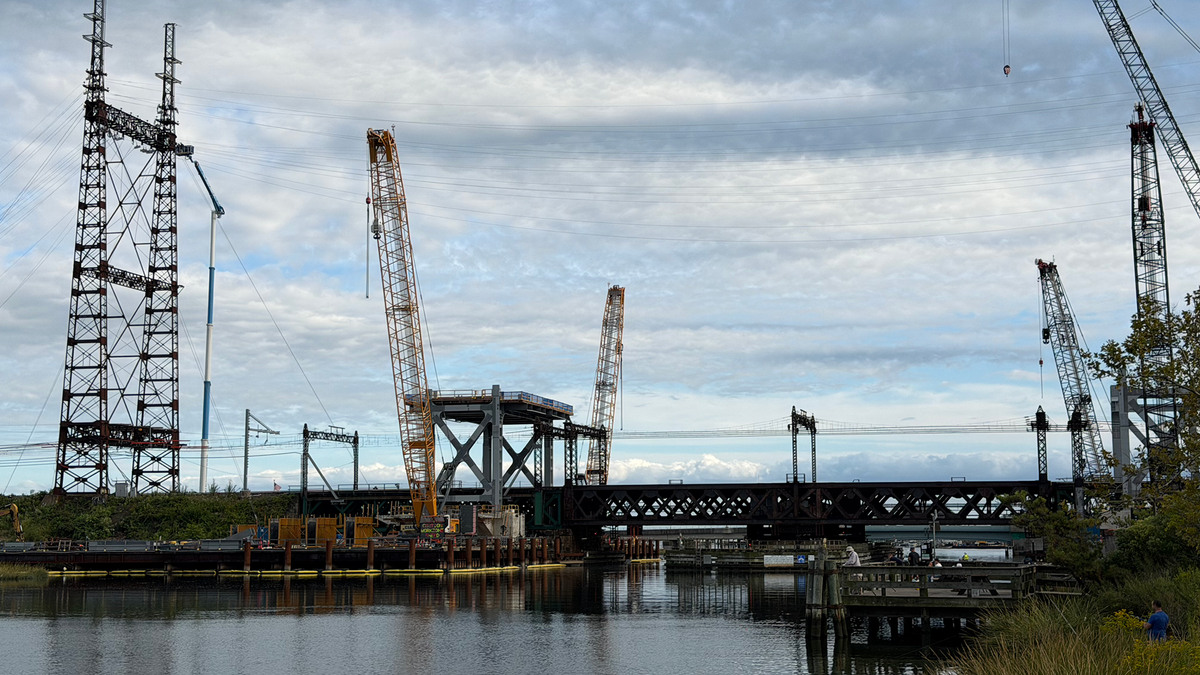
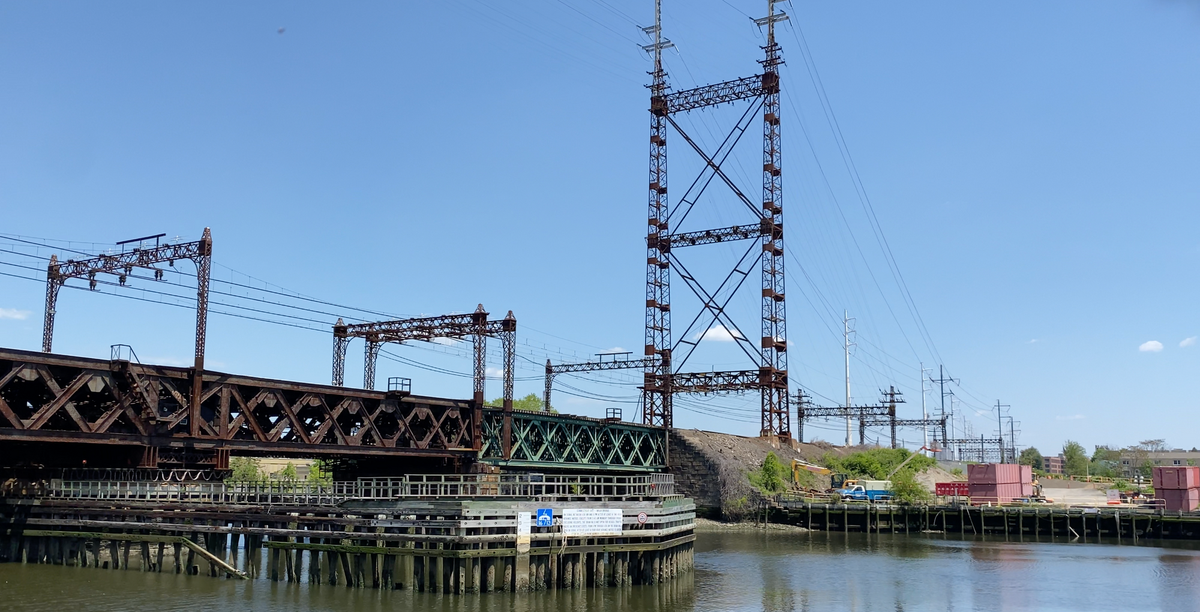
For 130 years, the high towers along the Norwalk River have been part of the city’s skyline, helping to keep the trains—and their electricity—running across the waterway. But now, as a part of the Walk Bridge construction project, they are starting to come down.
“These towers have stood as part of Norwalk's skyline and as a symbol of the bridge that has connected our community and supported one of the most important transportation corridors in the Northeast,” Mayor Barbara Smyth said at a press conference on Sept. 9.
The work on the towers has been some of the most visible construction work taking place as part of the Walk Bridge project, which began in earnest in 2023, thanks to the bipartisan infrastructure bill.
The overall, nearly $1 billion Walk Bridge project will replace the 130-year-old bridge that spans the Norwalk River, as well as other improvements to bridges, roads, and railroad tracks in the area. The project is part of the state’s Time for CT initiative, which aims to speed up the time it takes to get from Connecticut into NYC (and vice versa.)
“Connecticut is home to the most used commuter rail line in the country, and it is a key component of our economic growth, supporting the ability of thousands of people every day to get to their jobs and earn a living,” Governor Ned Lamont said in 2021. “But our aging infrastructure is not only slowing our travels, it’s slowing our economic growth. Nobody wants to live and work in a place where they spend hours stuck in their daily commutes.”
A New Walk Bridge
The swing bridge had a history of getting stuck and failing causing train delays up and down the Northeast Corridor, which connects Boston to New York, Philadelphia, and Washington D.C.
“Any disruption on the Northeast Corridor equates to over $100 million per day in our regional economy,” State Senator Bob Duff said at the press conference.
The bridge will be replaced by a vertical lift bridge, which means the bridge can be lifted up to allow for water traffic to pass below. On either side of the bridge will be two towers of 150 feet each, which is about 100 feet shorter than the current towers. Officials said that this design will allow the bridge to “be more resilient and withstand extreme weather, load, and external forces.”
“The removal of these towers represents progress,” Smyth said at the press conference. “It represents the continued transformation of the Walk Bridge and the advancement of a project that is critical not only to Norwalk but to Connecticut and the entire Northeast Corridor. So while there is certainly history in what we are saying goodbye to today, there is also immense excitement about what comes next.”
Current Conditions On and Around the Bridge
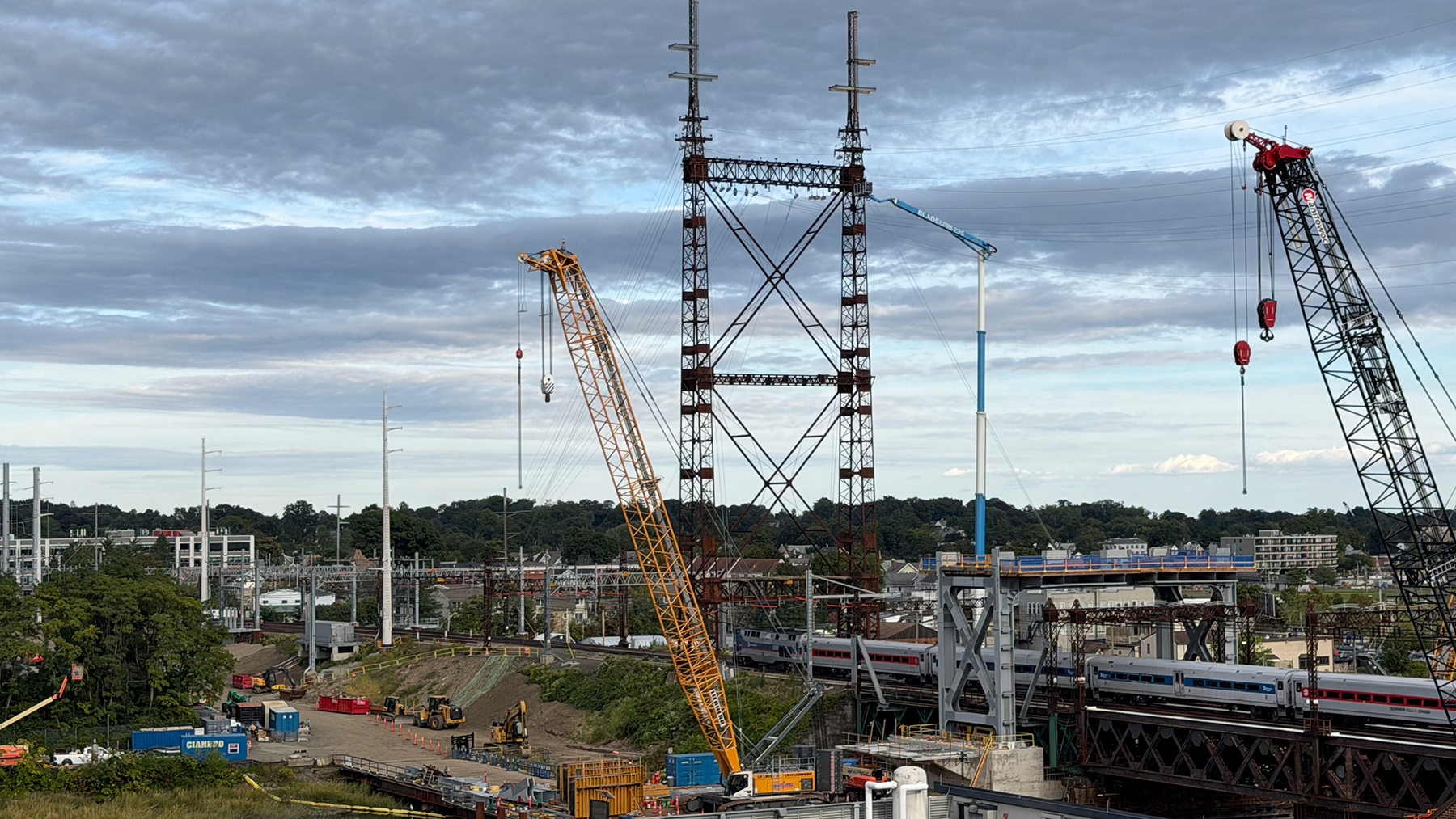
While the vision for the future promises an easier commute, the construction period can be a little challenging to navigate for local residents and commuters. This past weekend (Sept. 19 and 20) was the second weekend in September with limited Metro North service between New Haven and Stamford. (Train riders were encouraged to use the garages at the Stamford station to head into NYC as there was full service between Stamford and New York.)
The weekends of Oct. 10-11 and Oct. 17-18 also have planned service reductions planned to accommodate work on the towers.
“These schedule modifications are necessary to allow crews to safely remove two 234-foot-tall utility towers and overhead wire systems on the existing 130-year-old WALK Bridge, which crosses the Norwalk River,” a statement from CTDOT reads. “This work is a major milestone in the WALK Bridge Replacement Program and is essential to maintaining long-term reliability along the Northeast Corridor.”
In addition, the East Norwalk train station will be shut down from Sept. 26 through October 18 as work to improve the station and surrounding area continues.
While this is a big milestone in the project, there is still a long way to go. A statement from CTDOT noted that the “construction of the new movable lift bridge and its approach spans will occur in later phases of the project. The new bridge is expected to be placed into service in 2030.”
Still, officials said this project will help improve service both for local residents and commuters traveling across the bridge.
“Welcome to the 21st century as we build a new modern transportation infrastructure here in the state of Connecticut and the city of Norwalk,” Duff said.
You can stay informed about the latest schedule adjustments at mta.info.
 Kelly Prinz