What’s in the 2026-27 Budgets for Fairfield County Communities?
Stamford, Norwalk, Bridgeport, and beyond are putting together their budgets for 2026-27. We give you an inside look at the ongoing work.
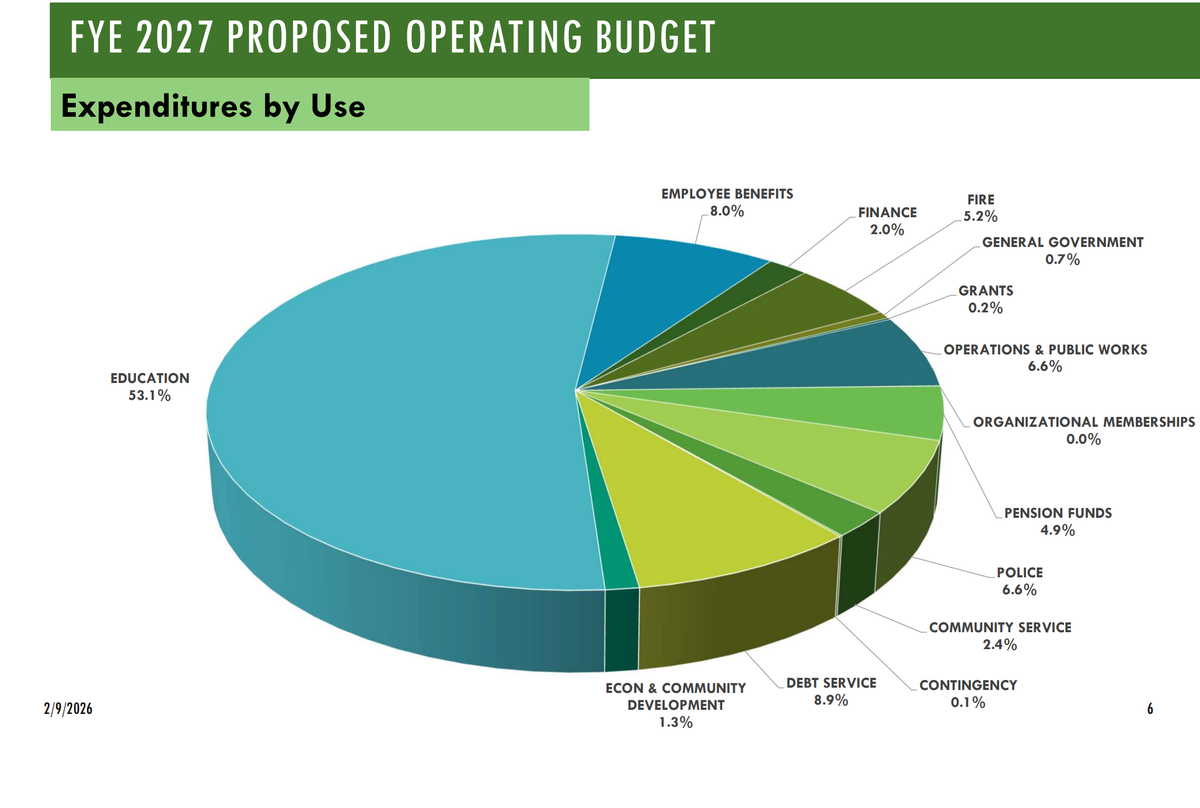
Across southwest Connecticut, each year our communities spend more than $3 billion on schools, roads, police, fire, community services, and so much more. And this money comes from you—it’s your tax dollars at work. That’s why we’re putting together this article to help you understand what’s in your community’s budget, what the challenges are, why your taxes are (probably) going up, and more.
We’ll be releasing a few communities each week and updating as we can to keep you informed about all the budgets across southwest Connecticut. We have the highlights below or you can click on your community to learn more details. We’ll be updating this page—and the individual city/town pages—each week.
Bridgeport | Stamford | Norwalk | Fairfield | Greenwich | Darien | Westport
Bridgeport
Coming in March
Stamford
Stamford Mayor Caroline Simmons proposed a $747.4 million operating budget for the city and Board of Education, which is a 6.32% increase from the previous year. The total city-side of the budget is $365.2 million, or an increase of 5.6%, while the Board of Education budget is $372.1 million.
“The increases we’re seeing on the city and Board of Education side are higher than we’ve seen in years,” Simmons said at a joint meeting of the Board of Finance and Fiscal Committee of the Board of Representatives.
She said that the budget “responsibly funds long-term obligations,” adds an additional $10 million to the school construction fund, and “reflects our values of delivering high quality services.”
Dive deeper into Stamford’s budget.
Norwalk
“This is a challenging budget year for Norwalk,” Mayor Barbara Smyth told the Board of Estimate and Taxation on February 9.
For residents of Norwalk, that’s a phrase they’ve heard for years, even though this was Smyth’s first budget as mayor—although she had been part of many as a City Council member.
Her proposed $483.9 million budget would be an overall 7% increase from last year’s approved budget. It includes a 10% increase for the city’s side of the budget, going from $204.9 to $226.9 million and a 4% increase on the Board of Education’s side, going from $247.2 million to $257.1 million.
But even with the increases, the budget still doesn’t fully fund the Board of Education’s request. The board approved a budget with a 6.5% increase, while Smyth’s proposal only includes a 4% raise for the schools. Last year, the city and schools faced a prolonged budget fight as deep cuts to programs like music were proposed to close the budget gap. Ultimately, the city allocated additional funding—as did the state—to stave off the most drastic cuts.
So far, residents have spoken out about fully funding the schools, while members of the council and Board of Estimate and Taxation have raised concerns about the large increases.
“I’ve been on this board for a number of year—the city side has always been the cost of inflation or lower. It is alarming to me seeing this for the first time,” said Troy Jellerette, a member of the BET.
Dive deeper into Norwalk’s 2026-27 budget.
Fairfield
For her first budget, First Selectperson Christine Vitale proposed one that’s just under $403 million, a 4.97% increase from last year.
The budget includes $243.9 million for the Board of Education, $134.4 million for the town, and $24.6 million to cover shared operating expenses, such as workers’ compensation funds and interest payments on debt. Vitale proposed $360.9 million coming from local taxes, with the rest coming from non-tax revenues, like investment income, service charges, and licenses/permits.
“The budget is a reflection of our values and advances the administration’s priorities,” Vitale said when she unveiled the proposed budget at the Board of Selectmen meeting on Tuesday, February 24. “The men and women who work in our town every day—plow drivers, firefighters, police officers, teachers—they’re the ones that keep our town running and they're the resource we invest in the most.”
Vitale said this budget will allow the town to “attract and retain highly qualified” employees, maintain the school system and libraries, support public safety, sustain critical infrastructure needs, and continue to support legal efforts against United Illuminating and Aquarion for projects that could impact the town.
Some of the biggest cost drivers are ones that are happening across the region, such as rising health care costs. In addition, she noted that there are four collective bargaining units for town employees that are still in negotiations so they’re factoring in a reserve for when those are settled.
Dive deeper into Fairfield’s budget.
Greenwich
Greenwich officials are proposing a $543 million budget, up 4.33% from the year before. On the town side, First Selectman Fred Camillo is proposing a $144 million operating budget, with an additional $127 million set aside for fixed costs, which include items like health care and insurance.
Also, Greenwich, unlike a lot of other communities, has a capital tax levy baked into its budget, which this year is proposed to increase to $64 million. On the school side, Superintendent Toni Jones is proposing a $207.2 million budget, up about 4.4% from the previous year.
Camillo, who presented his budget to the Board of Estimate and Taxation in late January, focused on the capital budget items that he said the town needed to invest in.
“When you defer these projects, all you’re doing is passing along the obligations to future residents and future officials to deal with,” he said.
One of the biggest projects Camillo highlighted was the Hamill Rink Replacement project, which he included $41.2 million for in this year’s capital budget.
On the school side, Jones and Mike Mercarni-Anthony, chair of the Board of Education, said that they were “proud of this budget.”
“We feel that it very much represents our fundamental responsibility of the achievement of potential of every individual student in Greenwich Public Schools,” Mercarni-Anthony said.
Still, the budget, while going up 4.4%, does cut 11.5 full-time positions, including six teaching positions and an administrator at Greenwich High School.
Many residents voiced their support for the Dorothy Hamill Rink project, while others raised concerns about the school district cutting staff.
Charles Guliner, a sophomore at Greenwich High School, said that reducing teachers doesn’t just affect academics, but it also impacts the social and emotional wellbeing of students.
“When you reduce teachers at GHS the impact is immediate—classes get larger, teachers have less time to help students individually,” he said. “Without enough teachers students may not get the support they need to manage stress, navigate difficult circumstances and prepare for college and careers.”
Dive deeper into Greenwich’s 2026-27 budget.
Darien
The Darien Board of Education is requesting a $130 million budget, up 3.51% from last year—the lowest budget request since 2021. Meanwhile, the Board of Selectmen budget is projected for $40.1 million, a 5.5% increase from the year before.
The entire town side, which includes the BOS operating budget, library costs, and the debt service fund, is up $4.8 million or an 8.2% increase. In addition, the town is also projecting to bring in slightly less revenue from investment income, budgeting for just $2.4 million, compared to $3.9 million the year before.
First Selectman Jon Zagrodzky said that he believed the budget was “adequate for meeting town needs,” while adding that they would have liked to see the increase close to 3.5% to 4%, but felt the “budget is pretty tight.”
Board of Education Chair Robin Nelson said that on the school side the board and administration “ worked to ensure that the budget effectively allocates the resources needed to support our strategic goals and meet the needs of our students while maintaining fiscal responsibility to our taxpayers.”
Dive deeper into Darien’s 2026-27 budget.
Westport
Between the town and the school district, Westport is proposing a $266.1 million budget, a 5.2% increase from the previous year.
As a part of First Selectman Kevin Christie’s first budget, he proposed a $89.5 million budget for the town operations, up 1.96% from the previous year. With separate budgets for the Health District, Library, Earthplace, and Transit District factored in, the overall town side of the budget accounted for $97.2 million, a $1.9 million increase over last year.
“Municipal budgets are often described as just numbers on a page but they really reflect the community’s priorities and community’s values,” Christie told the Board of Finance in March. “In Westport, Westporters expect a town that runs well, is fiscally responsible, and capable of delivering high quality services while planning responsibility for the future.”
On the school side of the budget, the Board of Education recommended a $157.9 million budget, just under a 5% increase from last year.
“How we spend money is what we value, Westport values education,” Board Chair Lee Goldstein told the Board of Finance. “Our schools are remarkable and that’s what this is about.”
Superintendent Thomas Scarice told the board that the “funding for our schools has been incredible in my six years here.”
However, he noted that most of the budget increase was due to rising healthcare costs, so if the budget was reduced “we’re going to need to adjust our expectations for Westport Public Schools.” Scarice gave the example that about 98% of Westport high schoolers could get the classes they want right now—”Kids just don’t get their courses in every high school, here they do.” If the budget was cut, that might have to change due to staffing adjustments, he said.