What Should the Future of Westport’s Cribari Bridge Be?
As CTDOT officials unveiled options to fix the Cribari Bridge, residents said they didn't want to see tractor trailers in their neighborhoods.
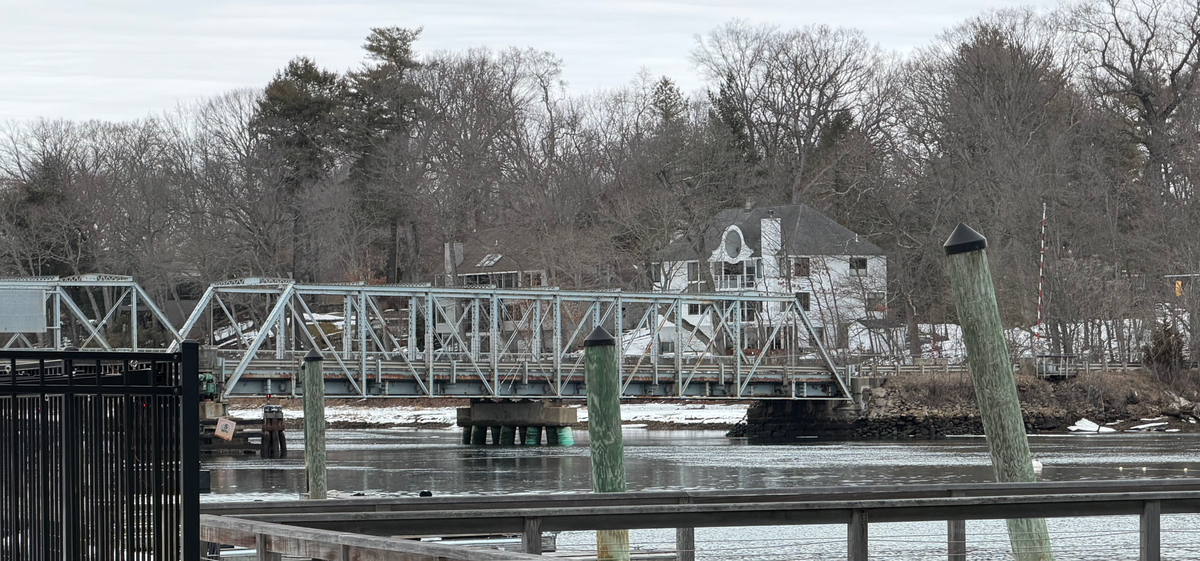
The historic William F. Cribari Bridge was originally built in 1884 and listed on the National register of Historic Places in 1987. But about 10 years ago, the state Department of Transportation identified structural deficiencies on the bridge, which carries more than 13,000 vehicles each day, that “cannot be addressed through regular maintenance.” The bridge, which carries vehicles across State Route 136 over the Saugatuck River, currently has two travel lanes and a sidewalk on one side.
The department recently unveiled a few options for how to address some of these concerns at a public hearing on March 19.
According to the CTDOT, the goal is to “provide a resilient structure that addresses the structural and functional deficiencies of the existing bridge and accommodates safe vehicular, bicycle, pedestrian, and marine traffic.”
We explore some of the issues with the bridge, what replacement options are proposed, and how members of the public reacted.
What are some of the issues with the bridge?
At its latest inspection from 2024, the bridge ranked in fair condition for its deck and superstructure and poor condition for its substructure. Based on this condition, officials said the bridge will now be inspected annually to keep a closer eye on it.
Officials said some of the main concerns include a “damaged truss system, with a substandard ability to withstand wind loads; substandard vehicle lane width and height; non crash-test compliant guardrail system; and vulnerable mechanical and electrical equipment.
CTDOT officials specifically highlighted that there are several structural elements that are “in damaged and/or deteriorated condition,” particularly concrete deterioration and exposed steel piles.
In addition, officials noted that the sidewalk is not ADA-complaint and there’s no accommodation for bicyclists.
What are some of the options to address these concerns?
Officials said they evaluated five options to address some of these structural challenges. The preferred option from the department is an “on-alignment replacement bridge.”
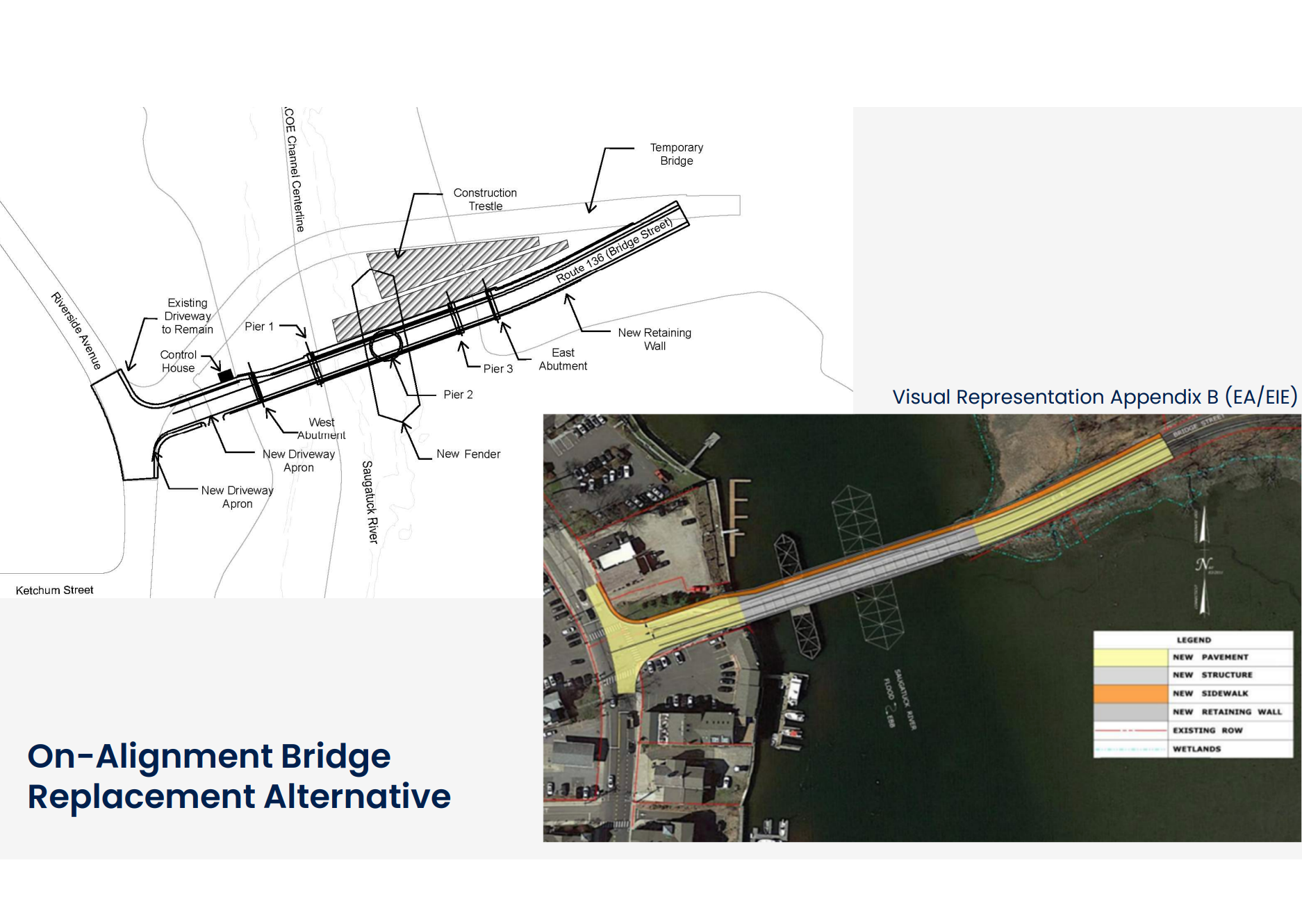
This option calls for constructing a “new, movable bridge on the same general alignment and removing the existing bridge.” CTDOT officials said the replacement bridge, which is estimated to cost between $75 and $80 million, would “meet current roadway, multimodal, and load standards, increase marine vertical clearance, improve bridge operations, and raise mechanical and electrical equipment.”
The department also looked at a few other options. There was a no build alternative that would “maintain current maintenance practices,” but this option noted that “eventual major construction will likely be needed to ensure the bridge remains useable,” and that these maintenance activities could keep the bridge going for a maximum of 10 to 15 years.
A second alternative was a “conservation alternative,” which would restore the bridge to the condition of a 1990s rehabilitation project. This project would include limited repairs, particularly “structural repairs to piers 2 and 3” and work to “repair the damaged truss.” Officials estimated this work would keep the bridge serviceable for 25 to 40 years, and cost $49 million to $54 million
A third option was a "rehabilitation alternative,” that would “address more of the safety and structural needs,” than the conservation option. In addition, to the repairs from that alternative, the rehabilitation proposal would include the “widening of the trusses and increasing the vertical clearance, installing a MASH-compliant guardrail system, patching substructure and deck and
replacing mechanical and electrical equipment.” This option, which would cost between $50 million and $55 million would also keep the bridge serviceable for 25 to 40 years.
And the fourth option was an “off-alignment bridge replacement,” which would construct a new movable bridge just to the north of the existing one. This would have the same features as the preferred alternative, just be located north, and include some roadway realignment. This would cost $66 million to $73 million.
What was the public reaction?
At the March 19 public hearing, the biggest concern from residents was that they did not want the bridge to accommodate tractor trailers.
According to Dan Woog’s local site 06880, Kristen Schneeman, a member of the RTM, said that residents were opposed to creating a “fourth lane of I-95 that jeopardizes safety, health, and quality of life well beyond the Bridge Street historic area.” She also noted that they wanted to preserve “the historic character of a local icon.”
The Westport Alliance for Saugatuck, an advocacy group for residents in the community that has pushed back against development plans such as the Hamlet, called on community members to unite behind one alternative—an adaptive rehabilitation of the current structure.
“Unless the community unites behind one solution, the Department of Transportation is likely to proceed with a new bridge designed with increased clearance—that would allow eighteen-wheelers to pass through Saugatuck on to Compo and Greens Farms,” a statement from the group reads.
What are the next steps?
There is still time for residents to comment on the proposals, which can be done on the state’s website, until mid-April.
After all comments are received the department will respond to them and finalize all planning docs related to the bridge, before moving into design, permitting, and construction.
You can keep up with the project on the CTDOT website.