What Does the Future of I-95 Look Like in Southwest Connecticut?
Three CTDOT studies in Stamford, Greenwich, and Fairfield/Bridgeport could shape the future of I-95 in Connecticut.
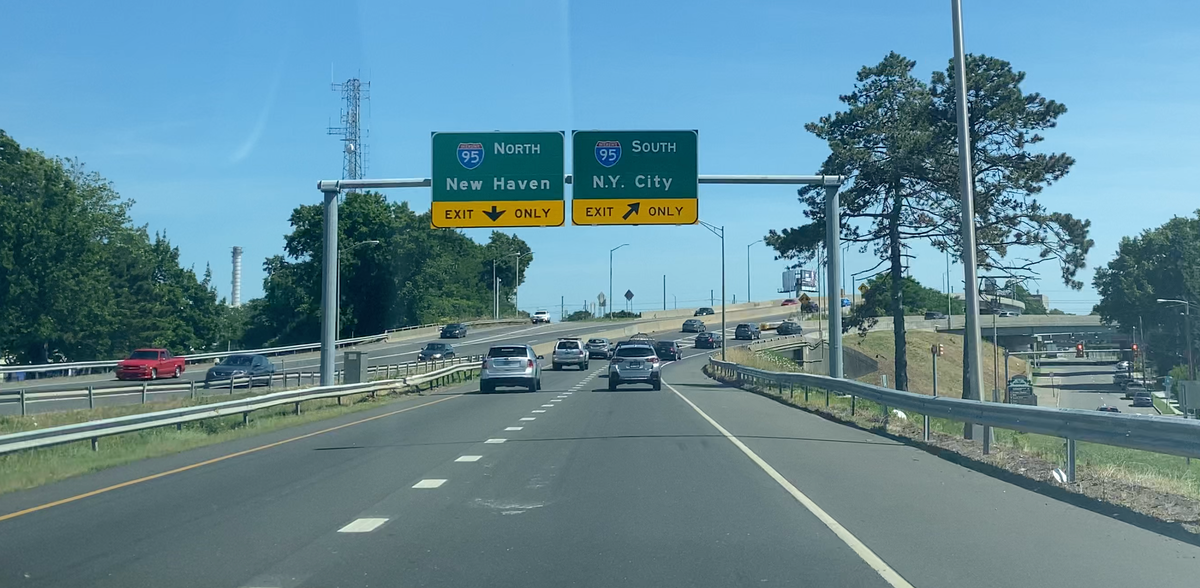
An additional travel lane, new bridges, fewer exits. These are just a few proposals for how to improve one of the most congested highways in the country, which runs through the heart of southwest Connecticut.
The Connecticut Department of Transportation is looking at three parts of I-95 in our region through three separate studies, called PEL studies (which stands for Planning and Environmental Linkages Studies). The studies aim to evaluate the environmental, community, and economic goals and impacts as a part of the transportation planning process and ideally speed up the approval process once a project is selected.
The areas they cover include:
- I-95 Greenwich, which covers from the New York State Line up to Exit 7 in Stamford, and along Route 1.
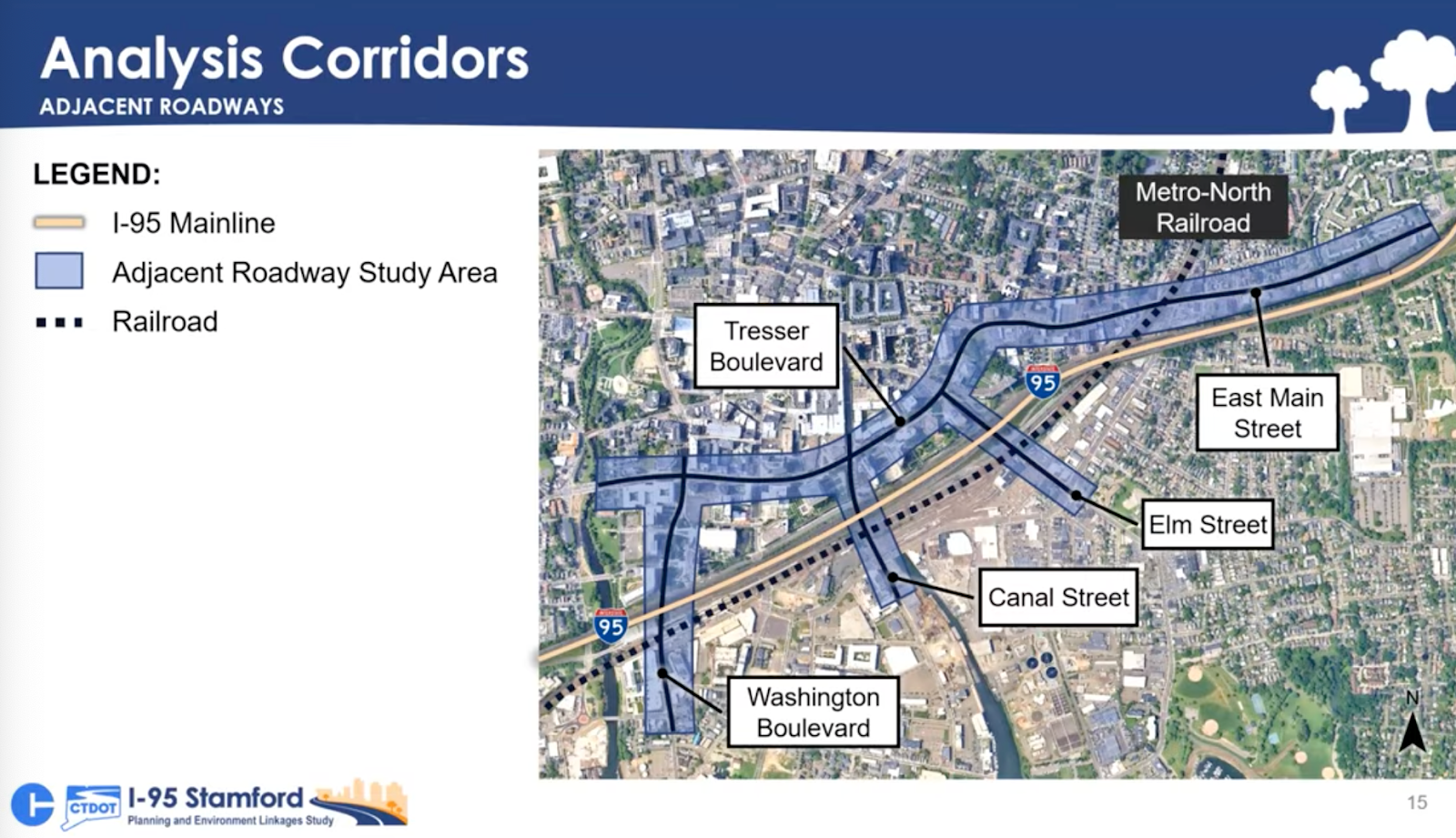
- I-95 Stamford, which is focused on Exit 7 to Exit 9, and the surrounding major roadways in the city
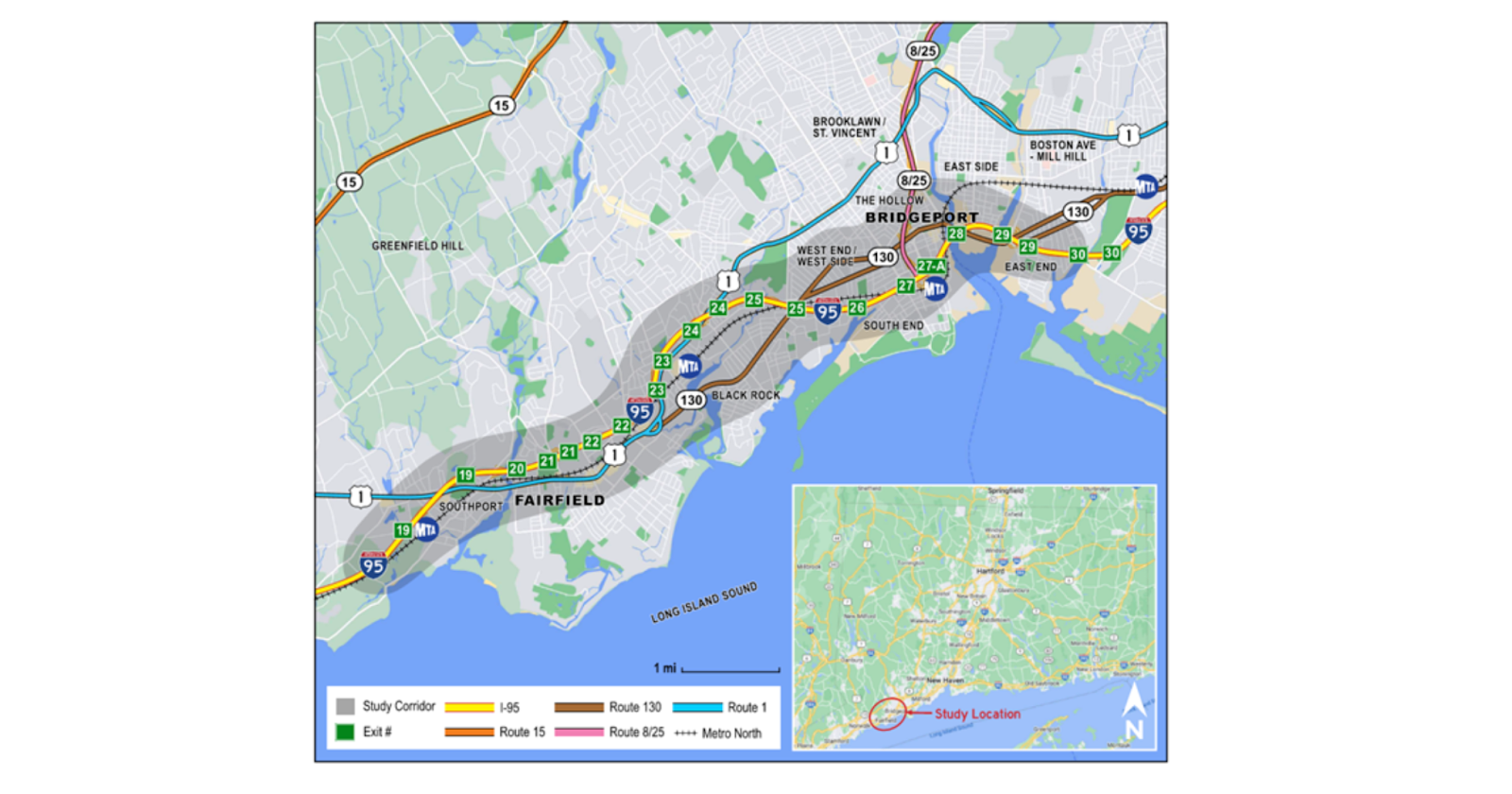
- I-95 Fairfield/Bridgeport, which covers I-95 from Exit 19 in Fairfield through Exit 30; Route 8 and Route 25 from I-95 up to Exit 2, and nearby major roads including Post Road, Route 1, State Street, and Fairfield Avenue.
While each is focused on a particular area, state officials say they are working in coordination to make sure an improvement made in one section wouldn’t cause a negative impact further away.
“Our teams are working hand in hand on those studies,” said Jonathan Dean, the project manager of the I-95 Stamford PEL study. “We’ll keep talking between those studies [to] work together and understand the impacts of each.”
Let’s explore each of these studies, particularly what the common themes—and differences—are and how they could affect you.
Addressing Congestion
All three of the studies note that I-95 is one of the most congested roadways in the state (and beyond), and could become even more traveled with the population of the region expected to grow in the next 20+ years.
In Stamford, I-95 carries about 120,000 vehicles per day “into, out of, and through the City.” In Greenwich, there are even more cars as I-95 in Greenwich “is one of the most heavily traveled roadways in the state, carrying more than 135,000 vehicles per day,” according to the Greenwich PEL study. And the Fairfield–Bridgeport PEL reports that anywhere between 120,000 to 130,000 vehicles travel that section of roadway per day.
So far, only the Stamford PEL is at the stage where they’re discussing proposed projects. On December 10 and 11, CTDOT officials and their consultants unveiled four potential proposals to address congestion—and other issues—to the public.
The proposals included ideas such as:
- Adding an extra lane in each direction along I-95
- Eliminating at least one exit to reduce the points of merging on the highway
- Creating collector roads that merge all the cars from the exits first before connecting with the highway
- Reconfigure some of the intersections that can cause traffic to back up onto I-95
Improving Safety
In addition to just the number of vehicles on the highways, all the studies cite closed spaced interchanges and short on and off ramps as challenges that impact safety on the roadways. That’s part of why CTDOT has added an auxiliary lane between Exit 7 and 6 to allow for more room for cars to merge on and off the highway.
CTDOT officials also noted the importance of replacing structures in these study areas that are near or at the end of their useful lives. For example, in the Stamford PEL area, replacing the bridge that runs over Metro-North and Myrtle Avenue is one of the reasons this study was started in the first place.
“We’ve got about 10 or 15 more years of service life, so really, the goal is to have that replacement done in the mid, late, 2030s,” Dean said.
Enhancing Local Roadways
While most of the work is focused on I-95, each of the PEL studies also is working to highlight improvements that can be made to local roads in the study area.
For example, the Fairfield–Bridgeport I-95 PEL found that the “system is largely deficient,” for residents looking to walk or bike on local roads in the study area, particularly along Route I and Commerce Drive/State Street in Bridgeport.
“While infrastructure exists, much is in poor repair or deficient from current design standards,” the study found.
Officials with the Stamford PEL also noted that they were hoping to identify projects that could be done sooner to provide improvements to local roadways, as the mainline work was continuing.
Diving Deep into I-95 Stamford PEL
Both the Greenwich PEL and the Fairfield–Bridgeport PEL are working to identify and analyze potential proposals to address the issues in their areas. According to the Greenwich PEL, these proposals could be shared by the end of 2026, while the Fairfield–Bridgeport PEL estimates developing alternatives through 2026 and into 2027.
But the Stamford PEL is farther ahead and officials unveiled four potential proposals at public meetings in mid-December. Let’s explore each of these options—all of which include replacing the bridge that runs over the Metro-North train tracks.
Proposal 1: Added Capacity
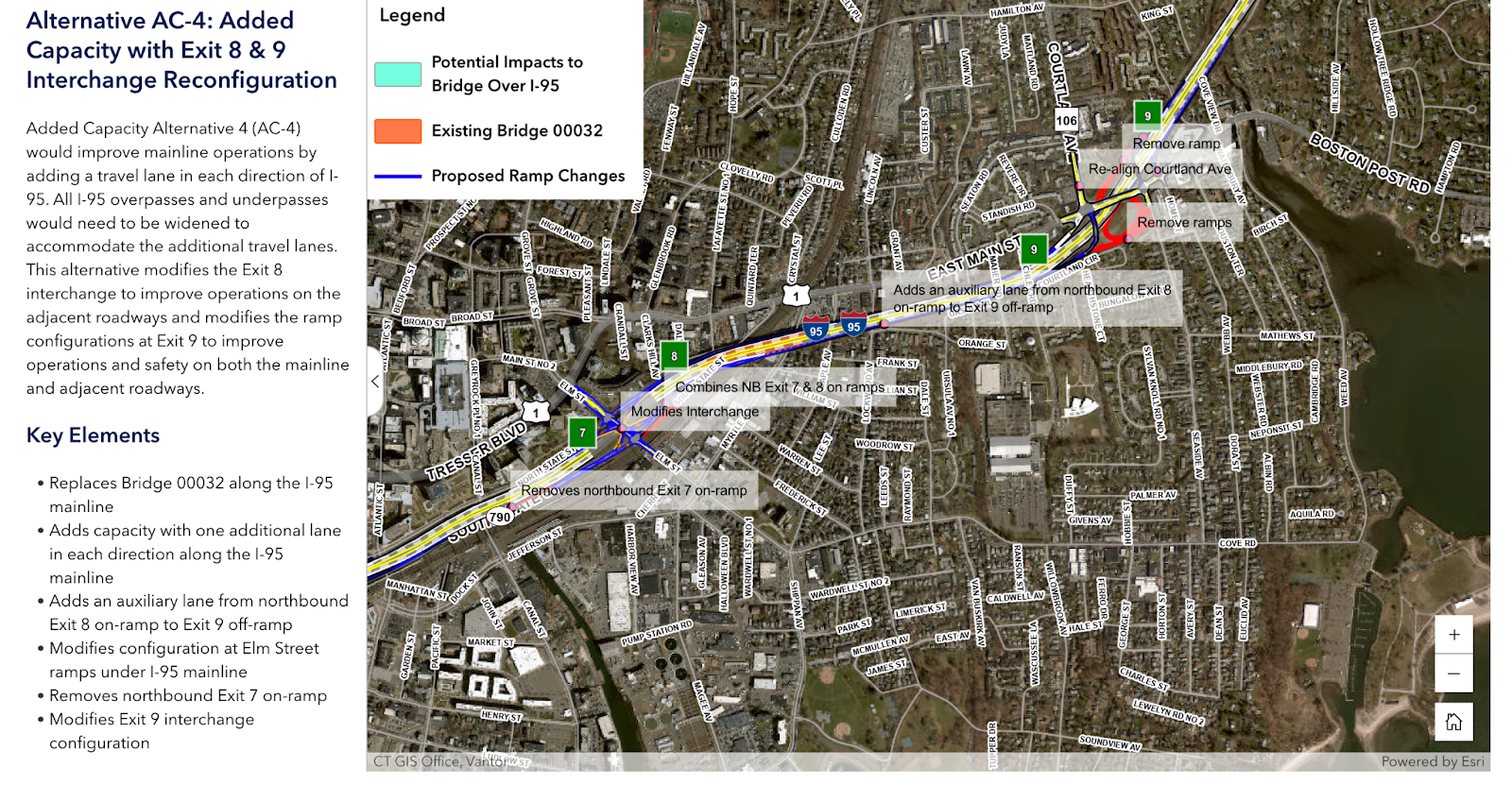
The first proposal would add an additional travel lane in both directions on I-95 through the project area. In addition, the Exit 8 interchange would be modified and “flyover” ramps to reconfigure Exit 9 would also be added. An auxiliary lane between northbound Exit 8 to Exit 9 would also be added, while a portion of South State Street would be removed and the northbound Exit 7 ramp would also be removed.
Proposal 2: Improving Operations
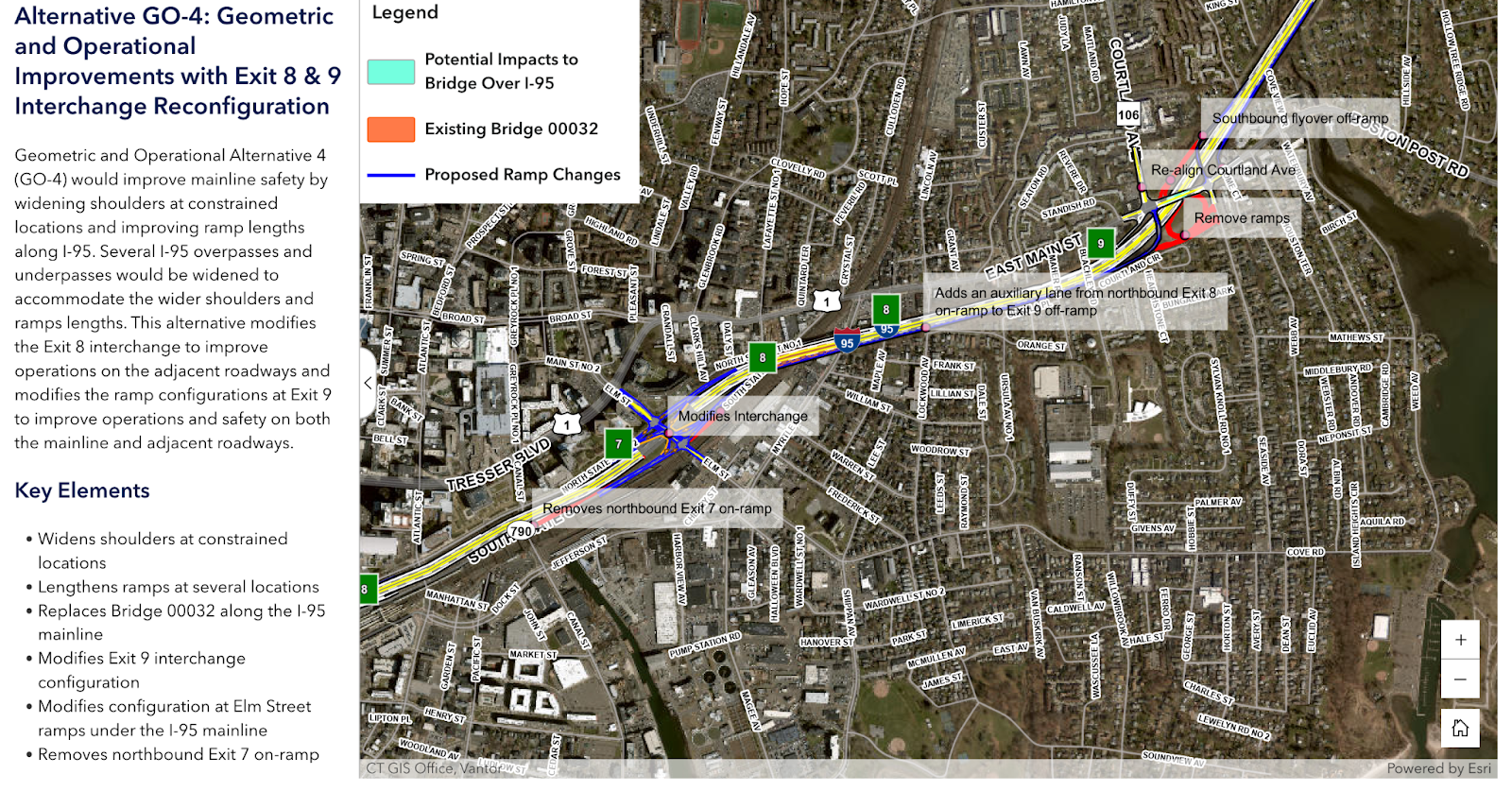
The second proposal wouldn’t add a lane of travel, but it would widen shoulders and expand ramp lengths to make it easier for cars to merge onto the highway and to pull over in the event of a breakdown. In addition, the Exit 8 interchange would be modified and “flyover” ramps to reconfigure Exit 9 would also be added. An auxiliary lane between northbound Exit 8 to Exit 9 would also be added, while a portion of South State Street would be removed and the northbound Exit 7 ramp would also be removed.
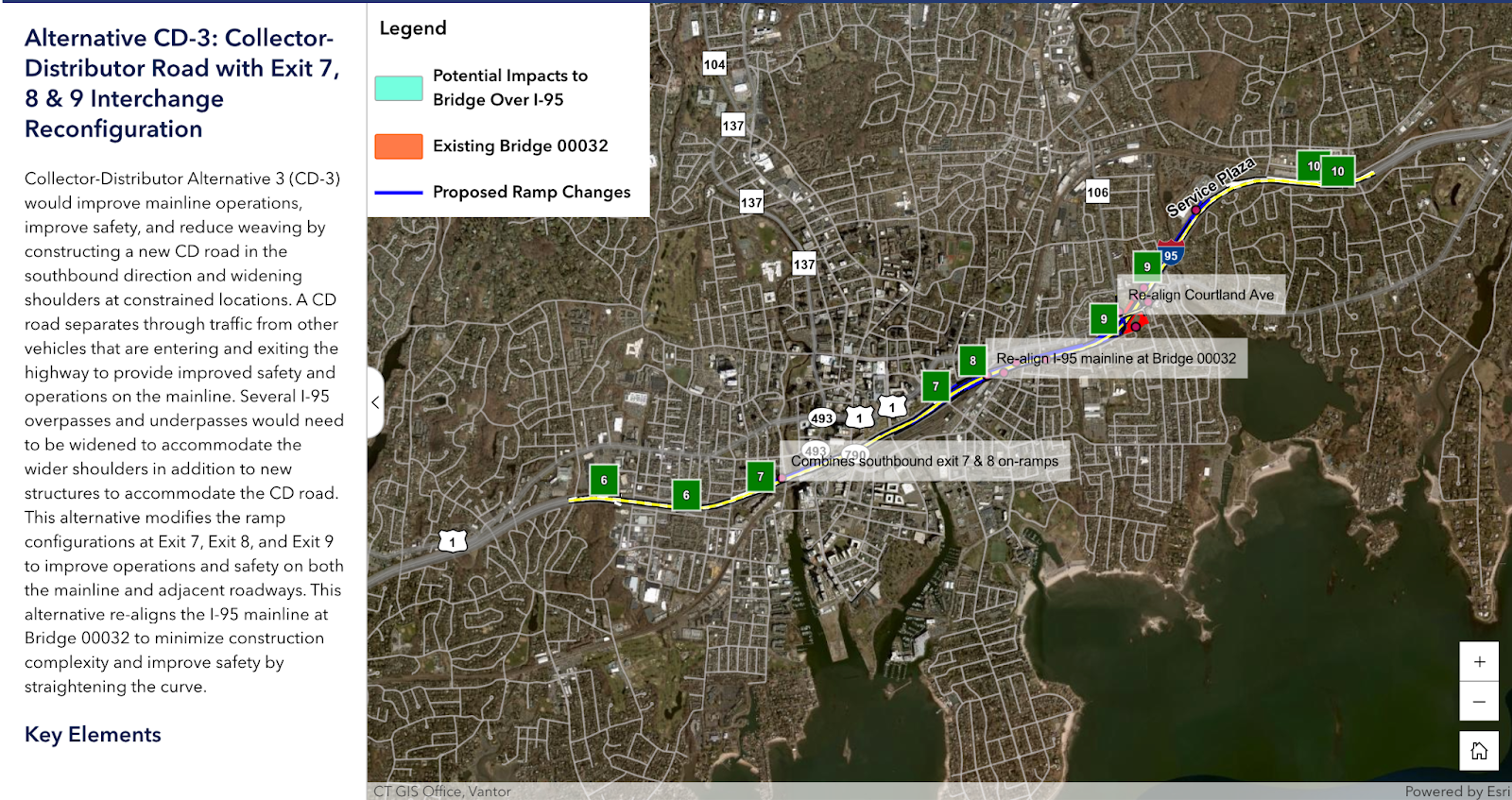
Proposals 3 and 4: Adding a Collector-Distributor Road
Both the third and fourth proposals would add a collector-distributor (CD) road, which would gather cars before they got onto I-95 and have them make one merge onto the highway instead of two or three at different exits.
The third proposal would add a CD road only to the southbound side, while the fourth would add a CD road to both the north and southbound sides.
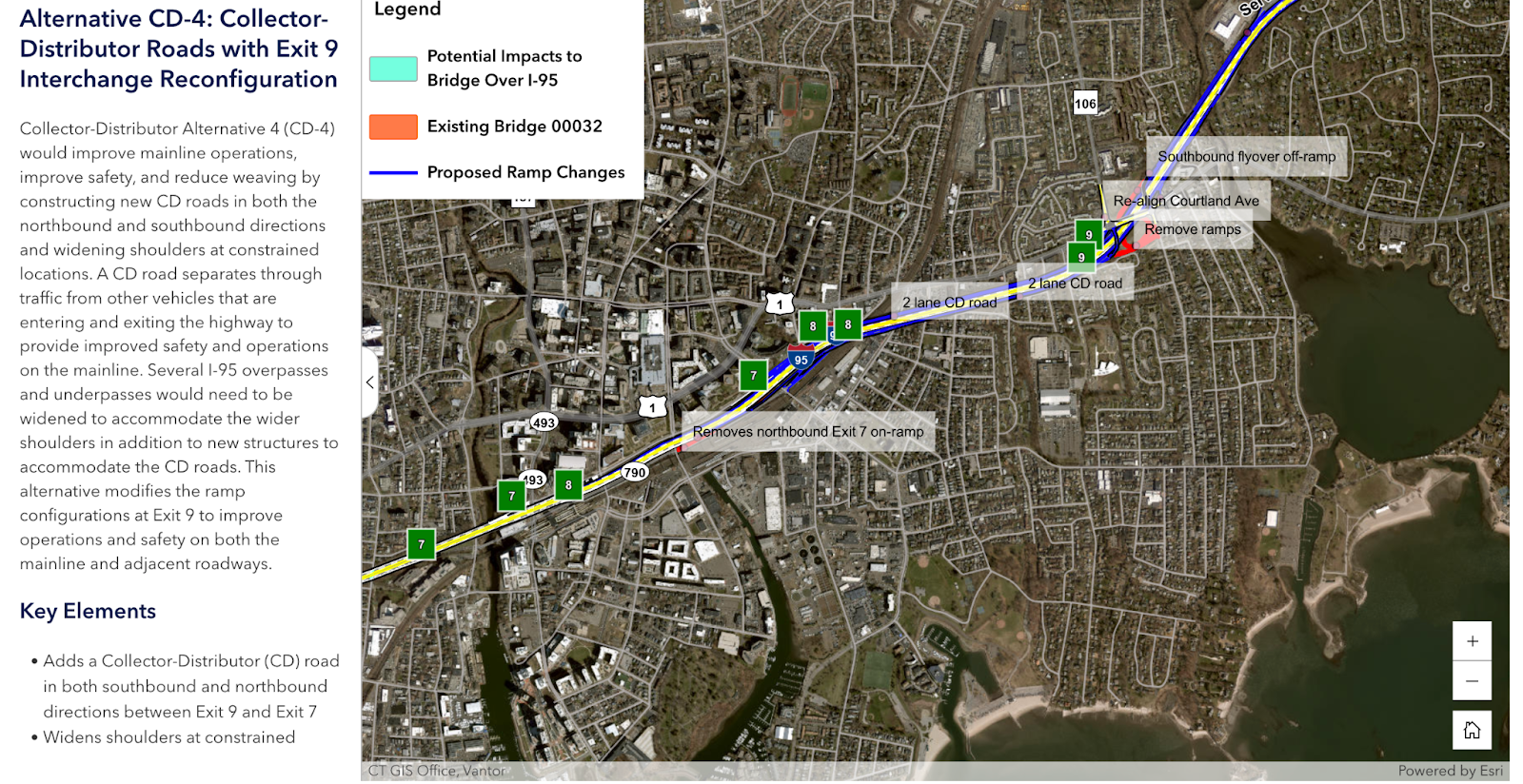
Residents of the region raised multiple concerns about these proposals, particularly the impacts of adding another lane of traffic. Studies have found that when highways are expanded, there’s “induced demand,” meaning that more people end up driving, which takes away any benefits an additional lane might bring.
“I-95 through many communities in Connecticut have, like, posed a lot of environmental and equity concerns regarding vehicle pollution,” said Joshau Caskey. “I'm just concerned by expanding capacity—it would increase that pollution by adding additional traffic…I just don't see how adding capacity to a highway is in line with our goals as a state to reduce carbon emissions and improve air quality in the area.”
Others questioned the effects of reducing the number of exits and access points to I-95.
“I haven't heard anybody mention the flooding issues that we have on Canal and South State Street,” Stamford resident Sue Halpern said. “When there's a particularly full moon, high tide, last month we had a flooding issue on Canal Street and Jefferson Street at that intersection, and where they closed off the roads. This is an issue for us down here—there's 10,000, 15,000 people down here. And if we're going to have these flooding issues, and now we're going to have less access to getting in and out and off of I-95, this will be concerning.”
Next Steps
For the Stamford PEL, the next steps involve evaluating feedback and narrowing down its proposals. The final PEL study recommendations are slated to come in 2026.
The Greenwich PEL and Fairfield–Bridgeport PEL are continuing to develop proposals that will come before the public next year.
You can follow along all three at the websites below: