Reconnecting Communities: How Lower Fairfield County Is Working to Address Highway Divides
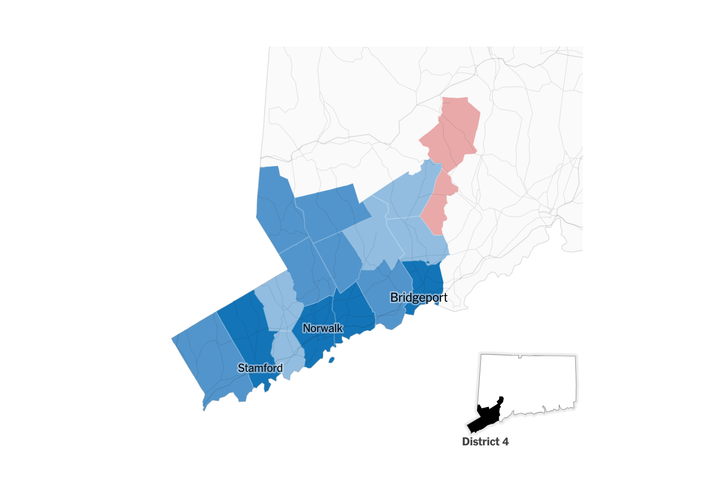
Norwalk, Bridgeport, and Fairfield are exploring how to bridge neighborhoods that have been divided by highways.
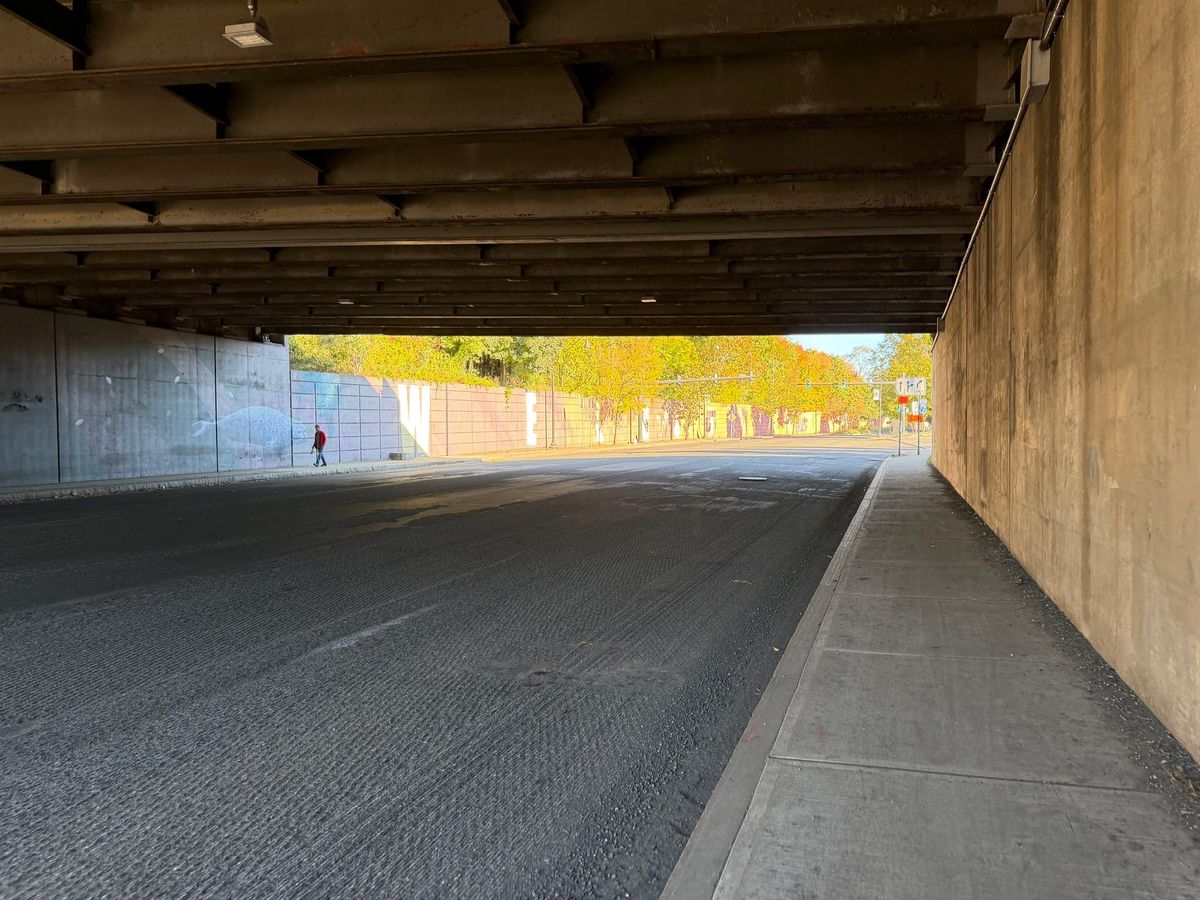
How do you reconnect two neighborhoods divided by a highway? Communities across Lower Fairfield County are looking to answer that exact question.
In Norwalk, the city received a $600,000 federal grant (paired with an additional $150,000 local match), to explore ways to better link its Wall Street, West Avenue, and South Norwalk neighborhoods, which are separated by I-95.
“We have more importantly the opportunity to right some wrongs that were done a long time ago, and to really start to stitch this the city together, to really focus on multimodal transportation to really prioritize your your people moving around the about the city,” Jim Travers, the head of Norwalk’s transportation, mobility, and parking department, said at an October public meeting.
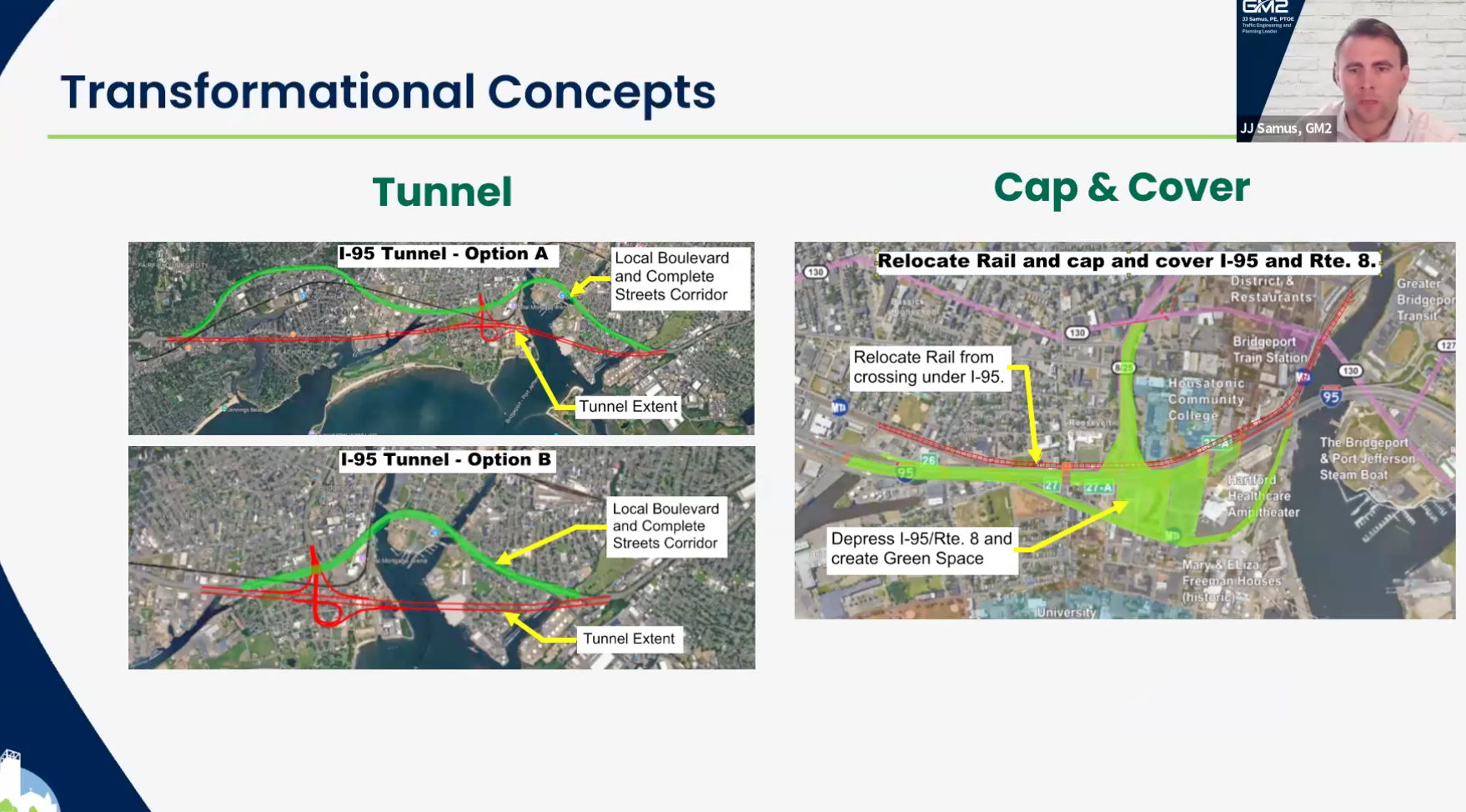
In Fairfield and Bridgeport, the state is exploring how to improve I-95 in their areas. A few of the preliminary alternatives include tunneling the highway or building over it, reconnecting the communities it divided.
Let’s explore the work taking place around the region.
Norwalk: Easing the Transition from One Side of the Urban Core to the Other
Prior to construction of I-95 in the 1950s, the city had trolley lines that connected its two main hubs—Wall Street and Washington Street. But when the highway came in, that connection broke.
Carly Kramer, a community planner for the Norwalk Redevelopment Agency, said that I-95 wasn’t all negative—it helped bring jobs and people from other communities—to the city, but it did have some consequences.
“It did lead to automobile traffic issues in traffic congestion, roadway safety issues, air and noise pollution,” she said. “So those are all things that we're trying to mitigate through this project.”
Brian Bidolli, the head of Norwalk’s Redevelopment Agency, said the purpose of the grant is to explore how I-95 has affected the neighborhoods around it, particularly Wall Street, West Avenue, and the downtown/South Norwalk area.
“What we want to do is basically examine, what have been the impacts, what can we do to sort of address those impacts, and then have a community conversation to sort of collaboratively identify potential solutions,” he said.
It’s a great time to examine this as the city has been transforming, according to Michael Morehouse, traffic engineer with consulting firm IMEG, who is working on the plan with the city.
“We're now at a point in time in Norwalk where the population is changing again, right?” he said. “This is a very diverse community. There's a lot of different ethnicities. There's a lot of different income levels. There's a lot of different transportation needs—so all great cities, if they want to evolve, they need to make sure that they're safely accommodating people traveling by all kinds of modes and people of all abilities as well.”
The city recently conducted public walks of the corridor to examine the conditions on the ground and receive real feedback from participants about the qualities and challenges they saw. The goal is to think about what kind of designs could be done to better enhance and link the corridor, whether that’s through improved connections to transit or better sidewalks and bike lanes.
In addition, the goal is to examine some of the crash hotspots and see what can be done to help make traffic flow safer and smoother.
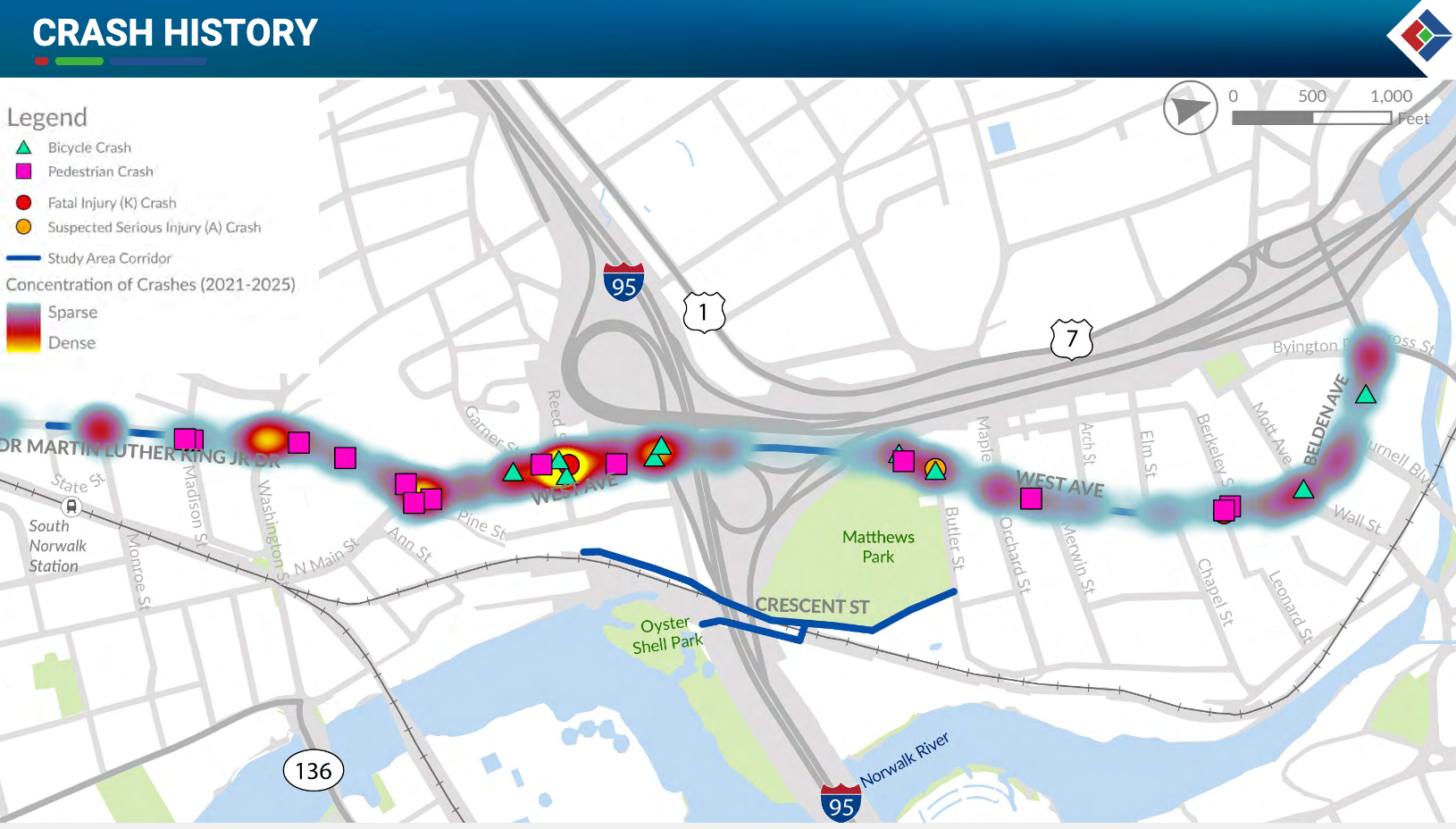
Travers said that this plan aims to address both transportation and economic development aspects.
“We have a better network when that network works for everyone, when that network works for pedestrians and cyclists and transit riders and people who are riding in cars,” he said. “We're going to do a plan collaboratively that focuses on economic development, but focuses on transportation. We want equity in our transportation network.”
Officials said after the November sessions, they heard great feedback from participants including that the environment is uncomfortable and loud, with underutilized open space. That could lead to things like more trees and landscaping to make it more inviting to walk and spend time there.
In addition, the participants voiced support for a multi-use path on Crescent Street and realigning the Norwalk River Valley Trail to avoid cutting through the cemetery at the back of Mathews Park.
Residents can still provide feedback through an online survey until early December. From there, officials will develop a variety of alternatives and share them back with the community in mid-2027.
Bridgeport and Fairfield: Transforming I-95
Right now the state Department of Transportation is conducting a study, examining how I-95 operates through the two communities, as well as the roads surrounding it.
“This is a corridor that ranges from a suburban environment to a dense like many others, and so we needed to understand where the problems were and how they basically fed each other, this would allow us to understand whether we needed a local solution or a more corridor-wide solution,” Joe Rubino, the environmental lead for the project from SLR, a consulting company.
The study is still in its early phases, meaning consultants are examining a wide range of options.
“We wanted to leave really no stone unturned when we were developing concepts like this, and that means exploring really transformational ideas, like putting portions of I-95 underground in a tunnel, or lowering and covering sections of the highway,” said JJ Samus, the executive vice president for transportation for GM2, a consultant working on the project.
Samus said these types of transformational ideas can really benefit local neighborhoods.
“Beyond improving transportation, ideas like this can really help reconnect communities. It can help strengthen local roadway networks and also potentially create opportunities for economic development,” he said.
But that doesn’t necessarily mean it will happen. Officials said they’re examining all types of options to improve the corridor.
Still, the project comes just a few after Bridgeport applied for a similar grant to the one Norwalk received. Bridgeport in particular was looking to address the neighborhoods around Route 8.
“Route 8 was built along the west edge of the downtown area and separated the West End from the downtown,” the grant application read. “It also eradicated numerous residential properties located adjacent to the downtown. It also split the Golden Hill neighborhood from the Hollow with a cut that created a canyon-like gap between the two neighborhoods. North of downtown, the highway cut a path through the city effectively dividing it in two sections.”
While the city hasn’t received grant funding for that effort yet, the I-95 study presents an opportunity to tackle some of that work as a part of the larger project.
Residents can follow along the study on the planning website.