Goodbye Meeting Room; Hello Walk-In Closet
In Stamford, Norwalk, and beyond, property owners are proposing to turn vacant—or nearly vacant—office buildings into housing, primarily apartments. What are the impacts of this trend on southwest Connecticut?
How Office Buildings in Stamford, Norwalk, and Beyond Could Become Housing
What happens to an office building if its businesses leave? Many across southwest Connecticut could have a second life, as housing.
In Stamford, Norwalk, and beyond, property owners are proposing to turn vacant—or nearly vacant—office buildings into housing, primarily apartments. Some developers are literally converting the existing building into apartments, while others are tearing down old complexes and building new housing in their place.
In fact, the state recently made it even easier for the first type—the conversion of an office building into housing—to happen, thanks to a law signed by Governor Ned Lamont in July 2025.
Converting a vacant office building, and even building on an existing office site, can have many benefits for a community including:
- Adapting an existing structure (or site) instead of building on open space or undeveloped land
- Providing additional housing in areas that don’t have a lot of sites available for development
- Adding economic value by taking a vacant structure (or site) and giving it new life.
That’s why housing advocates like Sean Ghio, policy director for the Partnership for Strong Communities, a statewide nonprofit research, policy, and advocacy organization, say these types of conversions are beneficial to communities.
“High land costs contribute to high housing construction costs, making it difficult to build homes that are affordable,” he wrote in testimony to the state legislature. “Converting existing underused properties into housing is a smart approach to increase housing supply.”
But as more of these are proposed, communities are concerned about the implications, wondering what it means for their economies as well as their local infrastructure and neighborhoods. For decades, Merritt 7 was seen as the gold standard for office parks, and is home to the “highest concentration of jobs in the city,” according to Norwalk’s 10-year master plan.
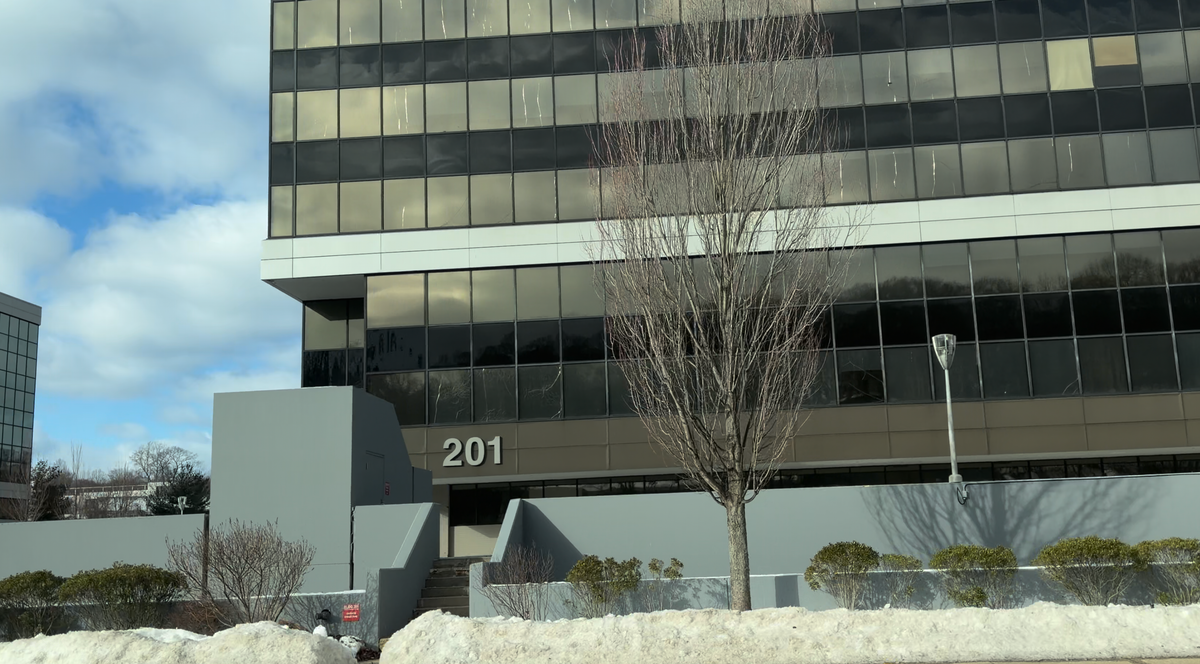
However, there’s a proposed project to convert two buildings in Norwalk’s Merritt 7 office park into housing that will go before the Planning and Zoning Commission in January. Representatives for Lofts M7 LLC, the group that plans to purchase 101 and 201 Merritt 7 and convert them to 300 units of housing, said that much office space is unsustainable in today’s world.
“The demand for suburban office space has dwindled as companies opt for more urban locations,” representatives for Lofts M7 LLC wrote in their application to the city. The COVID-19 pandemic only exacerbated this trend as companies have moved to remote and hybrid work models, thereby decreasing the demand for physical office space and making the office market more competitive.”
We’re going to take a two-part look into these two types of office to residential developments, starting with the conversions of office buildings into residential ones. Next week, we’ll explore what it looks like for office park sites to be torn down in favor of new residential construction.
The Growth of Office to Residential Conversions
The traditional office park really took off in the 1970s and 1980s. Over the past decade or so, however, the need for massive office spaces has dwindled. And the COVID-19 pandemic has exacerbated that trend, according to a report from the Brookings Institute.
“The shift away from the five-day office work week—which the COVID-19 pandemic only accelerated—has created an existential moment for many cities across the globe,” the report stated. “At the same time … American cities are experiencing the worst housing crisis of the postwar era—creating a renewed opportunity and an important mandate to convert underused offices into residential properties, particularly in hotter markets.”
That’s part of why the Connecticut legislature proposed a bill—which was signed into law by Governor Ned Lamont—this past session that aimed to make it easier to convert office buildings into residential uses. Proposed conversions would be subject to a “summary review” by the local zoning commission instead of a public hearing.
The Brookings report noted that while many say they are in favor of reusing existing buildings, “actual office-to-residential projects in large U.S. cities have been slow to pick up.” The report cites multiple reasons, including “continued market uncertainty in many office markets,” and the fact that “conversion projects collide with zoning constraints.”
But the trend has started to accelerate in southwest Connecticut, with multiple projects either approved or proposed. Here’s a look at a few of them.
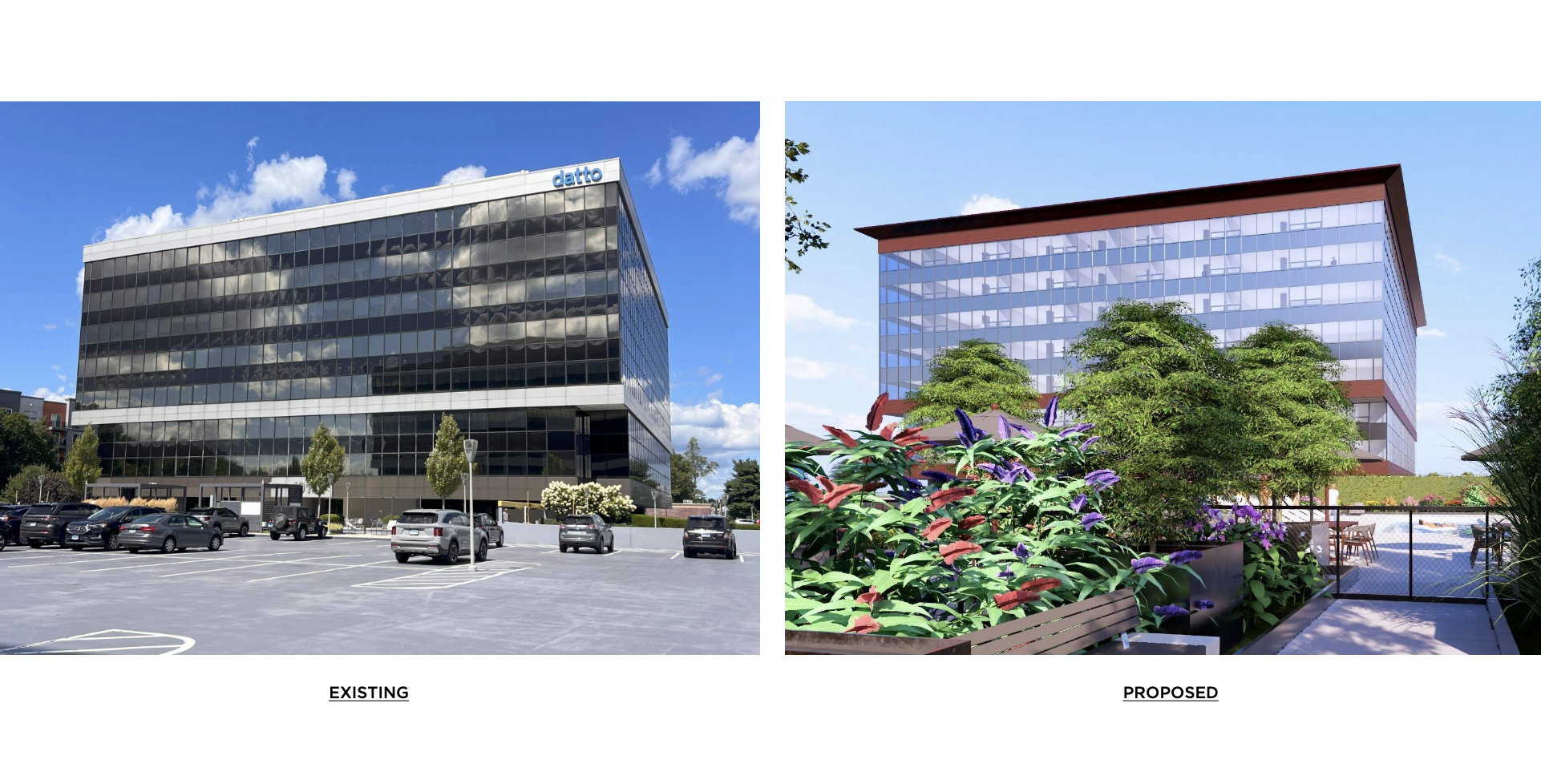
Norwalk: 101-201 Merritt 7
For years, the city had boasted that the Merritt 7 area “supports over 1.4 million square feet of Class A office space located at the intersection of Route 7 and the Merritt Parkway,” across six buildings in the Merritt 7 office complex.
But that much office space “has become unsustainable. Meanwhile, the need for additional housing has continued to grow,” according to representatives for Lofts M7 LLC, the group that plans to purchase 101 and 201 Merritt 7.
The developer is proposing to convert the existing buildings into approximately 300 apartments, including 27 that would be set aside as affordable.
The Lofts M7 LLC group said by converting the buildings it would serve “the dual purpose of facilitating the development of much-needed housing while increasing the demand for the office space that remains.”
The proposal is in front of the city’s Planning and Zoning Commission on Wednesday, January 6.
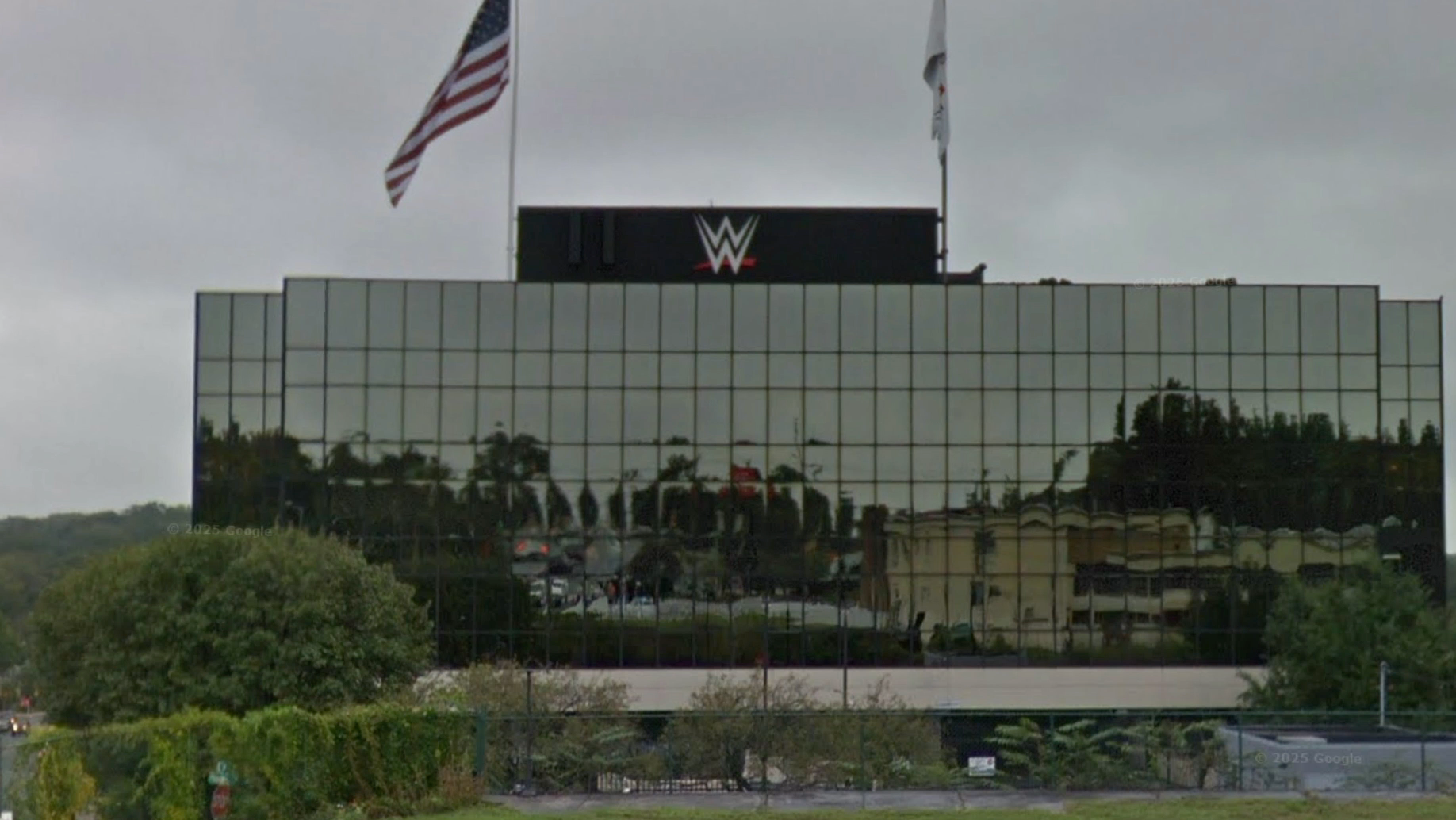
Stamford: 1241 E. Main Street (the former WWE building)
For more than 30 years, the office building called Titan Towers was home to the headquarters of the World Wrestling Entertainment (WWE). But in 2019, the company announced that it would sell the building, which was even featured in a Super Bowl commercial, and move its headquarters to Washington Boulevard. Since then, the property has been vacant.
But in December 2025, the Stamford Zoning Board approved a plan to convert the building into an 84-unit residential apartment building.
The property will include 59 one-bedrooms, 23 two-bedrooms, and two three-bedrooms. The plans would add indoor amenities including a game room, a fitness center, and co-working space, and outdoor amenities including a pool, terrace, and roof deck.
The application for the project noted that this plan is “in line with the goals of Stamford’s Master Plan and the City’s vision for repurposing suburban office space,” as “the demand for such office space has decreased over the years as companies have started to favor more urban locations close to public transportation hubs.”
Stamford: 400 Main Street
The historic Valeur Building—which was built in 1925, way before the suburban office boom—will see new life as a 41-unit apartment building, featuring ground floor commercial. The 8-story structure had operated as an office from its construction through 2024, when the city’s Zoning Board of Appeals approved its conversion.
Jay Klein, an attorney representing the project, told the board that this would “preserve a piece of history,” while providing “needed housing” in the city.
“Stamford and similar communities are experiencing a serious decline in demand for office space, particularly office space in these older buildings," Klein said. "But many historic buildings, fortunately, have found a second life for housing.”
Fairfield: 60 Katona Drive
In 2024, the town’s Plan and Zoning Commission approved a plan to convert the two-story office building into an 18-unit residential building featuring 14 one-bedroom apartments, two two-bedroom apartments, and two studios. The property is located off of Black Rock Turnpike.
Greenwich: 530 Old Post Road
The town’s Planning and Zoning Commission approved a plan to convert the office building at 530 Old Post Road into a 10-unit apartment building. The three-story building would include six two-bedroom units and four one-bedroom units, one of which would be affordable.
So what does this mean for our region?
Overall, experts have noted that this trend is going to continue to grow as the need for commercial space dwindles and the housing market remains tight. Experts say that converting the buildings is better for local communities—and their taxbases—than letting them sit empty. And by providing more residential options, they’re helping to address the housing shortage we’re seeing across the country.
The group behind 1241 E. Main Street in Stamford noted as such in their application.
“The proposal is consistent with the City’s goal of replacing underperforming office buildings with uses that are in much higher demand, which in turn will increase the City’s commercial tax base and place less stress on the City’s homeowners,” the application reads. “Furthermore, the proposed development will provide greatly needed housing supply, including a contribution to affordable housing, without any visual impact to the surrounding area.”
In fact, a 2025 report from CBRE, a real estate company, noted that for the first time since at least 2018, more office space is being removed from the U.S. and converted into other uses (primarily residential) than being added to it.
Since 2016, CBRE estimated that office conversions to multifamily housing have added 33,000 apartments and condominiums, while conversion projects in the pipeline across the country could add another 43,500 units to the housing market.
“The amount of residential units added to the national inventory from conversions won’t come close to solving the national housing shortage, but it will help, especially on a local level,” Jessica Morin, CBRE’s Americas Head of Office Research, said in a statement.
Morin also noted that the conversions could be beneficial for both the remaining office spaces and the local communities.
“Meanwhile, the office market will benefit as obsolete space is removed from the market in favor of the highest and best use. Additionally, conversions will boost the vibrancy of neighborhoods within various markets,” she said.
Still, there are some remaining questions that we won’t have the answers to immediately, such as what does it mean for a city to replace places of employment with places that people live? How does that impact the taxbase, the infrastructure, and the community as a whole?
For example, the WWE headquarters remained in Stamford—just a different location—so many people kept their jobs and the business stayed in town, but other companies are leaving the region, or significantly downsizing.
As we see this trend continue, we’ll keep an eye on it and follow up with more reporting on how these conversions are impacting our area.
Stay tuned for part 2 next week on how office parks are being torn down and replaced with residential housing.