Darien Looks to Pause ‘Large’ Multifamily Developments Amid Statewide Housing Challenges
Darien looks to pause multifamily developments in town for one year.
The Darien Planning and Zoning Commission is planning to vote on a one-year moratorium for “large multifamily developments,” or projects with 25 or more units.
Jeremy Ginsberg, the town’s director of land use, said there were a few reasons behind the proposed moratorium including a need for the commission to finish its work on the 10-year master plan. In addition, he and commissioners said that the town has had a lot of multifamily housing added in the last few years and they wanted to see the impacts of it on the town.
“I’m mindful of the need for this moratorium,” First Selectman Jon Zagrodzky said at the commission meeting. “The idea of a pause to allow what has been a non-trivial amount of development in town that seems not just to make sense, but to resonate with most residents with whom I speak.”
There would be some exemptions—particularly any projects that come under state statutes like 8-30g as they are governed by a separate set of regulations. But the moratorium comes amid a larger conversation happening across the state about the need for more housing.
A February 2026 report from CT Data Haven found that the state is “facing a historic housing affordability crisis.” The report noted that the state “ranks dead last nationally in the number of active housing listings for every ten thousand households … second to last in its rental vacancy rate, as of 2024.” In addition, the Connecticut Coalition to End Homelessness found that homelessness in Connecticut rose by 44 percent since 2021.
Let’s explore the reasons for the moratorium and what the conversation is related to housing around the state.
Why is Darien looking to put a pause on large multifamily developments?
Officials listed a few reasons for why a yearlong moratorium would be beneficial, but one of the main reasons is that the Planning and Zoning Commission would like to focus on other initiatives and projects that have to be completed this year.
The commission is working on the town’s master plan, known as the plan of conservation and development, which must be updated every 10 years. The goal is to have a final draft finished in late June/early July, with a public hearing in September. In addition, Ginsberg noted that the commission “needs to respond to the requirements” that were updated as a part of the state’s omnibus housing bill, known as HB 8002. The bill requires towns to update zoning regulations around “missing middle housing”—projects that are 2 to 9 units—as well as updates to parking requirements. Municipalities also must put together a housing growth plan, among other items.
“There's a number of provisions in that bill, the public act that was passed, which the Commission needs to act on, especially relative to parking, possibly rezoning some parcels,” Ginsberg said. “So there's a lot of sections to that bill. The bill in all, is 107 pages long, 53 different sections, some of which apply to Planning and Zoning commissions, and various deadlines within that.”
The other main reason Ginsberg and the commissioners laid out was the fact that Darien has seen a boom in multifamily developments and they want to see some of the impacts of those projects before adding more.
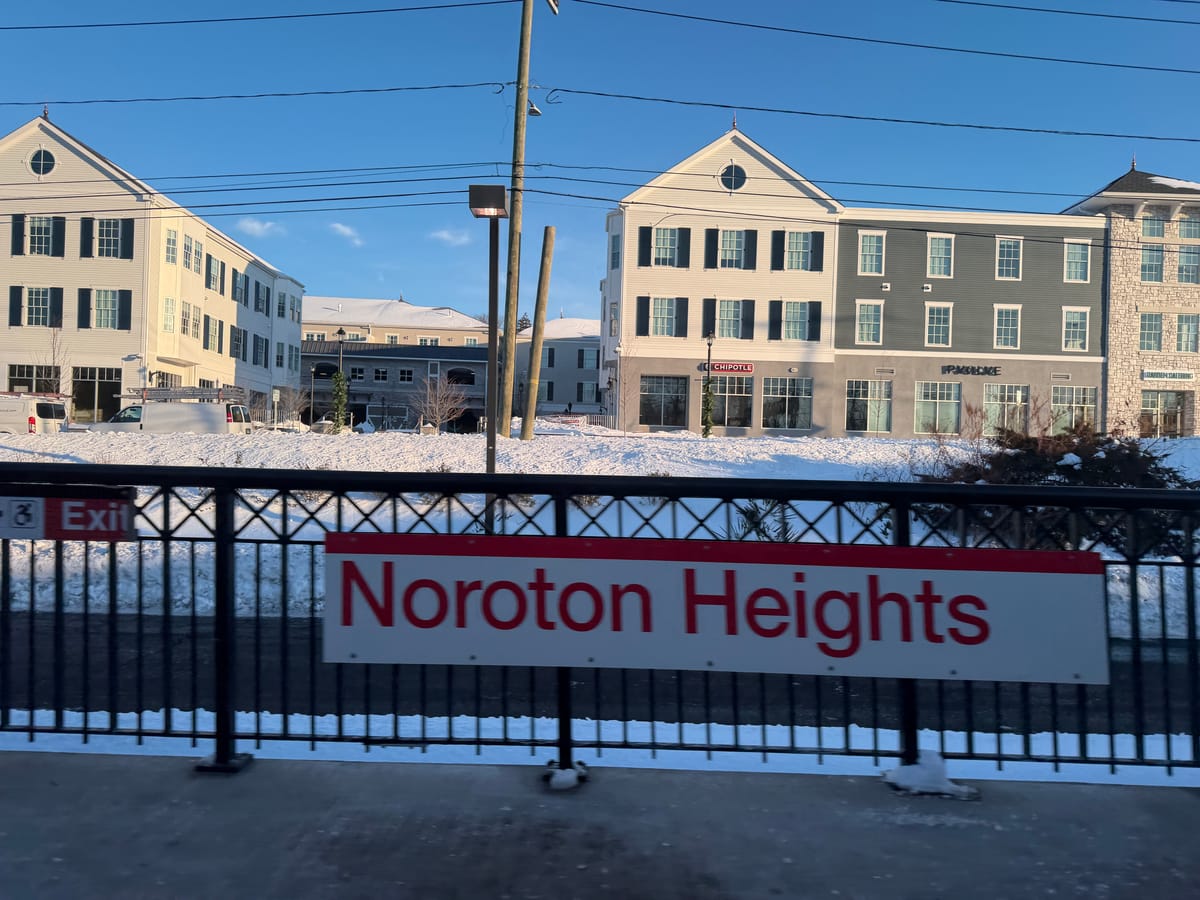
Since 2000, the town has seen almost 800 multifamily units constructed—320 of those have come since 2020, Ginsberg said. In addition, there are another 356 units currently under construction.
“What we're going to see going forward is multifamily increasing at a much faster rate than single family increasing,” Ginsberg said. “Darien is growing, but the growth is probably mostly multifamily housing.”
He noted that other towns have had moratoriums before—some over more specific uses, like tattoo parlors or vape shops, while others, like Ridgefield, had even broader moratoriums, like one on all commercial developments.
How would the moratorium work?
Ginsberg said that his office would “get the word out” if the moratorium was approved by the commission and tell anyone looking to put in an application about it. Basically, he said they would not accept applications.
The moratorium would be in effect for one year, although the commission could vote to extend it as the deadline got close. The commission plans to vote on the moratorium at a future meeting.
What was the reaction to the proposed moratorium?
Most of the commission members voiced their support for the pause saying it would allow them to focus on important deadlines and tasks and see how the new developments impact the community.
“If I look at just the last six years, so 2020 through 2026, there's been a pretty big acceleration—676 units post COVID,” Commissioner John Sini said. “I think it's just common sense that we'd want to take a breather here, understand what the impact is of what's still being built, what's been approved—I think it’s pretty reasonable to take a break.”
Planning and Zoning Chairman Stephen Olvany emphasized that it wasn’t a “ban on multifamily housing at all—it’s a pause on basically taking applications for a year.”
What does this moratorium mean for the region/the state?
The moratorium comes at a time when officials across the state say there’s a need for more housing to be built.
Governor Ned Lamont, who signed the omnibus housing bill in November said the state’s housing shortage is “among the most severe in the country.”
“It is driving up costs for working families, deterring businesses from investing or growing, and worsening homelessness. Simply put, the status quo is unsustainable,” he said in a statement. “While we have made significant steps forward in recent years to increase our housing stock, we need to do more to address this urgent need.”
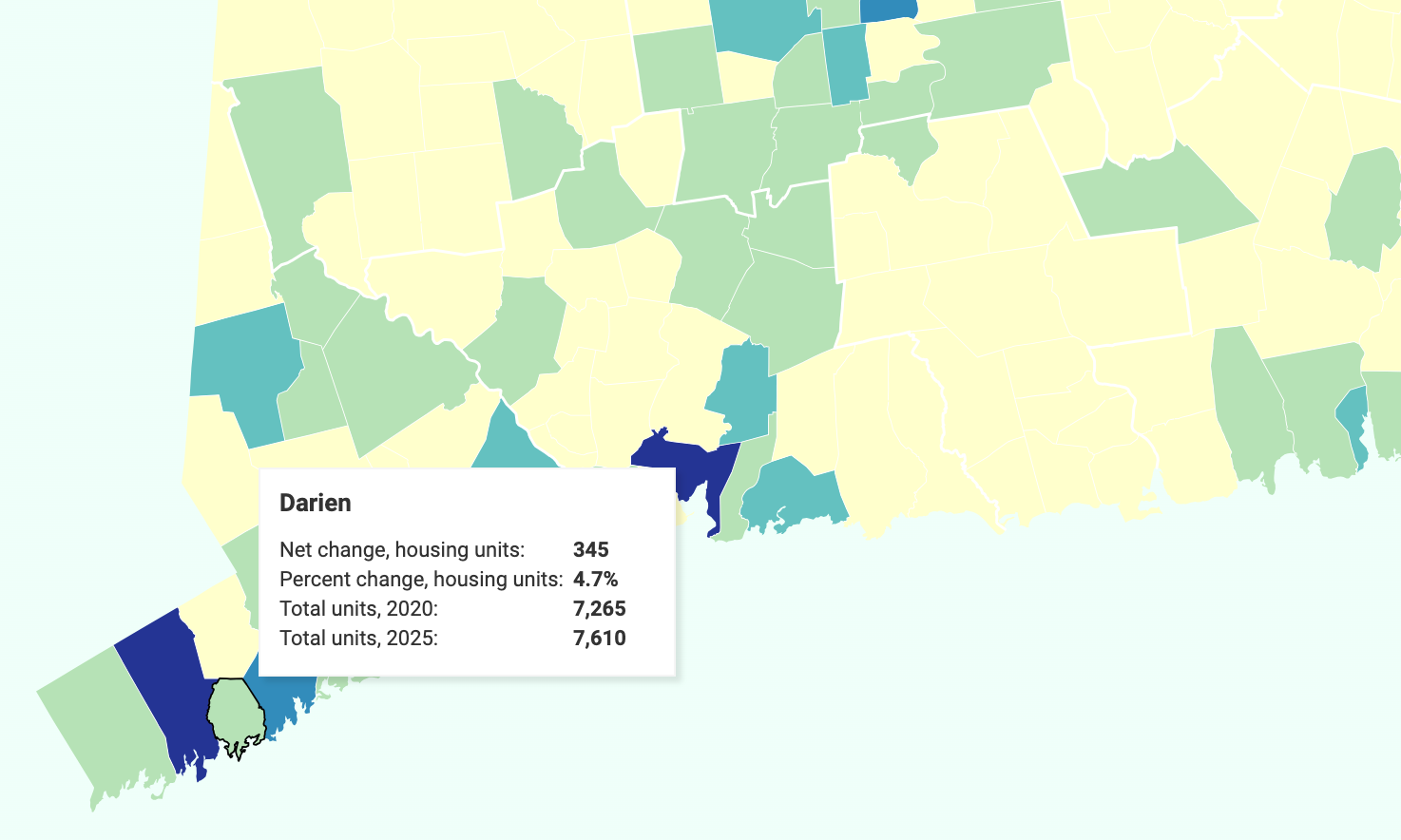
The February study from CTData Haven found that Darien has seen a 4.7% growth in its number of housing units over the past five years, which is above many neighboring communities—although the overall number of units, 345, is lower. Norwalk saw a 4.1% increase in the number of housing units it has, adding 1,564. Stamford had the highest percentage in the state—a 6.2% increase or more than 3,500 units.
Greenwich added 381 units for a 1.5% increase, Westport added 261 for a 2.5% increase, Fairfield added just under 600 for a 2.7% increase, and Bridgeport added 1,550 units for a 2.6% increase.
The report said that while the number of housing units has increased, it’s not enough to meet the growing needs that Lamont outlined. Citing the 2025 Connecticut Fair Share Housing Study, the report found that there is a shortfall of 120,000 housing units for low-income residents.That study noted the ”overall housing gap is even larger—up to 380,000 units statewide.”
The demand is coming from a few places—people wanting to age in place, workers and families moving into Connecticut, and younger people looking to move out of their parents house, CTData Haven found, noting that “average household sizes are also shrinking, as fewer people choose to live with roommates or extended family. As a result, even if the population were to remain steady, the demand for new housing supply would still increase with the rising number of households and the gradual loss of existing housing units.”
The report recommends finding ways to accelerate new housing developments, not pause them, such as by allowing multifamily housing by right in areas around transit and job centers.
What’s next?
The Darien Planning and Zoning Commission will vote on if it wants to establish the moratorium—and when it should begin if it passes—at one of its upcoming meetings.