An Inside Look into Manresa Wilds
Manresa Island has been home to a power plant since the 1960s. By 2035, the goal is to transform the site into a public park—and potentially an example for how to repurpose an industrial site.
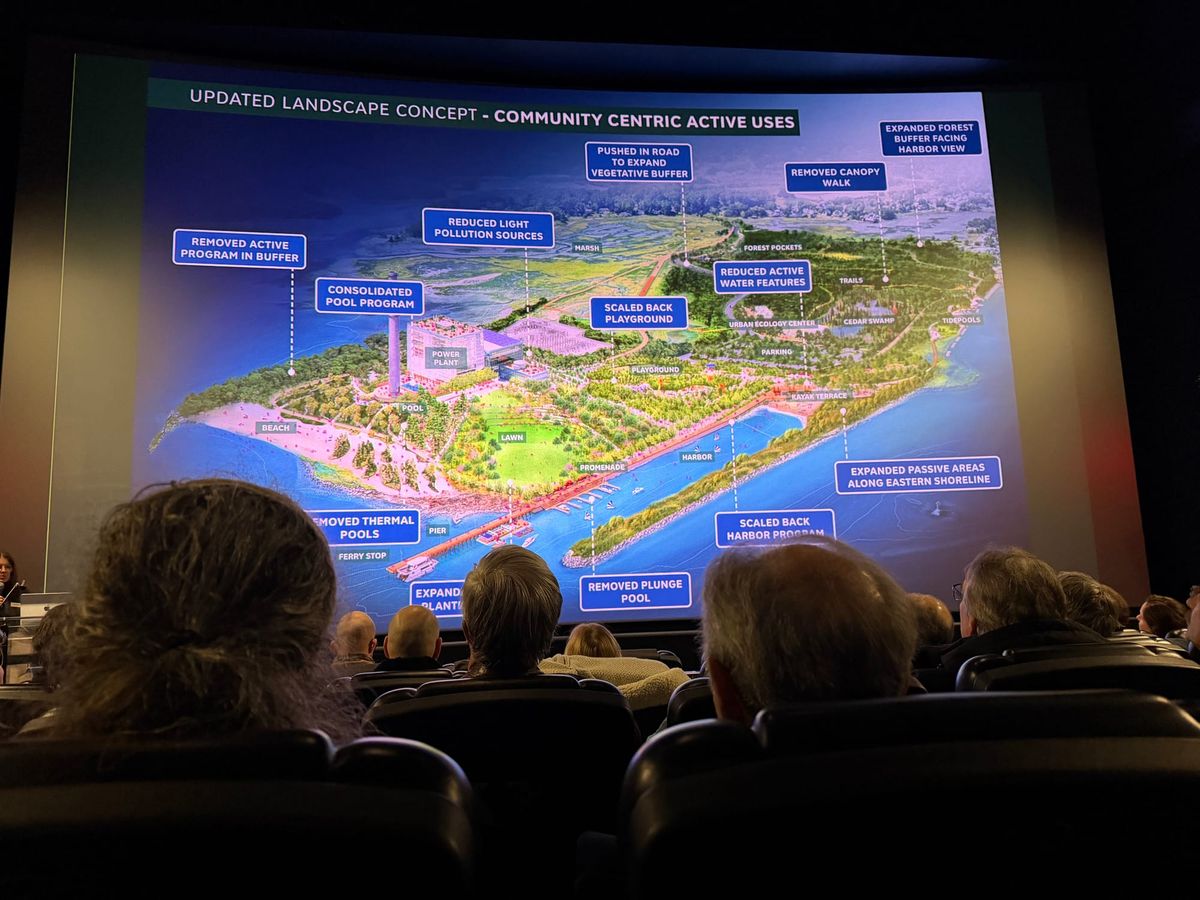
Since 2013, Manresa Island, located along the Long Island Sound has been home to a decommissioned power plant, which has been a source of blight along the city’s coast. But that will all be changing soon, as the final plans for what will be Manresa Wilds were unveiled on February 19.
Residents got a chance to see what lies ahead for the 125-acre site—beach access, a public pool, an event space, pedestrian trails, learning spaces, an urban ecology center, and more—at a special event at the Maritime Aquarium.
Back in 2024, Norwalk couple Austin and Allison McChord established a nonprofit and purchased the island with the intent to turn it into a public park. Austin McChord is the founder of Datto, a data backup company. Their vision is to remediate the site and provide not only Norwalk residents, but also wildlife with a new home.
Since unveiling their idea and concept in 2025, the McChords and Jessica Vonashek, the executive director of the Manresa Island Corp, the nonprofit overseeing the site, said they’ve received thousands of comments from members of the public. Many of them, officials said, were captured, in this final vision.
“We strongly feel that the project is better because of the input we have received from all of you,” Allison McChord said. “It's a better project, but ultimately, the core goals are the same: we're going to create a beautiful park that allows people to connect to nature and the Sound. We're going to create community spaces, spaces for research and learning. And critically, we're going to take this big piece of shoreline and revitalize it so it is healthier and more resilient for people and for wildlife.”
The estimated cost of the land purchase, remediation, infrastructure, circulation development, and ecological restoration is $410 million, all of which will be paid for by the McChords. The entire cost of the project will come from private philanthropy through the Manresa Wilds nonprofit, anchored by that initial investment from the McChords.
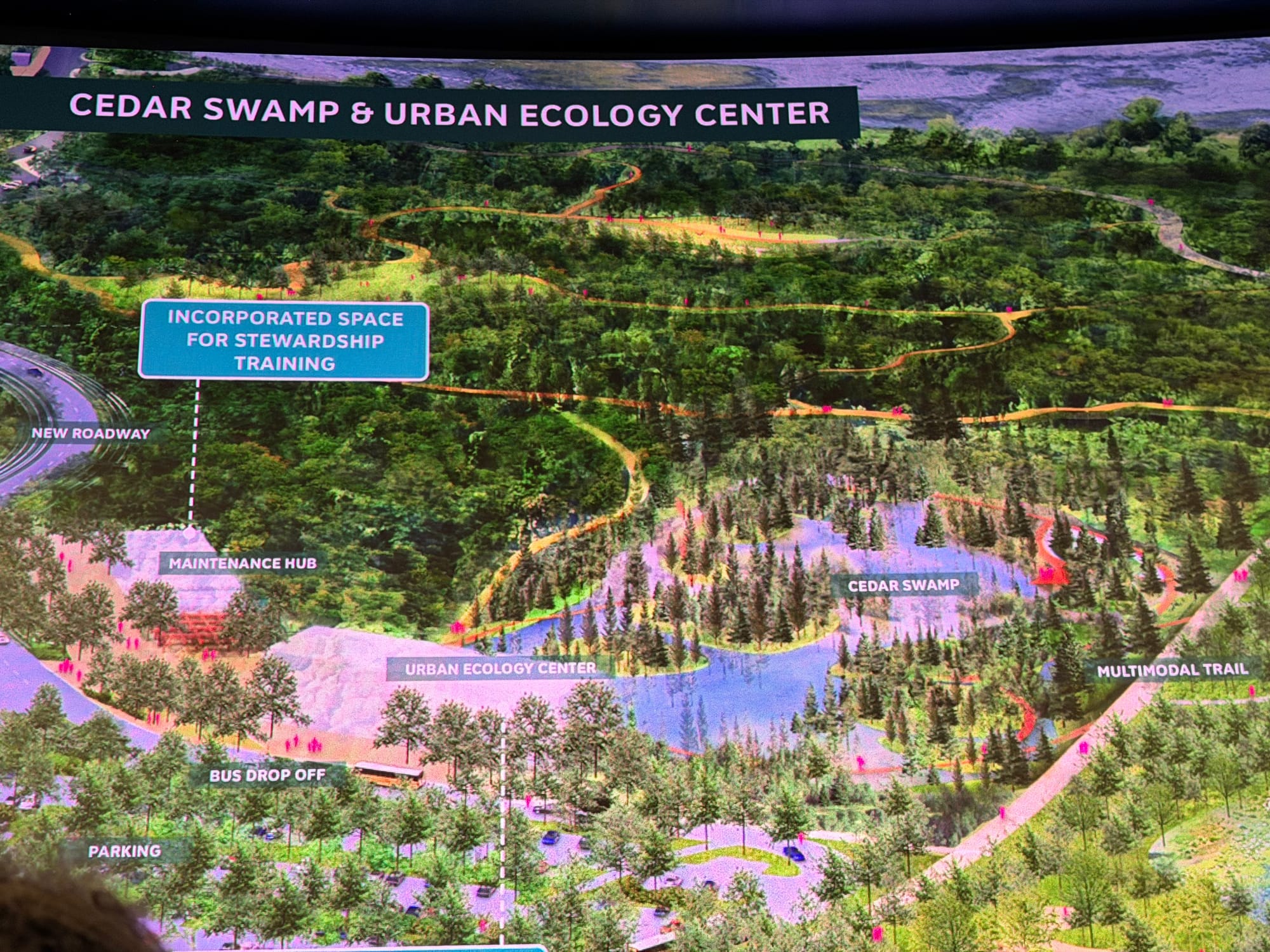
What are the overall design updates for Manresa Wilds?
Some of the suggestions that were highlighted include:
- Expanding natural areas and habitat protections for wildlife along with the reducing the amount of hardscape and active features
- Concentrating some of the most active uses at the southern part of the island, away from neighboring residential communities
- Improving transit infrastructure, including bus drop-off areas, parking throughout the site, and access from the water
- Minimizing lighting and reducing water uses to protect wildlife and neighbors
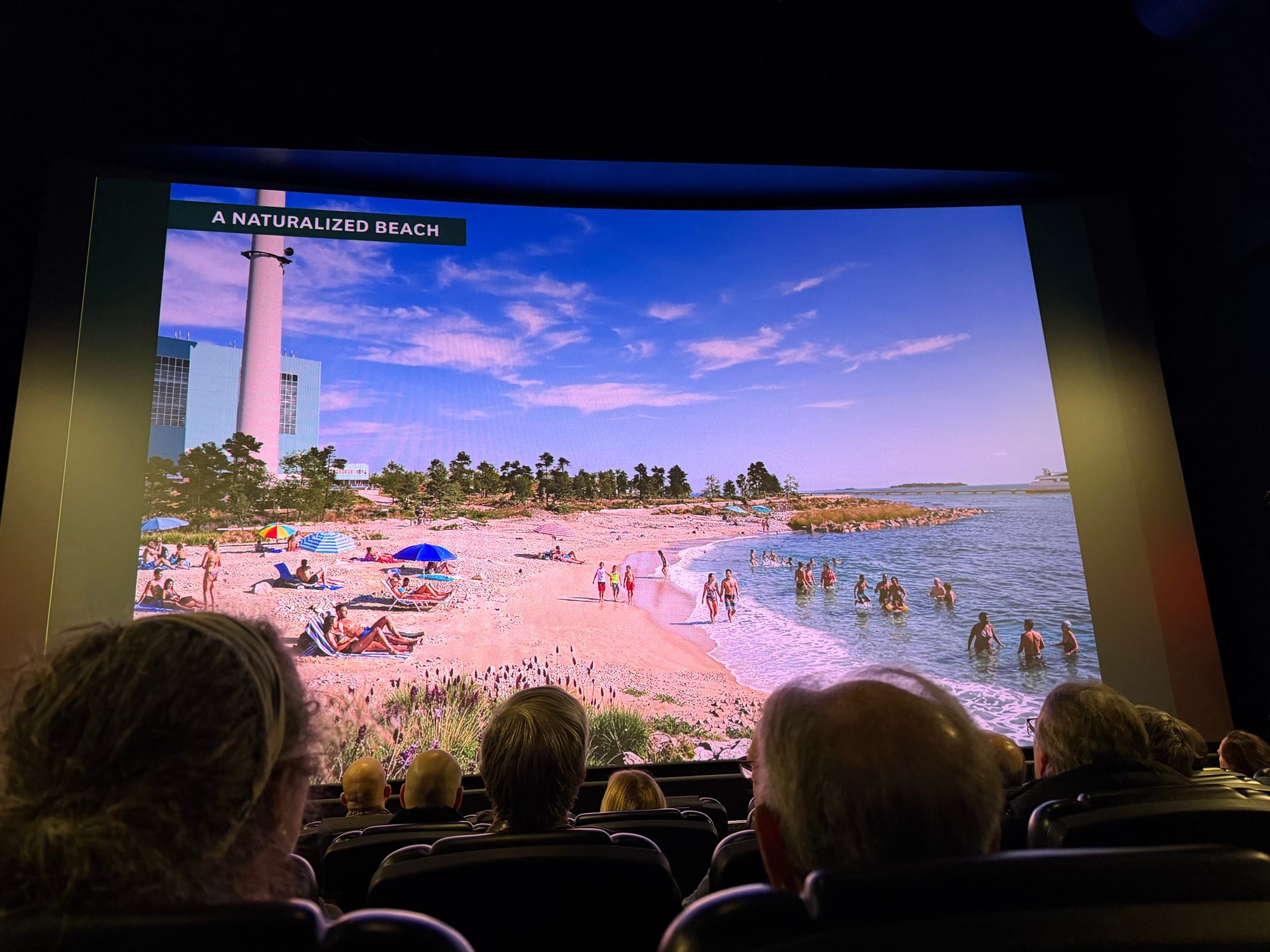
What’s in the plans for Manresa Wilds?
The plans feature two overarching plans—one for the natural, outdoor experience and one for the repurposing of the power plant itself.
Around the site itself, residents and visitors will have the opportunity to:
- Reconnect to the Water: The site will provide public beach access to the Sound on a site that had been cut off for more than 70 years. In addition, there will be kayak access, boat slips, and a living shoreline along the eastern coast featuring tidal pools and native plants. The goal is to allow residents to enjoy the water, while also creating a climate-resilient design.
- Gather Together: At the heart of the property will be a 3.5-acre lawn that aims to provide for community activities, picnics, and more. In addition, smaller gathering spots are located throughout the site.
- Wander Through Forest, Wetlands, and Shoreline: The site will feature a connected trail network of more than 15 miles that allow for residents to explore all of the site’s unique topography.
- Learn from the Wilds: Manresa Wilds will be home to an urban ecology campus in addition to learning opportunities throughout the site that will help to provide outdoor education to students and those studying coastal ecology and stewardship.
- Play at Any Age or Ability: From a playground to a community pool, from a sand lab to a play creek, the island will be home to many opportunities for activities.
As for the buildings on the site, officials said that the 1960-built power plant is in good condition and the goal is to repurpose it into a community hub. Officials said that this not only will honor the prior industrial uses, but it will also reduce the project’s carbon footprint.
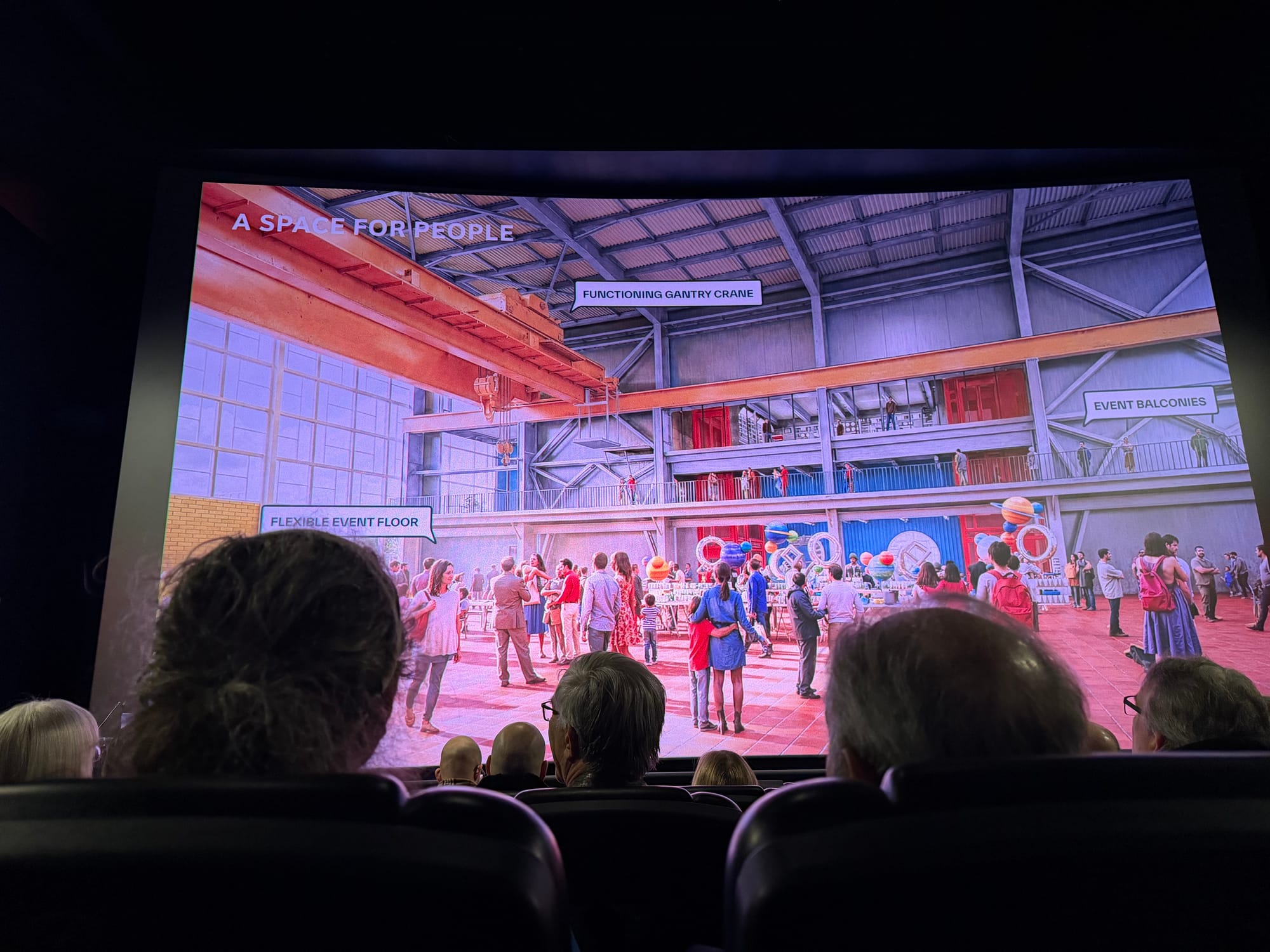
The plans for repurposing the plant include:
- Turning the main Turbine Hall (approximately 88,000 square feet) into a community hub, featuring flexible event and learning space for all types of activities
- Making the Administrative Building (20,000) into a park-level cafe and restaurant
- Wrapping the Smokestack with the pavilion and amenities for the pool
- Transitioning the Boiler Building into a space for education and community programming, with dedicated research facilities and classrooms. This building is one of the last phases of the project.
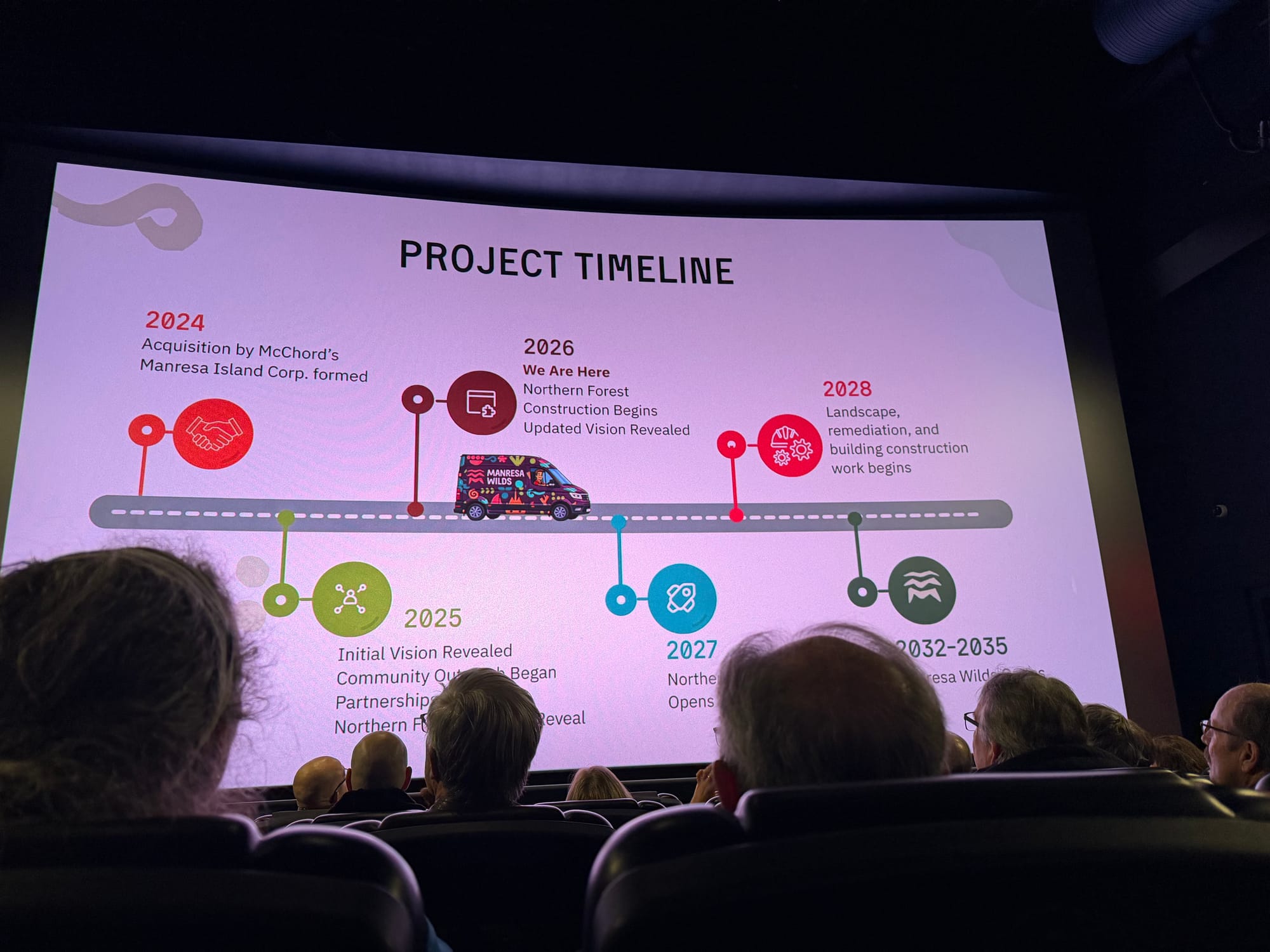
What’s next for Manresa Wilds?
Work is moving ahead quickly. In December 2025, Manresa Island Corp received a permit from the Connecticut Department of Energy and Environmental Protection (DEEP), that approved its approach to soil remediation on the site.
In addition, the plans for the Northern Forest section of the project, which features trails and some outdoor hubs, were recently approved by the Norwalk Planning and Zoning Commission. The goal is to open the forest in spring 2027.
The second phase of the project, which includes the repurposing of the Turbine and Administrative Buildings, landscaping throughout most of the site, the pool, and nature play area, is estimated for completion by 2032. The third phase, which includes the beach, kayak access, and additional play areas, is projected for 2032-2035, with the Boiler Building coming after depending on future partnerships.
Vonashek noted that some of the concerns residents shared would be addressed as the park starts to open.
“A lot of the concerns that we've been hearing are very operational based—so traffic and lighting and noise, and so it'll be our responsibility as the 501(c)3 to operate the park in a way that is responsive to the community,” she said. “And so while community engagement for the design portion of the project has closed, we know that we will continue to work with the community moving forward.”
In addition both the McChords and Vonashek said they hope Manresa Wilds could be used as an example for future repurposing of power plants across the country.
“We're talking about … a model for future thinking,” Vonashek said. “We know that there are hundreds of these sites around the U.S., and this could be used as a case study in order to be able to think about how to move the needle forward on polluted sites.”